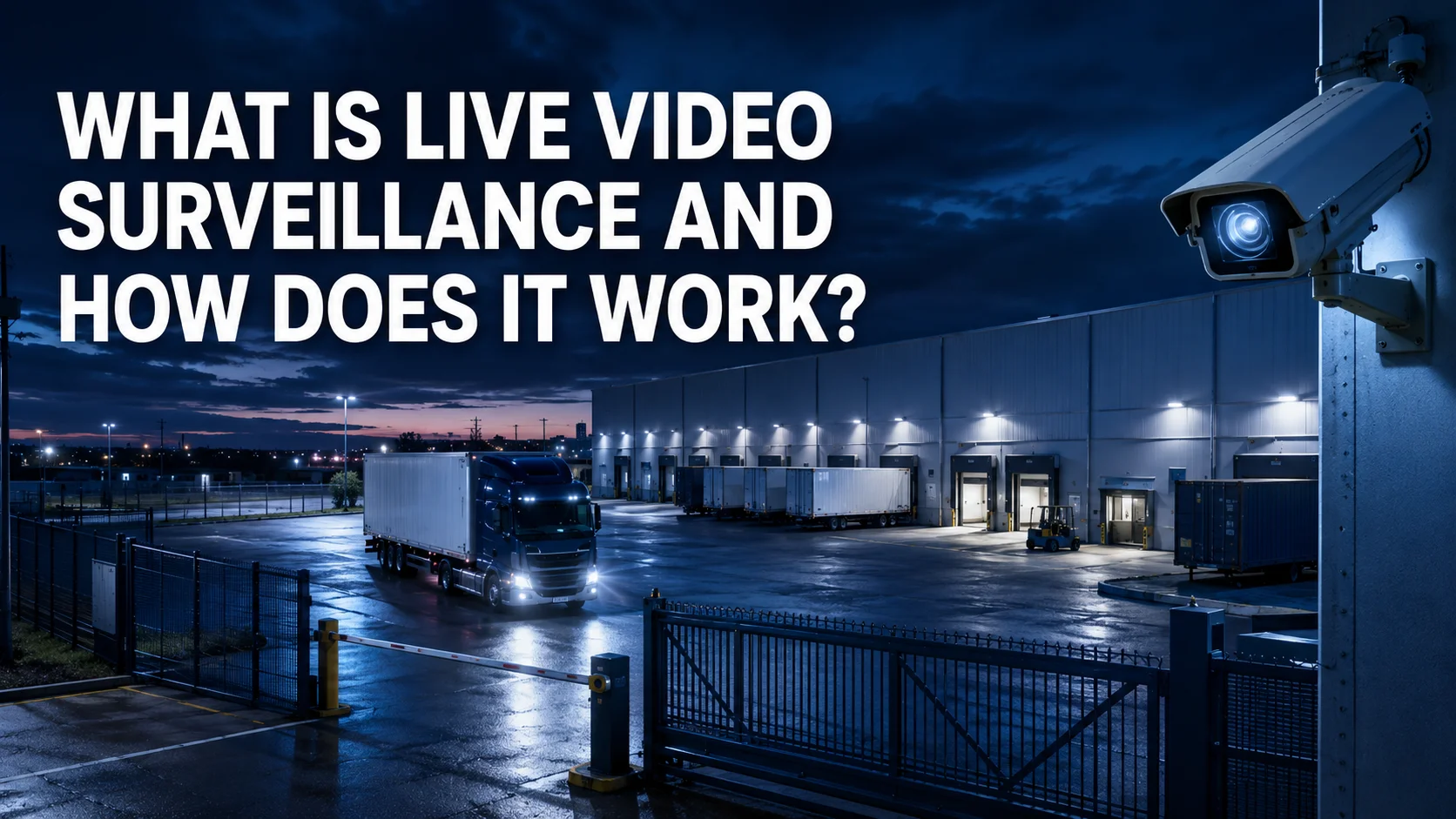
Direct Answer: What Is Live Video Surveillance?
Live video surveillance is a security service where trained remote agents monitor security cameras in real time, verify suspicious activity, respond while an event is still happening, and document what happened for later review.
Unlike passive cameras, live video surveillance is not limited to recording footage. It helps businesses detect, verify, respond, and document security and operational events as they happen.
For warehouses, logistics yards, truck terminals, manufacturing facilities, distribution centers, automotive lots, and industrial sites, live video surveillance can help protect gates, yards, perimeters, outdoor assets, employees, drivers, vendors, and high-value freight.
Birdseye uses AI-powered monitoring, trained human verification, Voice-Down™ intervention, GATECORE, SAFECORE, YARDCORE, and The Portal to help industrial facilities move beyond passive surveillance and gain real-time facility supervision.
Quick Summary: How Live Video Surveillance Works
| Step | What happens | Why it matters |
|---|---|---|
| Cameras capture activity | Cameras monitor gates, yards, docks, perimeters, and key facility areas | Creates visibility across the property |
| AI detects activity | AI helps identify people, vehicles, motion, restricted-area activity, and unusual events | Reduces alert noise and speeds up detection |
| Human agents verify the event | Trained agents review the situation in real time | Adds judgment and context |
| Agents respond | Response may include Voice-Down™ intervention, site contact notification, escalation, or documentation | Helps stop issues before they escalate |
| Events are recorded | Verified activity is documented for review | Supports investigations, claims, compliance, and operational improvement |
What Is the Difference Between Live Video Surveillance and Remote Video Monitoring?
Live video surveillance and remote video monitoring are often used to describe the same type of service.
Both refer to a security model where off-site agents monitor camera feeds, verify activity, and respond to events in real time. The key difference is not the name. The key difference is whether the system is actually active.
- A passive camera records.
- An alarm reacts.
- A guard sees only what is in front of them.
- A live video surveillance system helps the facility see more, verify faster, respond earlier, and document the event.
Why Passive Cameras Are Not Enough
Many businesses already have cameras, but cameras alone do not create active protection.
A passive camera can record a person entering the property. It can show a truck arriving at the gate. It can capture a vehicle moving through the yard. It can show suspicious activity near a fence line. But if nobody is watching live, the footage may only help after the damage is done. Recording is not the same as response.
For industrial facilities, this gap matters. A trailer may already be gone. A fence may already be damaged. A gate may already be forced open. A safety issue may already have happened. A manager may then have to search through hours of footage to understand what occurred.
Live video surveillance helps close that gap by giving trained agents the ability to verify and respond while the event is still active.
Why Live Video Surveillance Matters for Industrial Facilities
Industrial facilities are harder to monitor than ordinary commercial buildings. They often have large outdoor areas, multiple gates, trailer rows, loading docks, employee parking areas, vendor access points, restricted zones, and after-hours activity.
That means a single guard, alarm, or camera view is rarely enough. Live video surveillance helps cover areas that are difficult to watch continuously, including:
- Gates and access points
- Trailer yards
- Warehouse docks
- Outdoor storage areas
- Fence lines
- Restricted zones
- Employee and visitor areas
- After-hours activity
- High-value assets and equipment
CISA provides physical security and resilience resources that support the importance of planning, prevention, and preparedness for facility-level protection. For industrial sites, live video surveillance is not just a camera service. It is a way to improve facility-wide visibility.
How AI Improves Live Video Surveillance
AI helps live video surveillance teams detect important activity faster. Instead of treating every movement the same, AI can help identify people, vehicles, motion patterns, restricted-area activity, loitering, perimeter movement, gate activity, and unusual behavior.
This is especially useful at large industrial sites where there may be too much activity for manual monitoring alone. But AI should not replace human judgment.
Industrial facilities are full of context. A truck at the gate may be expected or unauthorized. A person near the fence may be a driver, employee, vendor, contractor, or intruder. A trailer movement may be routine or suspicious.
That is why Birdseye combines AI-powered detection with trained human verification. AI helps find the signal. Human agents verify what the signal means.
Why Human Verification Is Critical
Human verification is what separates a useful alert from a reliable security response.
A motion alert only says that something moved. A camera clip only shows a few seconds of activity. An AI alert may identify a person or vehicle. But a trained human agent can review the situation and determine whether the event is normal, suspicious, unsafe, or urgent.
The Monitoring Association’s AVS-01 Alarm Validation Scoring Standard reflects the security industry’s broader move toward better alarm validation, clearer event information, and stronger response prioritization.
For a facility, verification helps answer the real questions:
- Is this a false alarm?
- Is this expected activity?
- Is this a safety issue?
- Is this unauthorized access?
- Does someone need to respond now?
- Should the event be documented?
Live video surveillance works best when AI detection and human verification support each other.
How Live Video Surveillance Supports Gate Security
The gate is one of the most important control points at any logistics yard, warehouse, truck terminal, or manufacturing facility.
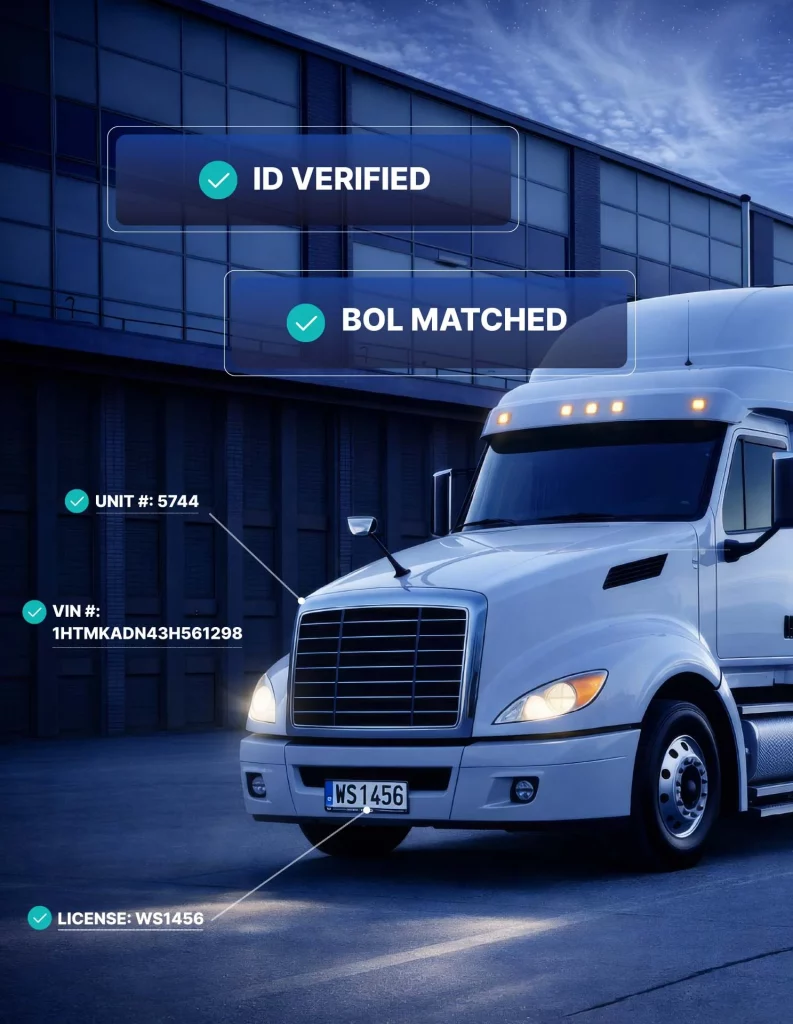
A basic camera can show that a truck arrived. But facility teams also need to know who arrived, whether the driver was verified, what vehicle was involved, what trailer was connected to the event, whether the Bill of Lading was captured, whether the seal was checked, and whether the access event was documented.
GATECORE helps facilities bring structure and visibility to gate activity.
With GATECORE, Birdseye supports driver verification, vehicle and trailer logging, license plate capture, Bill of Lading documentation, seal checks, access workflows, and gate transaction records.
This turns live video surveillance at the gate into something more useful than a camera view. It becomes a verified access workflow.
How Live Video Surveillance Protects the Perimeter
Perimeters are one of the easiest places for facilities to develop blind spots.
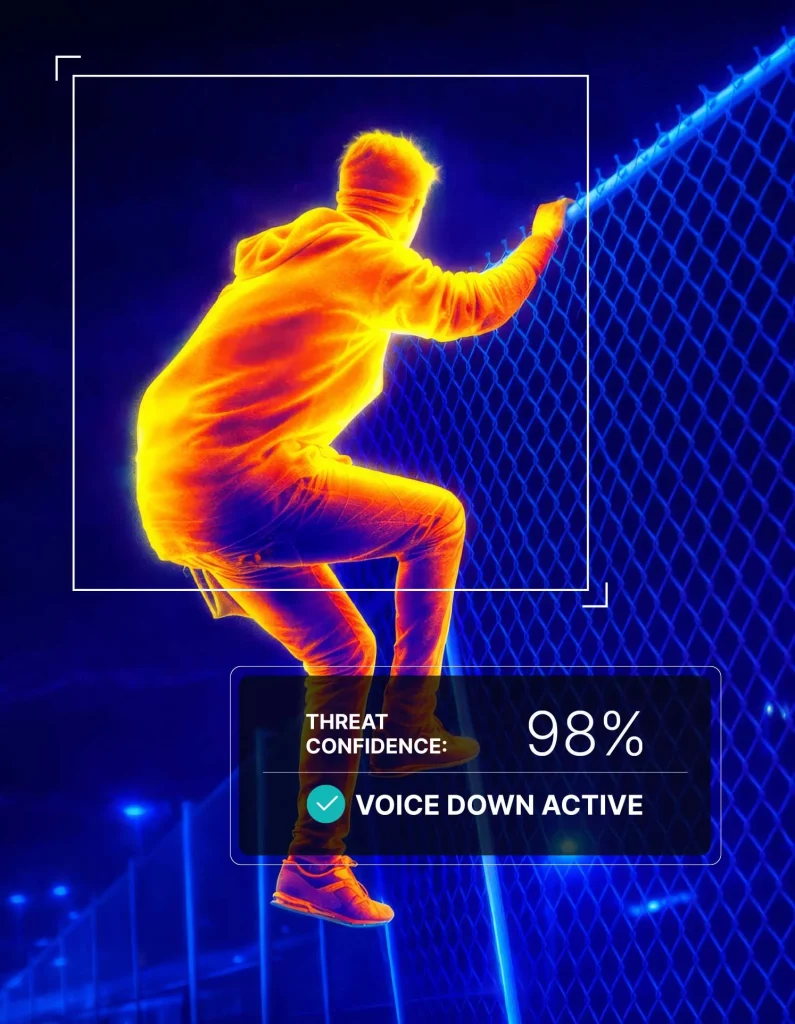
Fence lines, side gates, outdoor storage zones, trailer rows, employee lots, and restricted areas may not be visible from the guardhouse or main entrance. A camera can record suspicious activity in these areas, but live monitoring gives the facility a chance to respond while the activity is happening.
SAFECORE helps facilities protect perimeter areas with AI-powered detection, human verification, Voice-Down™ intervention, escalation procedures, and incident documentation.
This is important because perimeter security should not only answer, “What happened last night?” It should help answer, “What is happening right now, and how do we respond?”
How Live Video Surveillance Improves Yard Visibility
Yards are dynamic environments. Trucks enter and exit. Trailers move. Drivers wait. Employees cross active traffic areas. Vendors and contractors may enter operational zones. Equipment and inventory may sit outside. A passive CCTV system may capture all of this, but it does not automatically identify which events matter.
YARDCORE helps facilities supervise yard activity in real time. It supports visibility into movement, exceptions, restricted areas, safety events, and procedure enforcement.
For logistics and industrial operations, this matters because many risks happen after a vehicle has already entered the property. A truck may enter through the correct gate but go to the wrong area. A trailer may be parked incorrectly. A driver may ignore site procedures. A person may walk through an active traffic lane.
YARDCORE helps teams see these events sooner.
How Live Video Surveillance Supports Safety and Procedures
Live video surveillance can also support safety and operational procedures, not only security.
In warehouses and distribution centers, OSHA notes that common hazards can include powered industrial trucks, material handling, slip/trip/fall risks, robotics, and other fast-paced warehouse hazards: OSHA Warehousing Resources.
For industrial facilities, live video surveillance can help identify unsafe movement, restricted-zone activity, after-hours access, missing PPE, vehicle-pedestrian conflicts, and procedure violations.
The goal is not to replace safety management. The goal is to improve visibility so the right people can respond earlier.
When small procedure issues are visible in real time, they can often be corrected before they become larger incidents.
How Live Video Surveillance Compares to Security Guards
Many industrial facilities use security guards, but guard-only coverage has limits.
A guard can only be in one place at a time. If they are checking a driver at the gate, they are not also watching the back fence. If they are patrolling the perimeter, they may not be reviewing dock activity. If they are handling paperwork, they may miss yard movement.
The U.S. Bureau of Labor Statistics describes security guards as workers who may monitor alarms and video systems, patrol property, control access, and write reports, while also showing that many guards work shifts and that night shifts are common: BLS Security Guards.
Live video surveillance does not have to eliminate guards. In many facilities, it helps reduce blind spots and allows guards or site teams to focus on tasks that truly require on-site presence.
Live Video Surveillance vs. Traditional Security Tools
| Security tool | What it does well | Main limitation |
|---|---|---|
| Passive cameras | Record footage for review | Usually help after an event |
| Alarms | Notify that something triggered | Often lack visual context |
| Security guards | Provide on-site presence | Limited by location, staffing, and visibility |
| Access control systems | Control doors, gates, or credentials | May not verify full context |
| Live video surveillance | Detects, verifies, responds, and documents activity | Works best when paired with strong procedures |
The strongest facility security model often combines multiple tools into one coordinated system.
Birdseye helps industrial facilities connect live monitoring with gate workflows, yard activity, perimeter protection, and event records.
Why Reporting and Documentation Matter
Live video surveillance is most valuable when events are documented clearly.
If something happens, managers need to know who entered, what vehicle was involved, what trailer moved, what activity was verified, what response occurred, and what records are available for review.
Disconnected systems make this difficult.
A facility may have camera footage in one system, gate logs on paper, incident notes in emails, and yard updates in phone calls. That slows down investigations and weakens accountability.
The Portal helps centralize gate transactions, yard events, perimeter alerts, incident records, and operational activity in one place.
This helps teams review events faster, improve procedures, support claims, and create a clearer record of what happened.
Video Privacy and Data Handling Should Be Part of the Conversation
Live video surveillance can capture sensitive information, including employees, visitors, drivers, vendors, license plates, vehicles, documents, and facility activity.
That means data handling matters.
The Security Industry Association’s Data Privacy Code of Practice for Video Surveillance provides guidance for responsible policies and practices around video technology.
The FTC also recommends that businesses understand what information they collect, keep only what they need, protect what they keep, dispose of what they no longer need, and plan for security incidents: FTC Protecting Personal Information.
A good live video surveillance partner should help improve visibility without creating unnecessary data risk.
What Questions Should You Ask Before Choosing Live Video Surveillance?
Before choosing a live video surveillance provider, ask:
- Do they provide live monitoring or only camera installation?
- Do they combine AI detection with human verification?
- Can they monitor gates, yards, and perimeters?
- Can they issue live Voice-Down™ intervention?
- Can they document incidents and access events?
- Can they centralize reporting?
- Can they support driver, trailer, BOL, and seal verification?
- How is footage stored and protected?
- Who can access event records?
- Do they understand industrial operations?
These questions help separate a basic camera provider from a true facility supervision partner.
Why Birdseye Is Different
Birdseye is built for industrial facilities where security and operations overlap.
- GATECORE helps verify and document gate activity.
- SAFECORE helps protect perimeters and restricted zones.
- YARDCORE helps supervise yard activity after access is granted.
- The Portal centralizes events, reports, and operational records.
Together, these services help facilities move beyond passive camera systems and toward real-time operational control.
Final Takeaway: Live Video Surveillance Is Active Facility Supervision
Live video surveillance is more than a camera system.
It is an active security model that helps facilities detect, verify, respond, and document important events in real time.
For industrial facilities, that means better visibility at the gate, stronger perimeter protection, improved yard supervision, faster response, better records, and fewer blind spots.
A passive camera records what happened.
A live video surveillance system helps your team understand what is happening now.
Birdseye helps turn that visibility into action.
FAQs About Live Video Surveillance
What is live video surveillance?
Live video surveillance is real-time camera monitoring performed by trained agents who verify events, respond to suspicious activity, and document what happened. It is also called remote video monitoring.
How does live video surveillance work?
Live video surveillance uses cameras, AI detection, remote agents, audio intervention, escalation procedures, and event documentation. Cameras capture activity, AI helps detect important events, and human agents verify the situation before responding.
Is live video surveillance better than passive CCTV?
Yes. Passive CCTV usually helps after something happens. Live video surveillance can help detect and respond to suspicious activity while the event is still happening.
Can live video surveillance replace security guards?
It can reduce dependence on guard-heavy coverage in many facilities, but it does not always replace guards completely. Some sites still use guards for specific on-site tasks while live monitoring improves visibility across the property.
What types of businesses need live video surveillance?
Live video surveillance is especially useful for warehouses, logistics yards, truck terminals, manufacturing facilities, distribution centers, automotive lots, construction sites, industrial properties, and outdoor storage yards.
How does Birdseye use live video surveillance?
Birdseye combines AI-powered monitoring, trained human verification, Voice-Down™ intervention, GATECORE, SAFECORE, YARDCORE, and The Portal to help facilities supervise gates, yards, perimeters, and operational activity in real time.