Truck yard security has become one of the most significant operational risks facing transportation, logistics, and distribution facilities across North America. The escalation of organized cargo theft, rising insurance requirements, and increased pressure from shippers have pushed yard security from a compliance task into a core business priority.
Recent industry analysis shows how serious the problem has become. Verisk CargoNet reports that cargo theft losses now exceed 35 billion dollars per year in the United States
and the National Insurance Crime Bureau recorded a 30 percent increase in theft activity across freight hubs and logistics corridors. Yards, staging areas, and warehouse lots represent the highest percentage of theft locations.
As a result, companies are searching for ways to strengthen security without adding unnecessary operational costs. The good news is that the most effective improvements are not always the most expensive. In many cases, better visibility and stronger controls deliver both higher protection and measurable financial returns.
Understanding the Core Risks Inside a Truck Yard
A modern yard experiences several categories of risk. These risks have direct impacts on uptime, customer trust, and insurance cost.
Cargo Theft
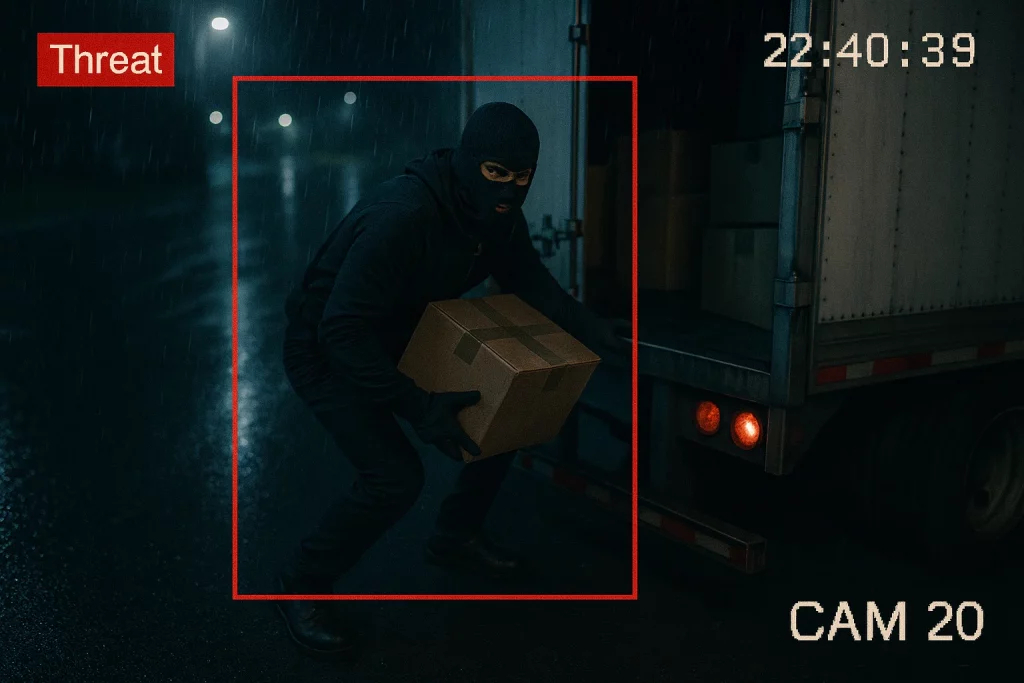
Organized groups target trailers, drop lots, staging yards, and distribution centers. Trailers left unattended, especially during weekends or evenings, present high-value opportunities. Theft often involves coordinated surveillance and can result in losses that exceed six figures per incident.
Vandalism and Tampering
Damage to equipment creates safety hazards for drivers and delays outbound loads. Repairs, inspections, and rework create hidden operational costs, especially when damage is only identified at the gate or during release.
Unauthorized Access
Unverified visitors, subcontractors, and drivers entering without proper validation increase both physical and liability risk. Manual check-ins are prone to errors, incomplete documentation, and inconsistent enforcement.
Lack of Visibility
A significant percentage of yards still rely on partial camera coverage or a single guard shack. This creates blind spots that make supervision and investigation difficult. Facilities without reliable historical records also face challenges when dealing with insurance claims or customer disputes.
Cost-Effective Improvements That Deliver High Impact
Below are practical, affordable measures that significantly strengthen yard security while improving operational efficiency.
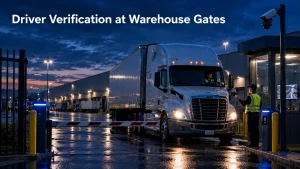
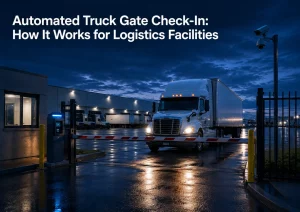
1. Replace Manual Gate Logging With Verified Entry Controls
Manual driver check-ins and paper-based logging are vulnerable to errors and introduce risk. Implementing a structured identity verification process not only strengthens security but also aligns with insurance recommendations.
A modern gate control workflow includes:
- High-definition cameras capturing both the driver and identification
- Automated logging of truck and trailer numbers
- License plate and unit number verification
- Real-time credential checks
Solutions like Birdseye’s Intelligent Gate Management System (iGMS) provide 99.99 percent accuracy, which ensures a complete and auditable record of every vehicle entering and exiting the site.
2. Add Active Monitoring Instead of Passive Cameras
Passive cameras only provide evidence after an event occurs. They do not deter intruders and they do not reduce risk in real time. Active monitoring combines intelligent detection with trained specialists who intervene immediately.
Active monitoring can:
- Detect intruders before entry
- Issue live VoiceDown warnings
- Escalate incidents
- Provide real-time coordination with law enforcement
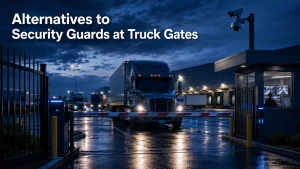
- Reduce the number of on-site guards required
This approach enhances deterrence and allows a single command center to manage multiple sites, which is significantly more cost-efficient than maintaining guard staff across shifts.
3. Improve Perimeter Visibility and Lighting
A well-designed perimeter significantly reduces theft attempts. The most cost-effective improvements include:
- Strategic placement of fixed and PTZ cameras
- Lighting that reduces dark zones
- Coverage of fence lines, blind corners, and trailer rows
- Analytics for motion and anomaly detection
Industry bodies such as TT Club emphasize the importance of perimeter visibility as a core component of cargo theft prevention
Proper visibility increases both deterrence and accountability, especially when paired with active monitoring.
4. Enforce Protocols Consistently
Most yard incidents originate from protocol gaps rather than dramatic breaches. Consistency is one of the strongest protective factors.
Examples include:
- Controlled access procedures
- Correct dock assignments
- Accurate seal verification
- Load and trailer condition checks
- Speeding and unsafe driving controls
- Pre-trip and post-trip confirmation
Birdseye’s remote agents enforce customer SOPs in real time, which removes the risk caused by high guard turnover or inconsistent manual processes.
5. Use Analytics and Historical Data To Strengthen Weak Points
Modern systems generate detailed reports that help managers understand how their yard is performing. Historical analytics highlight:
- High-risk time windows
- Recurring patterns of after-hours activity
- Repeated seal discrepancies
- Trailer movement delays
- Gate bottlenecks
- Investigation timelines
This level of visibility supports audits, insurance requirements, and continuous improvement.
Cost Comparison: Traditional Security vs. Modern Remote Monitoring
Below is an estimated comparison based on industry averages across North America.
Monthly Cost Comparison
| Category | Guard Force | Passive Cameras | Birdseye Remote Monitoring |
| Staffing | 3 shifts required | None | Centralized agents |
| Typical monthly cost | 30,000 to 65,000 dollars | 5,000 to 15,000 dollars | 8,000 to 18,000 dollars |
| Coverage | 20 to 40 percent | 20 to 50 percent | 100 percent monitored |
| Deterrence | Moderate | Low | High due to audio intervention |
| Accuracy | Dependent on personnel | Limited | 99.99 percent verified |
| Documentation | Manual logs | Video evidence only | Full video, audio, and reports |
Before and After ROI: Real Case Examples
Remco Warehousing
- Replaced guard services at multiple sites with remote monitoring
- Gained significant improvements in operational data collection
- Achieved 12 to 15 percent cost savings
- Increased accuracy of yard supervision and incident reporting
These examples demonstrate that stronger security often leads to measurable operational and financial benefits.
Linking Security to Insurance and Customer Requirements
Insurers increasingly evaluate:
- The strength of gate controls
- The presence of active monitoring
- The ability to verify inventory and seal integrity
- The quality of incident documentation
- The consistency of perimeter surveillance
Stronger controls directly influence premiums and claims handling. Shippers and 3PL customers also look for documented yard procedures when awarding high-value freight.
Choosing a Long-Term, Cost-Effective Security Model
A hybrid approach that replaces manual processes with automated verification and remote monitoring provides the highest value. This model improves protection, accelerates gate throughput, and reduces overall operating cost.
Birdseye’s Maximum Telepresence Approach combines:
- Remote agents
- AI-driven detection
- Real-time intervention
- Complete documentation
- System integration
- Full installation and maintenance
This creates a standardized, auditable, and cost-stable system that supports long-term operational growth.
Start Strengthening Your Yard Security
Improving truck yard security does not require an increase in guard staffing or major infrastructure spending. The most effective upgrades are rooted in visibility, verification, and consistent protocol enforcement. Facilities that adopt these controls see lower risk, faster operations, and stronger compliance with shipper and insurance expectations.
To learn more or request a walkthrough, visit our Contact Us page.