Yard management has become one of the most important operational priorities for transportation, logistics, automotive storage, and warehousing in 2025. Higher freight volumes, tighter delivery windows, insurance pressure, labor shortages, and growing theft activity have forced operators to re-evaluate how yards are controlled and measured. A yard can no longer function as an unstructured holding area. It is now treated as an extension of the supply chain and a regulated risk environment.
The challenge for operators is that most yards still rely on manual checks, guard instructions, radios, and paper logs. These practices slow down throughput, increase the margin of error, and leave operators without reliable data. Insurers, customers, and regulators now want confirmation that yard events are recorded accurately and that safety and security practices are enforced consistently.
This report outlines what effective yard management looks like in 2025, what operators are prioritizing, and how the industry is shifting toward data standardization.
Why Yard Management Has Become a Priority in 2025
Volume and velocity of freight have increased
The United States continues to move a high volume of freight, and congestion at ports and distribution hubs has pushed more pressure onto yard operations. Poorly managed yards cause delayed departures, dock bottlenecks, and detention fees.
Labor shortages affect guard shacks, yard checks, and dock coordination
The transportation industry continues to face staffing shortages. Many yards cannot maintain consistent gate procedures or consistent inspection quality due to turnover and limited availability of experienced workers.
Insurance carriers expect data and documentation
Underwriters now require verifiable evidence of:
• gate transactions
• trailer integrity
• driver identity
• safety compliance
• yard activity
Facilities without structured oversight face higher premiums and coverage restrictions.
Cargo theft and yard intrusions continue to rise
Criminal activity is more organized and more focused on weak yards. Inconsistent yard procedures, unverified access, and limited perimeter visibility increase exposure.
Customers want transparency
Shippers and carriers expect accurate trailer locations, gate timestamps, and dock status. Manual systems cannot meet these expectations.
What Effective Yard Management Requires in 2025
Accurate visibility of assets
Operators need to know where each trailer is located, whether it is loaded or empty, its seal status, and whether it is ready for release. Manual checks lead to misplaced trailers, detention time, dock delays, and billing errors.
Controlled gate operations
The gate is the primary intake point for all yard activity. Effective yard management requires consistent confirmation of:
• driver identity
• truck and trailer numbers
• license plates
• bill of lading information
• direction of travel
• load status
This information forms the basis of all yard reporting and insurance compliance.
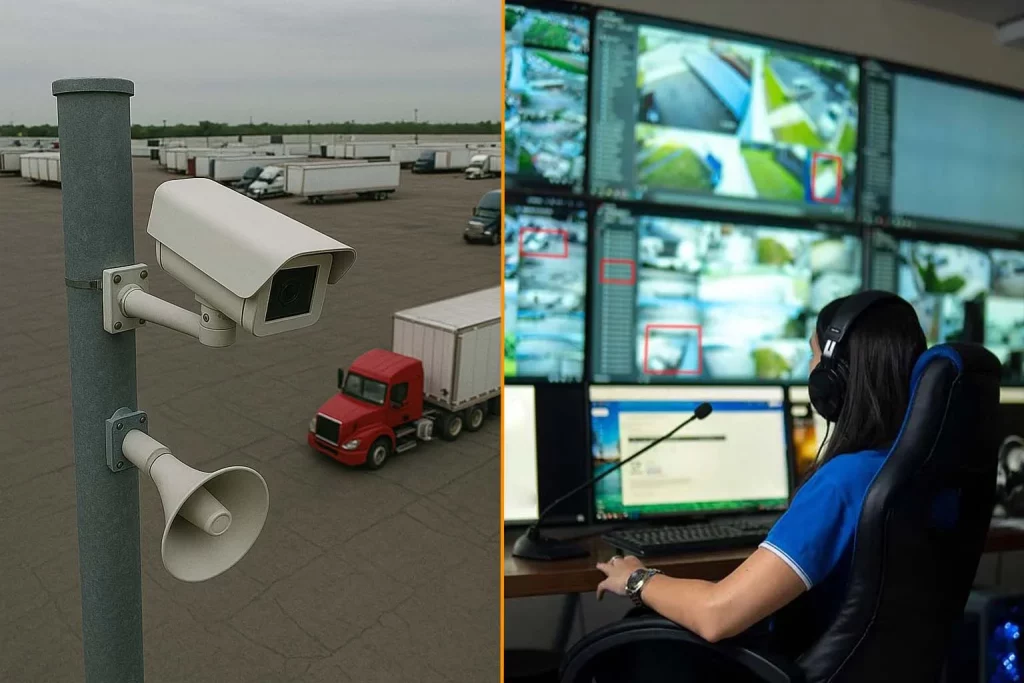
Continuous monitoring of the perimeter
A yard that cannot see its perimeter cannot manage its risk. Continuous monitoring supports intruder detection, accident investigation, and insurance requirements.
Standardized safety and operational protocols
Operators must enforce:
• speed limits
• safety gear use
• dock rules
• equipment movement procedures
• pre trip and post trip inspections
Standardization is critical for safety, claims defense, and operational consistency.
Reliable and centralized data
A yard cannot improve what it cannot measure. Data on throughput, dwell time, entry and exit patterns, utilization, and anomalies must be stored accurately and consistently.
The Limitations of Traditional Yard Management
Traditional approaches rely on a combination of yard drivers, guards, radios, and occasional inspections. These methods present significant challenges.
Lack of real time visibility
Operators often rely on outdated information or physical checks, which causes delays and increases the likelihood of errors.
Manual documentation
Paper logs, spreadsheets, and handwritten notes are difficult to audit and impossible to verify during insurance reviews.
Inconsistent guard performance
Turnover, fatigue, and inconsistent protocols create gaps in gate accuracy, trailer tracking, and incident reporting.
Limited investigative ability
Without complete video and data records, it becomes difficult to investigate damage, theft, or discrepancies.
No unified system
Many facilities rely on multiple systems that do not communicate, and most do not integrate with the Yard Management System used by carriers or customers.
How Yard Management Is Evolving in 2025
The industry move is toward a model that combines:
• real time monitoring
• automated data capture
• standardized protocols
• centralized reporting
• integration with YMS and TMS
• continuous oversight of safety and security
This shift mirrors similar transitions in manufacturing and warehousing where visibility and traceability are now baseline requirements.
How Birdseye Supports Modern Yard Management
Birdseye provides a combination of AI assisted monitoring and trained human oversight that aligns with what operators and insurers expect in 2025.
Gate operations with verifiable documentation
Birdseye records driver identity, truck and trailer information, bill of lading details, seal status, and direction of travel with 99.99 percent accuracy.
Continuous perimeter and yard monitoring
Real time monitoring helps operators identify intrusions, unsafe behavior, parked equipment, unauthorized activity, and potential operational delays.
Yard supervision and protocol enforcement
Birdseye supports safety compliance, operational consistency, and incident investigation across the yard environment.
Centralized operations and reporting through Facility Supervisior Portal
Facility Supervisior Portal unifies safety, operations, and security into one system, providing standardized reporting and historical data.
Trailer and seal verification
Birdseye confirms trailer numbers, seal numbers, load condition, and bill of lading information at entry and exit.
Conclusion
Yard management is now a core operational function rather than a background activity. Accurate visibility, structured gate operations, continuous monitoring, and standardized procedures are essential in a high volume and high risk environment. Operators who modernize their yard practices will reduce delays, improve safety, meet insurance requirements, and strengthen their ability to support customers.
Birdseye provides the oversight and data that help operators maintain real time control of their yards and manage risk effectively in 2025.