Most security incidents in logistics yards do not begin with forced entry. They begin when access is granted without full verification.
Industry loss data shows that organized cargo theft increasingly relies on fraudulent pickups, credential misuse, and procedural gaps at facility entry points. CargoNet reports that theft groups commonly exploit standard gate and dispatch processes rather than breaching perimeters by force. Once an unauthorized vehicle passes the gate, prevention options narrow quickly and liability expands across the site.
The Gate Is the Highest-Risk Control Point in the Yard
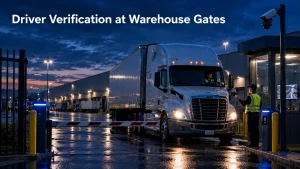
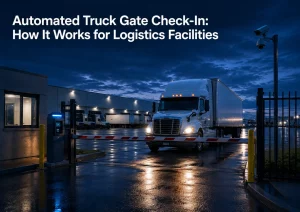
The gate represents the only structured transition between public access and controlled space. Every driver, vehicle, trailer, and load must pass through this checkpoint before interacting with yard operations, inventory, or personnel.
When access decisions rely on manual checks, paper logs, or visual judgment, consistency degrades under volume and time pressure. Even experienced teams struggle to maintain accuracy across shifts, peak hours, and high-traffic facilities.
The American Transportation Research Institute has documented that cargo theft increasingly relies on process exploitation rather than physical intrusion, particularly at freight facilities where handoffs and access approvals occur rapidly. These incidents often involve scenarios where a vehicle enters legitimately and later departs with an unauthorized trailer, a load is released without proper validation, or a trailer seal is compromised without detection at the gate.
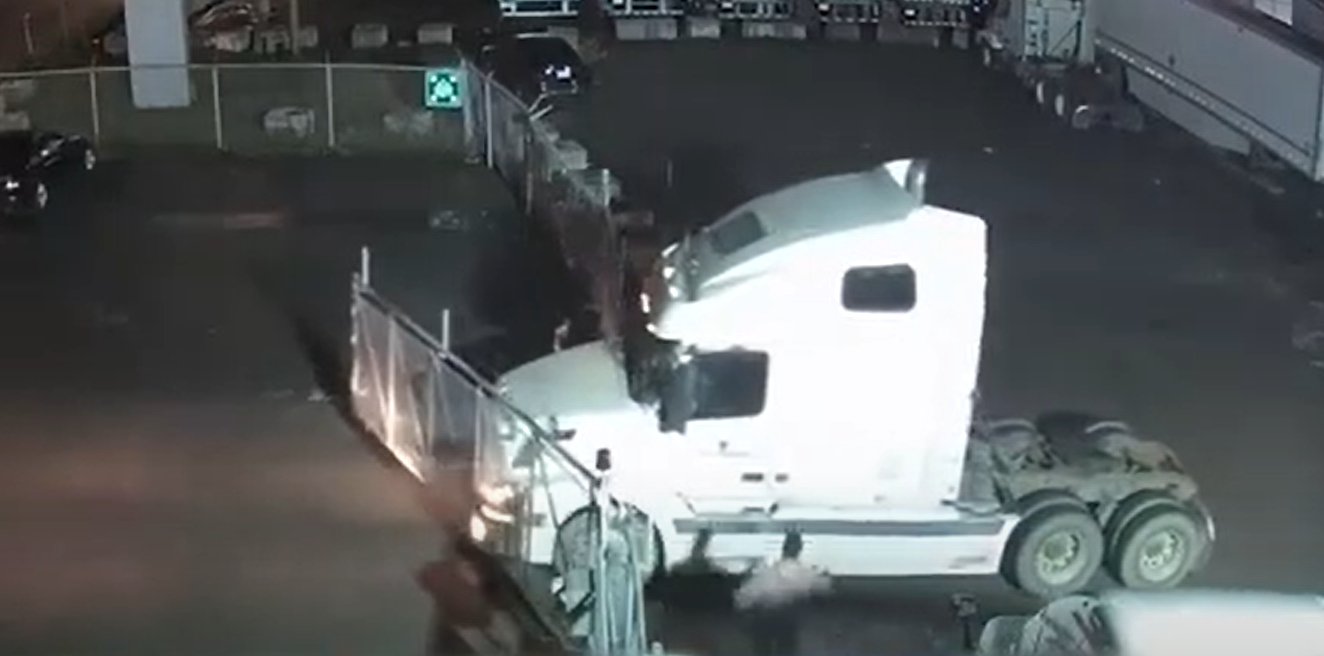
Once an unauthorized or improperly verified vehicle enters the yard, prevention options collapse. A driver can leave with the wrong equipment, remove or tamper with a seal, or stage a fraudulent pickup that appears operationally routine. Cameras capture activity after the fact, but the critical decision has already been made. Investigations become longer and more expensive, and liability extends beyond the theft itself to include compliance failures, insurance exposure, and audit risk tied to the original access decision.
Manual Gate Processes Create Predictable Failure
Most gate operations still depend on fragmented systems. Credentials are checked visually. Logs are written by hand. Trailer conditions are verified inconsistently. Documentation is stored separately from video evidence.
These methods introduce failure not because teams are careless, but because manual processes cannot scale reliably under volume, variability, and time pressure. As traffic increases, verification becomes selective. Edge cases are handled informally. Documentation quality degrades without anyone noticing in real time.
These gaps create exposure in three critical areas:
- Verification gaps when credentials, bills of lading, or release instructions appear valid but are not authenticated against live systems or historical records
- Documentation gaps when transaction data, seal status, or trailer condition cannot be reliably audited, replayed, or correlated with video and timestamps
- Accountability gaps when access decisions cannot be tied to a specific moment, protocol, or individual, complicating investigations and insurance claims
In many post-incident reviews, the underlying issue is not a missing camera or weak perimeter. It is the absence of a complete, verifiable record showing who approved access, under what conditions, and based on which information.
Under these conditions, theft and loss become a matter of probability rather than anomaly.
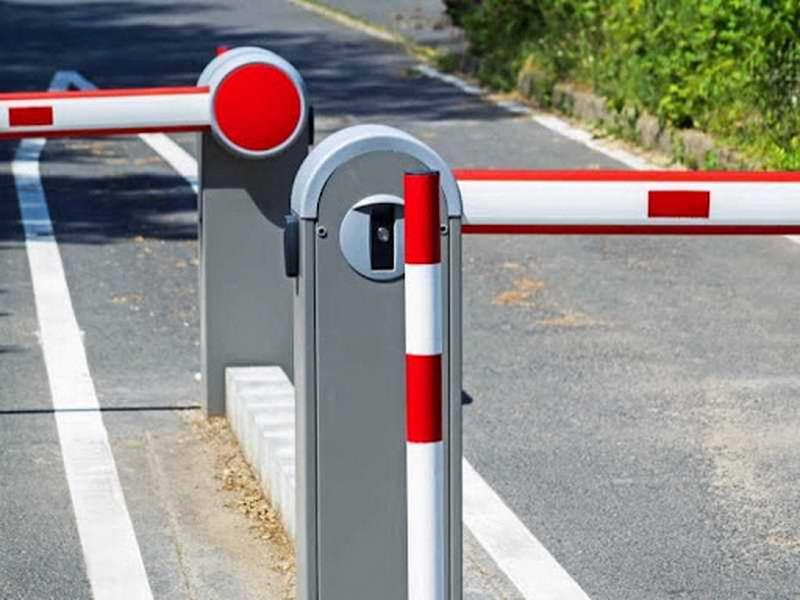
Throughput Pressure Amplifies Risk at the Gate
Facilities frequently optimize gate operations for speed. Delays are tracked, escalated, and measured. Verification quality rarely receives the same level of oversight or reporting.
This imbalance creates predictable behavior during peak hours. Verification steps are shortened to maintain flow. Exceptions are allowed to avoid congestion. Informal workarounds replace formal protocols when queues build.
Over time, access control shifts from enforcement to assumption. Drivers who appear familiar are waved through. Documentation is accepted without cross-checking. Seal checks are skipped when trailers are stacked or visibility is limited.
FM Global loss prevention research identifies access control failures as a leading contributor to large-scale loss events across logistics, manufacturing, and distribution facilities. Early-stage control breakdowns consistently increase loss severity because downstream systems are designed for monitoring rather than prevention.
Once a vehicle clears the gate under these conditions, the yard absorbs the risk. Cameras can observe movement, but they cannot reverse an access decision. Investigations become reactive, insurance exposure increases, and operational confidence erodes across the site.
Preventing Gate-Originated Incidents Requires Real-Time Enforcement
Gate security succeeds or fails based on timing. Verification must occur before access is granted, not after movement has already begun inside the yard.
Effective real-time enforcement relies on multiple controls operating together at the point of entry:
- Driver identity verification to confirm the individual matches the credentials presented and is authorized for that transaction
- Vehicle and trailer validation to ensure unit numbers, license plates, and trailer IDs align with expected records
- Authorization checks against delivery schedules, bills of lading, and release approvals
- Load and seal condition confirmation to document trailer status before entry or exit
When these controls are incomplete, delayed, or applied inconsistently, unauthorized access becomes operationally indistinguishable from legitimate activity. This explains why many theft investigations show no perimeter breach at all. Access was granted through normal processes, but verification did not occur at the right moment.
Automation becomes essential as traffic volume increases. Automated gate systems apply the same verification steps to every transaction, regardless of shift changes, weather conditions, or workload. They remove reliance on memory and judgment while creating a permanent, auditable record that can be reviewed immediately or during audits months later.
Real-time oversight completes the enforcement model. Live monitoring allows anomalies to be identified as they occur, rather than discovered after an incident has already unfolded. This preserves gate throughput while ensuring that exceptions are addressed before access is approved.
Birdseye Security Solutions applies this enforcement model through its
GateCore combines AI-driven verification with trained remote agents who follow site-specific protocols in real time. Facilities using automated gate enforcement reduce gate processing time by over 50% while maintaining 99.99%data accuracy across millions of annual transactions.
The Gate Sets the Security Standard for the Entire Site
Why Prevention Must Happen Before Access Is Granted
Gate performance determines whether a facility operates in a reactive or preventive posture. When access decisions are accurate, consistent, and enforced before entry, risk is contained at the earliest possible point in the workflow.
Effective gate controls reduce loss by stopping unauthorized movement before it enters the yard. Verification occurs prior to exposure, not after assets are already in motion. Investigations become faster because every transaction is timestamped, recorded, and traceable. Insurance and compliance conversations shift from assumptions to demonstrable controls.
Prevention at the gate changes how the entire site functions. Downstream systems no longer need to compensate for uncertainty. Yard supervision becomes more efficient because fewer unknowns are introduced. Perimeter monitoring shifts from chasing anomalies to reinforcing a controlled environment.
Security incidents start at the gate because that is where trust is first granted. Facilities that protect that decision prevent loss instead of responding to it. By enforcing verification in real time, the gate becomes a control point for prevention, not just a checkpoint for traffic.
When access is enforced correctly, the rest of the operation follows with confidence.