Direct Answer: What Is the Best Alternative to Security Guards at Truck Gates?
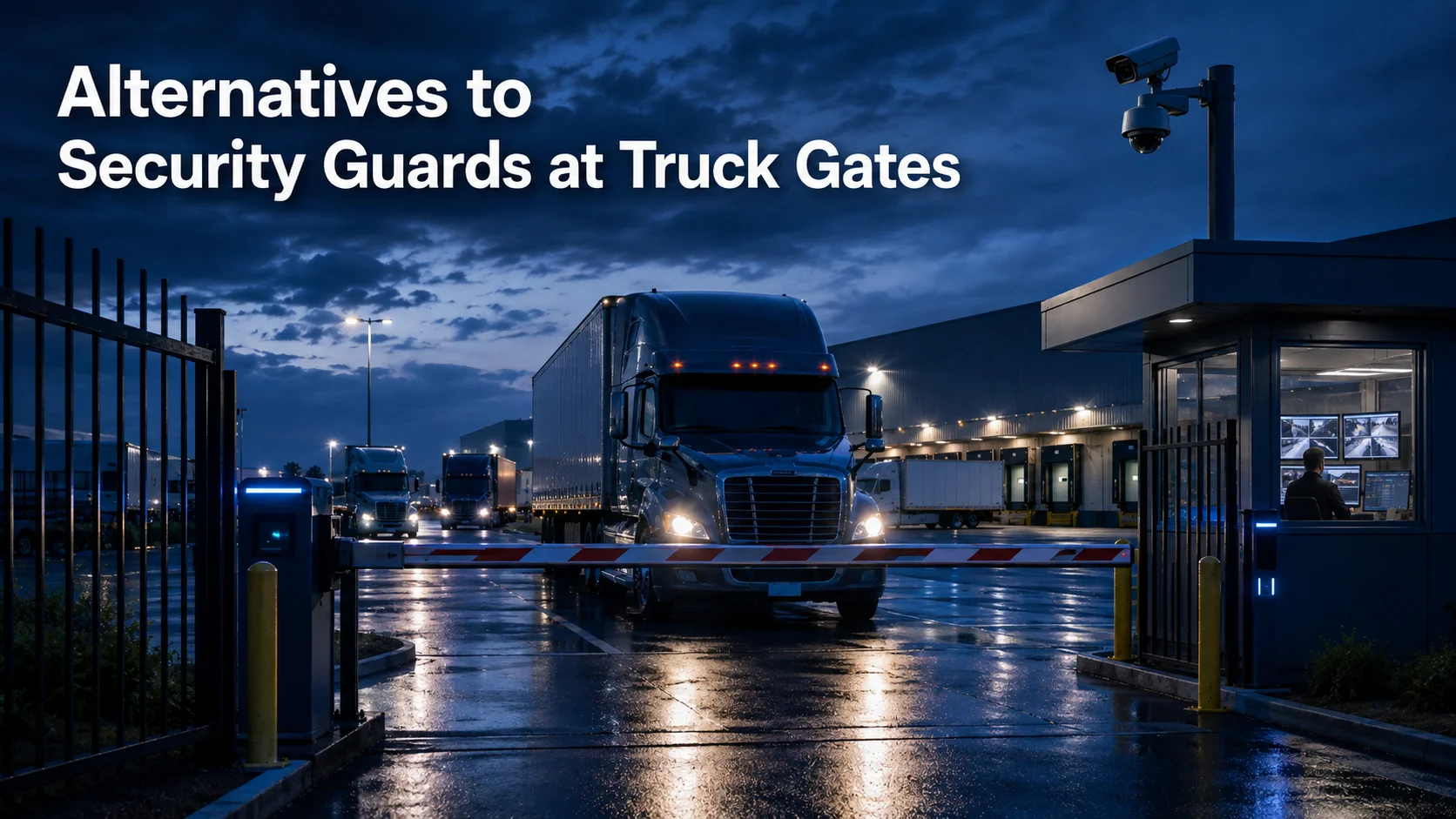
The best alternative to security guards at truck gates is a remote gate management model that combines automated access workflows, AI-powered monitoring, human verification, driver verification, vehicle and trailer logging, Bill of Lading capture, seal check documentation, and centralized gate transaction records.
For logistics yards, warehouses, distribution centers, truck terminals, manufacturing sites, and industrial facilities, the goal is not simply to remove guards. The goal is to create a gate process that is faster, more consistent, better documented, and easier to review.
Security guards can still play a role at some facilities, especially where physical presence is required. But relying only on guards at busy truck gates often creates problems: inconsistent logs, long driver wait times, missed verification steps, limited visibility, and rising labor pressure.
Birdseye helps facilities reduce guard dependency with GATECORE, supported by YARDCORE, SAFECORE, The Portal, AI-powered monitoring, and trained human verification.
For a deeper breakdown of how the full system works, read our complete guide to truck yard gate automation.
Quick Summary: Security Guard Alternatives for Truck Gates
| Alternative | What it does | Best use |
|---|---|---|
| Remote gate management | Uses remote agents, cameras, intercoms, and access workflows to manage entry and exit | Facilities that want guard-level oversight without guard-heavy coverage |
| AI-powered video monitoring | Detects people, vehicles, gate activity, and unusual events | Busy gates, after-hours access, perimeter activity, and yard visibility |
| Human verification | Trained agents review events and apply site-specific procedures | Reducing false alarms and avoiding blind automation |
| Automated driver verification | Confirms drivers, vehicles, trailers, documents, and access status | Logistics facilities with pickup, delivery, vendor, and carrier traffic |
| Digital gate transaction records | Documents gate events with timestamps, video, notes, BOLs, seals, and access decisions | Audits, claims, investigations, and customer disputes |
| Hybrid guard + remote supervision | Combines fewer on-site guards with remote monitoring and digital workflow | Facilities that still need some physical presence but want better scale |
Why Truck Gates Depend Too Much on Security Guards
Many logistics and industrial facilities still manage truck gates with a guard, a clipboard, a camera, a phone, and a gate arm.
That setup can work at a small site with low traffic. But as truck volume grows, the gate becomes more complicated.
A single guard may need to check driver information, review documents, call shipping or receiving, write down trailer numbers, check seals, manage visitors, answer questions, watch cameras, open the gate, deny access, and handle exceptions.
That is too much for one person to do perfectly all day.
The U.S. Bureau of Labor Statistics describes security guards as workers who may control access, patrol property, monitor alarms and video-surveillance systems, and write reports. That is a wide set of responsibilities, and truck gates add even more operational complexity because freight, drivers, trailers, BOLs, and seals are involved. BLS security guard overview.
For truck yards, the issue is not whether guards are useful. The issue is whether guard-only gate operations are still the best way to manage modern logistics access.
In many facilities, they are not.
The Main Problems With Guard-Only Truck Gate Operations
Guard-only gate operations often create hidden problems that become visible only after something goes wrong.
- A load is disputed.
- A trailer is missing.
- A driver says they checked in.
- A customer asks for proof.
- A seal issue appears.
- A gate log is incomplete.
- A manager needs to know who entered and when.
- A camera clip exists, but it is not connected to a clean transaction record.
That is when facilities realize the gate was not really controlled. It was only staffed.
Staffing a gate is not the same as managing a gate.
A modern truck gate needs verification, documentation, workflow, response, and reporting. A guard alone may not provide that consistently. Here you can read our complete guide to truck yard gate automation
Problem 1: Guards Can Only Be in One Place at a Time
A guard at the gate can help with driver check-in, but that same guard cannot also watch the back fence, monitor the trailer yard, supervise dock activity, verify a perimeter alert, and document every event perfectly.
This matters because logistics facilities are active environments.
- Trucks arrive.
- Trailers move.
- Drivers wait.
- Vendors enter.
- Employees cross traffic areas.
- Outdoor storage sits exposed.
- After-hours activity happens near gates and fence lines.
A guard can provide physical presence, but physical presence has limits.
Remote gate management and live video monitoring can help extend visibility beyond the guard booth. Cameras, AI detection, and trained remote agents can support multiple views, multiple lanes, and multiple facility areas at once.
That does not mean every guard disappears. It means the facility stops depending on one person to see everything.
Problem 2: Manual Gate Logs Are Often Weak
Manual logs are one of the biggest weaknesses in guard-only gate operations.
A paper log may capture a driver name, company, time, and trailer number. But the record may be incomplete, hard to read, inconsistent by shift, or disconnected from video footage and shipment documentation.
When an incident happens, the team may need to search through paper logs, camera footage, emails, phone calls, spreadsheets, and memory.
That is slow and unreliable.
A strong alternative to security guards at truck gates should create digital gate transaction records. Each transaction should include the details the facility may need later:
- Driver information
- Vehicle information
- Trailer number
- License plate
- BOL capture
- Seal check
- Timestamp
- Entry or exit direction
- Access decision
- Exception notes
- Video-backed evidence
- Remote agent actions
- Related yard or perimeter activity
This is where The Portal becomes important. The Portal helps centralize gate transactions, yard events, perimeter alerts, incident records, and operational activity so teams can review what happened without digging through disconnected systems.
Problem 3: Driver Verification Can Be Inconsistent
Driver verification is one of the most important functions at a truck gate.
The FBI recommends that businesses confirm positive identities of drivers at pickup, including driver information, truck information, trailer identifier information, and secure pickup numbers. FBI cargo theft guidance.
That recommendation fits directly into truck gate operations.
At the gate, a facility should be able to answer:
- Who is the driver?
- Is the carrier expected?
- Does the truck match the record?
- Does the trailer match the shipment?
- Was the Bill of Lading captured?
- Was the seal checked?
- Was the pickup or delivery authorized?
- Can the event be reviewed later?
A guard may check some of these details. But without a structured workflow, verification can vary by shift, workload, training, and pressure at the gate.
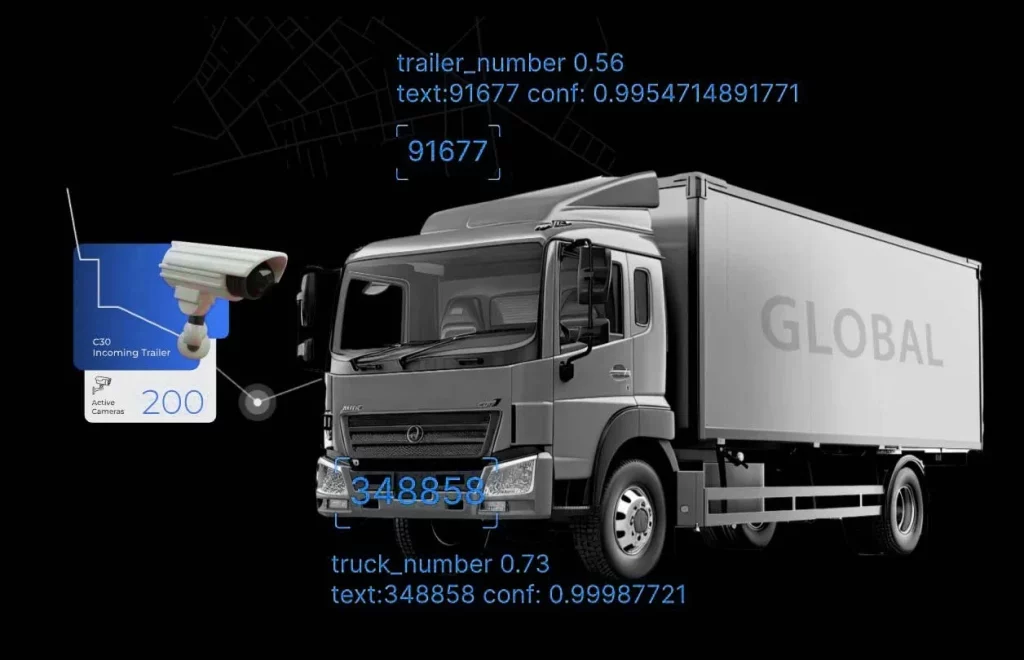
GATECORE helps facilities create a more consistent verification process through driver verification, vehicle and trailer logging, license plate capture, BOL documentation, seal checks, access workflows, and gate transaction records.
This is not just security. It is operational control.
Problem 4: Guards Get Pulled Into Too Many Tasks
At many truck gates, guards are not only security personnel. They become traffic coordinators, receptionists, paperwork reviewers, phone operators, gate operators, driver support, vendor check-in, and incident reporters.
That creates distractions.
The busier the gate gets, the easier it is for important details to slip.
A driver may be waved through because the line is backing up. A BOL may be reviewed but not captured. A seal may be checked but not documented. A trailer number may be written incorrectly. A guard may spend time calling a supervisor while another truck waits at the gate.
This is why facilities look for alternatives.
The goal is not to criticize guards. The goal is to give the gate a better system.
Remote gate management can take repetitive verification and documentation tasks out of a single guard’s hands and place them into a structured workflow supported by cameras, remote agents, AI detection, and digital records.
Problem 5: Guard-Only Coverage Is Hard to Scale
Guard-heavy gate operations can become difficult to scale across multiple sites.
Each facility may have different guard habits, different logs, different training, different reporting quality, and different escalation procedures.
For multi-site logistics networks, that creates inconsistency.
One site may document BOLs carefully. Another may not. One site may check seals every time. Another may skip checks during busy periods. One site may handle after-hours access consistently. Another may rely on whoever is working that shift.
Remote gate management gives companies a more repeatable model.
The same core workflow can be applied across multiple facilities while still allowing site-specific rules and exceptions.
For leadership, that means better visibility across locations. For local teams, it means less improvisation at the gate.
Alternative 1: Remote Gate Management
Remote gate management is one of the strongest alternatives to security guards at truck gates.
Instead of relying only on an on-site guard, the facility uses cameras, intercoms, access control, AI-powered monitoring, remote agents, and digital workflows to manage gate activity.
A remote agent can verify the driver, review the event, communicate through audio, follow the facility’s procedure, approve or deny access, escalate exceptions, and document the transaction.
This model works especially well for facilities that want:
- More consistent gate verification
- Better documentation
- Reduced guard dependency
- Faster access decisions
- Remote coverage across multiple gates
- After-hours gate support
- Video-backed records
- Centralized review
Remote gate management is not “set it and forget it” automation. The strongest model still includes trained human verification.
That is what makes it practical for real logistics environments.
Alternative 2: AI-Powered Video Monitoring With Human Verification
AI-powered video monitoring can help detect activity faster than manual camera watching.
AI can identify people, vehicles, motion, gate activity, restricted-zone movement, perimeter activity, and unusual behavior. This is useful because truck yards can generate too much movement for a human to watch manually all day.
But AI alone is not enough.
A person at the gate could be a driver, employee, contractor, vendor, visitor, or trespasser. A truck could be expected, early, late, or unauthorized. A trailer movement could be normal or suspicious.
AI detects the event. Human verification determines what the event means.
The Monitoring Association’s AVS-01 Alarm Validation Scoring Standard reflects the security industry’s larger movement toward validated alarm information and better response prioritization. For truck gates, the same principle applies: better context creates better decisions.
Birdseye combines AI-powered monitoring with trained remote agents so facilities can reduce noise, verify events, and respond based on the right context.
Alternative 3: Automated Driver Verification
Automated driver verification helps facilities confirm whether a driver should be allowed to enter or exit.
This can include checking driver identity, carrier information, appointment details, pickup or delivery number, vehicle data, trailer information, and site-specific instructions.
For truck gates, this matters because cargo theft and shipment disputes often begin with weak verification.
A gate process should not rely only on a familiar face, a company logo, or a rushed conversation.
A better process verifies the driver, documents the truck and trailer, captures the BOL when needed, checks the seal when required, and records the access decision.
That is the foundation of GATECORE.
Alternative 4: Digital Gate Transaction Records
A digital gate transaction record is the difference between “someone wrote it down” and “we can prove what happened.”
A strong transaction record should include the gate event, timestamp, driver, vehicle, trailer, documents, seal status, access decision, exception notes, and related video.
This matters for:
- Cargo theft prevention
- Customer disputes
- Claims
- Internal audits
- Compliance support
- Procedure review
- Training
- Guard reduction analysis
- Incident investigations
Without digital records, the facility may have cameras but still lack operational clarity.
With digital records, the facility can review the full event faster and more confidently.
The Portal helps Birdseye customers bring those records into one centralized view.
Alternative 5: Hybrid Guard + Remote Supervision
Some facilities still need on-site guards.
That may be because of union requirements, customer expectations, facility layout, physical inspection needs, local policy, or certain high-risk workflows.
In those cases, the best alternative may not be removing guards completely. It may be a hybrid model.
A hybrid model uses fewer on-site guards while adding remote supervision, AI monitoring, digital gate workflows, and centralized reporting.
This gives the facility the benefit of physical presence where it matters, while reducing the weaknesses of guard-only coverage.
For example:
- A guard can handle physical inspections.
- Remote agents can monitor multiple cameras.
- GATECORE can structure driver verification.
- YARDCORE can extend visibility after entry.
- SAFECORE can monitor perimeter areas.
- The Portal can centralize records.
This is often the most practical transition path for facilities that are not ready to remove guards fully.
Alternative 6: Automated Truck Gate Check-In
Automated truck gate check-in helps standardize how drivers enter a facility.
Instead of every driver interaction depending on the guard’s memory or judgment, the process follows a defined workflow.
The system can support:
- Driver arrival detection
- Remote communication
- Driver verification
- Appointment confirmation
- Vehicle and trailer documentation
- BOL capture
- Seal check workflow
- Entry approval
- Exit verification
- Exception escalation
- Transaction reporting
The benefit is consistency.
A busy facility cannot rely on every shift handling every truck the exact same way manually. Automated check-in makes the process easier to repeat.
That does not mean the gate becomes fully robotic. It means the workflow becomes structured, documented, and supported by trained people.
Alternative 7: Stronger Perimeter Monitoring Around the Gate
Truck gates are not the only access risk.
Facilities also need to protect fence lines, side gates, trailer rows, outdoor storage areas, employee lots, and restricted zones.
CISA provides physical security resources that support the importance of facility-level security planning, prevention, and resilience.
For logistics facilities, perimeter protection should connect to the gate process.
If suspicious activity happens near a fence line, it may matter more if a high-value trailer is nearby. If a person approaches a restricted area, it may connect to a recent gate event. If after-hours movement occurs near a trailer row, the facility needs live verification, not just a recording.
SAFECORE helps facilities monitor perimeter areas with AI-powered detection, human verification, live intervention, escalation procedures, and incident documentation.
This is important because reducing guards at the gate should not create blind spots elsewhere.
Why Full Automation Without Human Verification Can Be Risky
Fully automated gate systems can sound appealing.
A truck arrives. A credential is scanned. A camera reads a plate. A gate opens.
Fast, simple, clean.
But logistics gates are rarely that simple.
- Drivers arrive early.
- Trailers do not match.
- BOLs are unclear.
- Seals are damaged.
- Appointments change.
- Vendors show up unexpectedly.
- Carriers substitute equipment.
- After-hours exceptions happen.
- A shipment may require special handling.
A fully automated system may not handle those exceptions well.
That is why the best alternative to security guards is not blind automation. It is automation with human verification.
AI and workflow create speed. Human agents add judgment. Together, they create a gate process that is both efficient and controlled.
How GATECORE Replaces Manual Gate Friction Without Losing Oversight
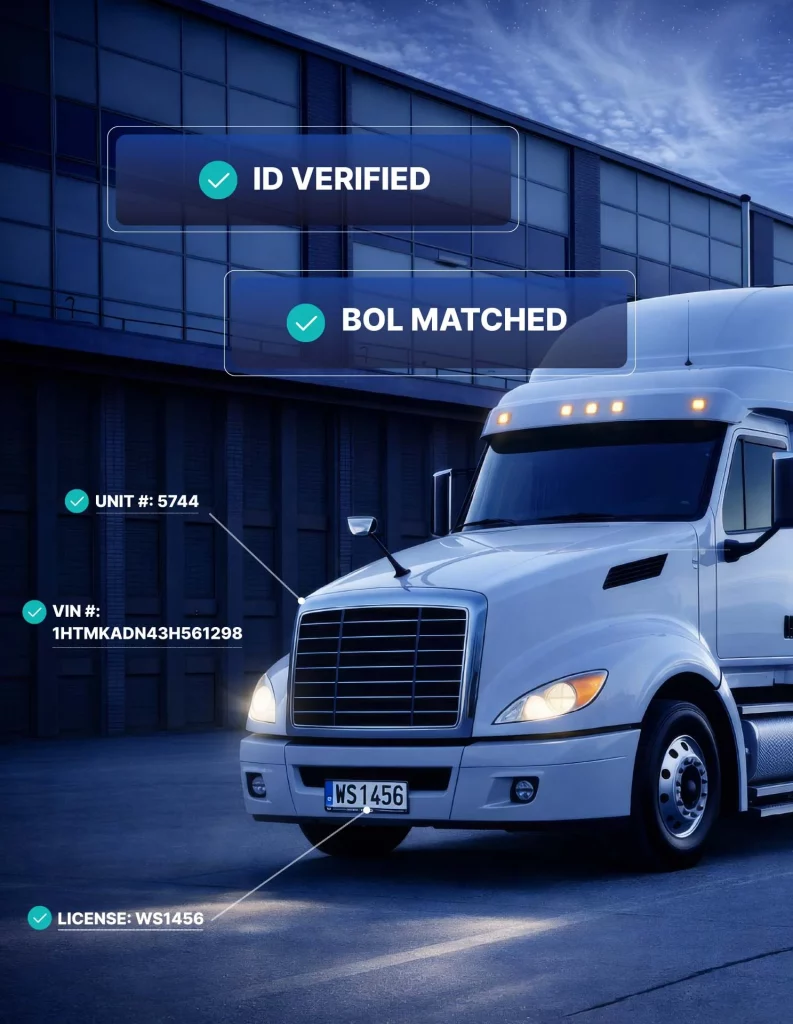
GATECORE is Birdseye’s gate automation and gate management solution for industrial and logistics facilities.
It helps facilities reduce manual gate friction while keeping human oversight where it matters.
GATECORE supports:
- Driver verification
- Vehicle and trailer logging
- License plate capture
- BOL documentation
- Seal checks
- Access workflows
- Gate transaction records
- Remote supervision
- Exception handling
- Video-backed review
This gives facilities a stronger alternative to guard-only gate coverage.
Instead of depending on one person at the booth to remember every step, GATECORE helps create a structured, repeatable, documented process.
The result is a gate that moves faster, records better, and gives managers more confidence.
How YARDCORE Extends Visibility After the Gate
Replacing or reducing gate guards only makes sense if the facility still has visibility after access is granted.
That is where YARDCORE fits.
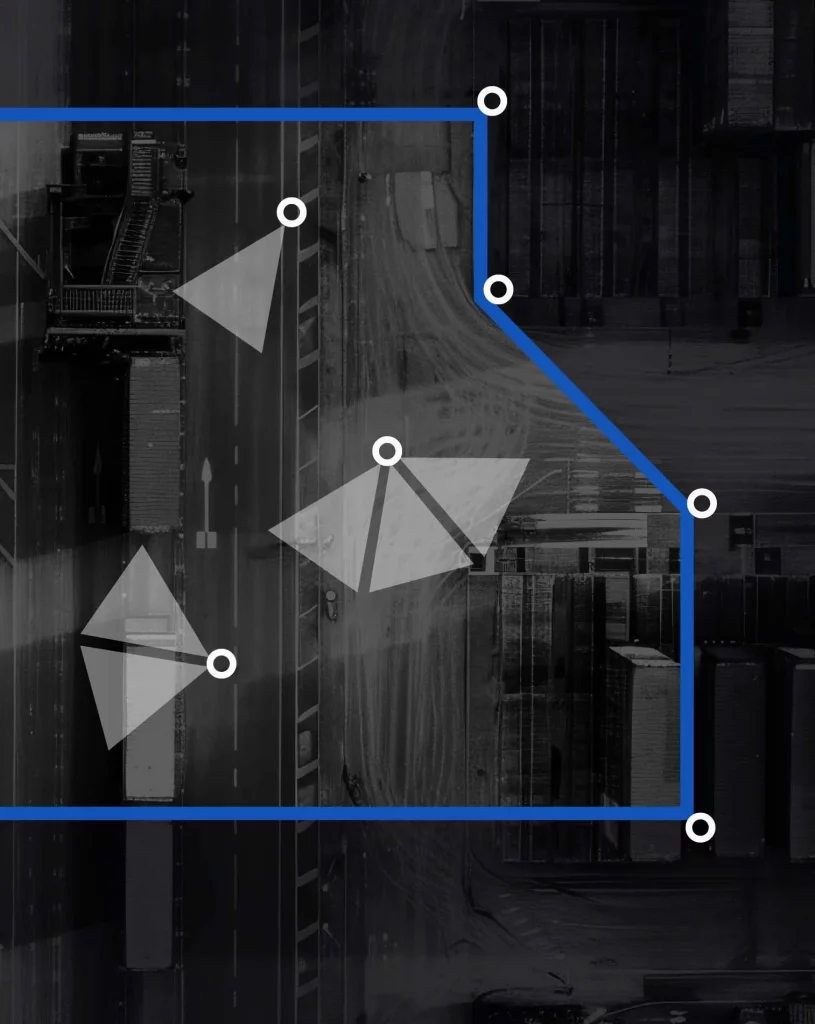
Once a truck enters the property, activity continues in the yard. Trailers move. Drivers wait. Equipment shifts. Employees cross traffic areas. Vendors enter operational zones. Freight may sit outside.
YARDCORE helps facilities monitor yard activity, movement, exceptions, restricted areas, safety events, and procedure issues.
This matters because many problems do not happen at the gate. They happen after the gate.
A guard may approve a driver correctly, but the driver may still go to the wrong area. A trailer may still be dropped incorrectly. A vehicle may still move through a restricted zone.
YARDCORE helps close that gap.
How SAFECORE Protects the Perimeter
If a facility reduces guard coverage at the gate, perimeter protection becomes even more important.
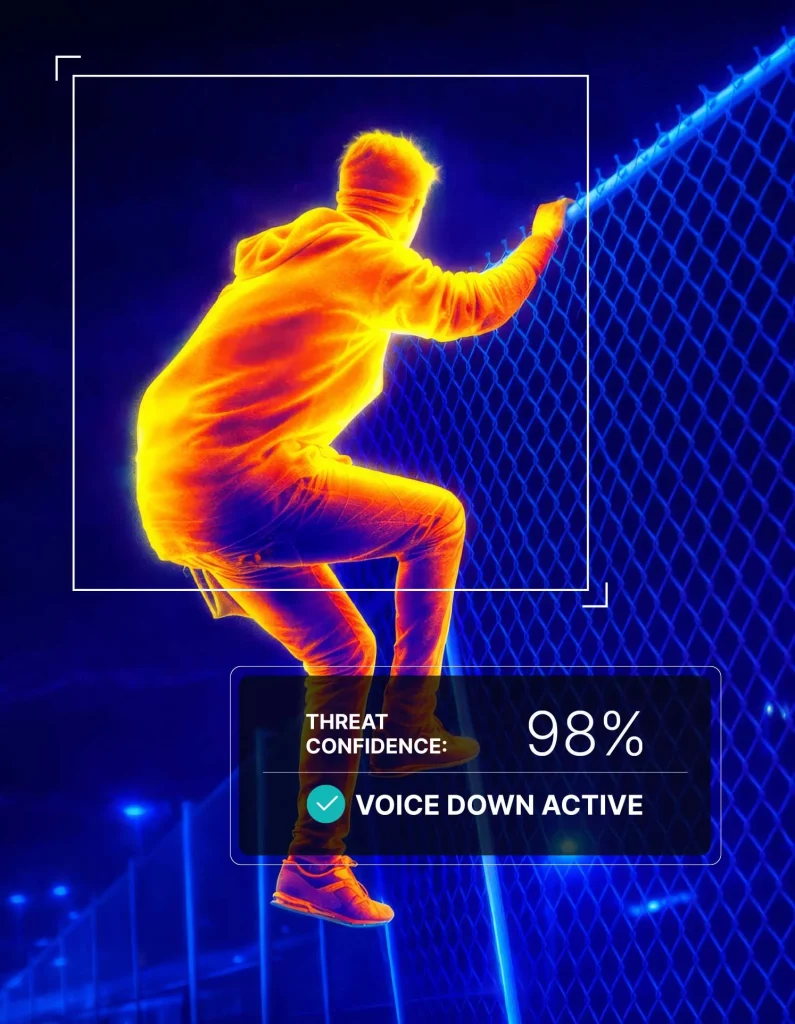
SAFECORE helps protect fence lines, side gates, outdoor storage areas, trailer rows, restricted zones, and after-hours access points.
It combines AI-powered detection, human verification, live intervention, escalation procedures, and incident documentation.
That means perimeter events can be detected and reviewed while they are happening, not just watched later on recorded video.
For facilities moving away from guard-heavy security, SAFECORE helps maintain strong coverage outside the gate booth.
How The Portal Turns Gate Events Into Usable Records
The Portal is what makes the gate process easier to review. A facility may have cameras, guards, intercoms, gate arms, and logs. But if those records are scattered, managers still struggle to understand what happened.
The Portal helps centralize gate transactions, yard events, perimeter alerts, incident records, and operational activity.
This supports:
- Incident review
- Customer disputes
- Claims
- Security audits
- Procedure improvement
- Multi-site visibility
- Internal accountability
- Leadership reporting
A security guard may write a note. The Portal helps create an operational record. That difference matters.
When Security Guards Still Make Sense
Security guards are not always unnecessary. Some facilities still need guards for physical inspections, emergency response, visitor management, escort duties, employee relations, site-specific requirements, or customer expectations. There are also cases where a hybrid model is better than full replacement.
Security guards may still make sense when:
- Physical inspection is required.
- A facility has complex pedestrian traffic.
- Local policy requires on-site security.
- High-risk loads require physical checks.
- Emergency response procedures need on-site support.
- Customer contracts require guard presence.
- The site layout makes remote-only coverage impractical.
The smarter question is not: “Should we remove every guard?”
The better question is: Which gate tasks truly require physical presence, and which tasks can be handled better through remote verification, automation, and digital records?
That is where most facilities find savings and better control.
What to Look for in a Security Guard Alternative
When evaluating alternatives to security guards at truck gates, look for a system that improves the actual workflow.
A good solution should support:
- Remote gate management
- Driver verification
- Vehicle and trailer documentation
- License plate capture
- BOL capture
- Seal check documentation
- Access approval and denial workflows
- Remote audio communication
- AI-powered detection
- Human verification
- Exception escalation
- Video-backed records
- Centralized reporting
- Yard visibility
- Perimeter protection
- Multi-site consistency
Do not evaluate the system only as a camera product.
Evaluate whether it makes the gate more controlled, consistent, measurable, and reviewable.
Questions to Ask Before Replacing or Reducing Gate Guards
Before changing your gate model, ask:
- What tasks do guards currently perform?
- Which tasks require physical presence?
- Which tasks are repetitive and can be digitized?
- Where do gate delays happen?
- How are drivers verified today?
- How are trucks and trailers documented?
- Are BOLs and seals consistently captured?
- How are exceptions handled?
- Can managers review gate events easily?
- What happens after a vehicle enters the yard?
- Who monitors perimeter activity after hours?
- What records are needed for audits, claims, and disputes?
- How much guard workload could be reduced?
- What would a hybrid model look like?
These questions help avoid a common mistake: replacing guards without fixing the gate process.
Cost Considerations: Guards vs. Remote Gate Management
Guard-heavy gate operations usually involve ongoing labor costs, shift coverage, overtime, supervision, turnover, training, and management overhead.
Remote gate management usually shifts the cost structure toward technology, monitoring, workflow, reporting, and remote agent support.
The right model depends on the facility.
A low-volume site may not need full automation. A high-volume logistics yard may benefit quickly because every gate delay, documentation gap, and guard-hour inefficiency repeats hundreds or thousands of times.
Facilities should compare:
- Guard hours
- Gate volume
- Peak-hour delays
- After-hours coverage needs
- Number of lanes
- Number of sites
- Exception frequency
- Documentation requirements
- Cargo theft exposure
- Customer dispute frequency
- Cost of investigations
- Value of faster gate processing
- Value of better records
The cheapest option is not always the best option. The best option is the one that improves control while reducing waste.
Common Mistakes When Looking for Guard Alternatives
Mistake 1: Replacing Guards With Cameras Only
Cameras are useful, but cameras are not a complete alternative to guards. A camera can record a truck at the gate. It cannot verify the driver, capture the BOL, check the seal, communicate instructions, handle exceptions, or create a structured access record by itself. The alternative should be a workflow, not just a camera.
Mistake 2: Removing Human Judgment
Automation is valuable, but logistics gates are full of exceptions.
Removing human judgment completely can create risk.
The stronger model is AI-powered detection and automated workflows supported by trained human verification.
Mistake 3: Ignoring Exit Events
Many facilities focus on entry and forget exit. A truck leaving the facility may carry freight, equipment, returns, empty trailers, or customer property. Exit events need verification and documentation too.
Mistake 4: Keeping Yard Visibility Separate
Gate automation is weaker if it does not connect to yard visibility. The facility should know not only who entered, but what happened after entry. That is why GATECORE and YARDCORE belong in the same conversation.
Mistake 5: Forgetting Reporting
If the new system does not create better records, the facility may still struggle when something goes wrong. Reporting should be part of the decision from the start.
Best-Fit Facilities for Guard Alternatives
Alternatives to security guards at truck gates are especially useful for facilities with:
- High truck volume
- Multiple gates
- After-hours traffic
- Frequent vendor access
- Outdoor trailer yards
- Manual logs
- Long driver wait times
- Rising guard costs
- Inconsistent gate procedures
- Cargo theft concerns
- BOL and seal documentation needs
- Multi-site operations
- Customer dispute issues
- Security blind spots
- Limited perimeter visibility
These facilities usually have enough complexity that guard-only operations become inefficient.
Final Takeaway: The Best Alternative Is Not No Guards. It Is Better Gate Control.
The best alternative to security guards at truck gates is not simply removing people from the process.
It is building a better process.
A modern truck gate needs verification, visibility, documentation, exception handling, perimeter awareness, yard context, and centralized records.
Security guards can provide physical presence, but they should not be the only layer controlling truck access.
Birdseye helps facilities move beyond guard-heavy gate operations with GATECORE, YARDCORE, SAFECORE, The Portal, AI-powered monitoring, and trained human verification.
The result is a gate process that is more consistent, more scalable, and easier to manage. For logistics facilities, that is the real goal: not fewer guards at any cost, but stronger gate control with less manual friction.
FAQs About Alternatives to Security Guards at Truck Gates
What is the best alternative to security guards at truck gates?
The best alternative is remote gate management supported by automated access workflows, AI-powered monitoring, human verification, driver verification, trailer logging, BOL capture, seal check documentation, and centralized gate transaction records.
Can truck gates operate without on-site security guards?
Yes, some truck gates can operate with remote gate management and human-verified monitoring. However, some facilities may still need guards for physical inspections, emergency response, customer requirements, or site-specific duties.
Does remote gate management replace guards completely?
Not always. In many facilities, remote gate management reduces guard dependency rather than eliminating guards completely. A hybrid model can keep guards where physical presence matters while using remote verification and digital workflows for repetitive gate tasks.
Is AI enough to manage a truck gate?
No. AI helps detect activity, but truck gates need human verification because drivers, vehicles, trailers, documents, and exceptions require context. The strongest model uses AI detection with trained human review.
How does gate automation reduce guard workload?
Gate automation reduces guard workload by standardizing driver verification, vehicle and trailer logging, BOL capture, seal checks, access decisions, remote communication, and transaction documentation.
Why are manual gate logs a problem?
Manual logs can be incomplete, inconsistent, hard to read, and disconnected from video footage or shipment records. Digital gate transaction records create a cleaner record that can be reviewed later.
How does Birdseye help replace guard-heavy gate operations?
Birdseye helps facilities reduce guard dependency through GATECORE for gate verification, YARDCORE for yard visibility, SAFECORE for perimeter protection, and The Portal for centralized reporting and event review. Birdseye combines AI-powered monitoring with trained human verification.