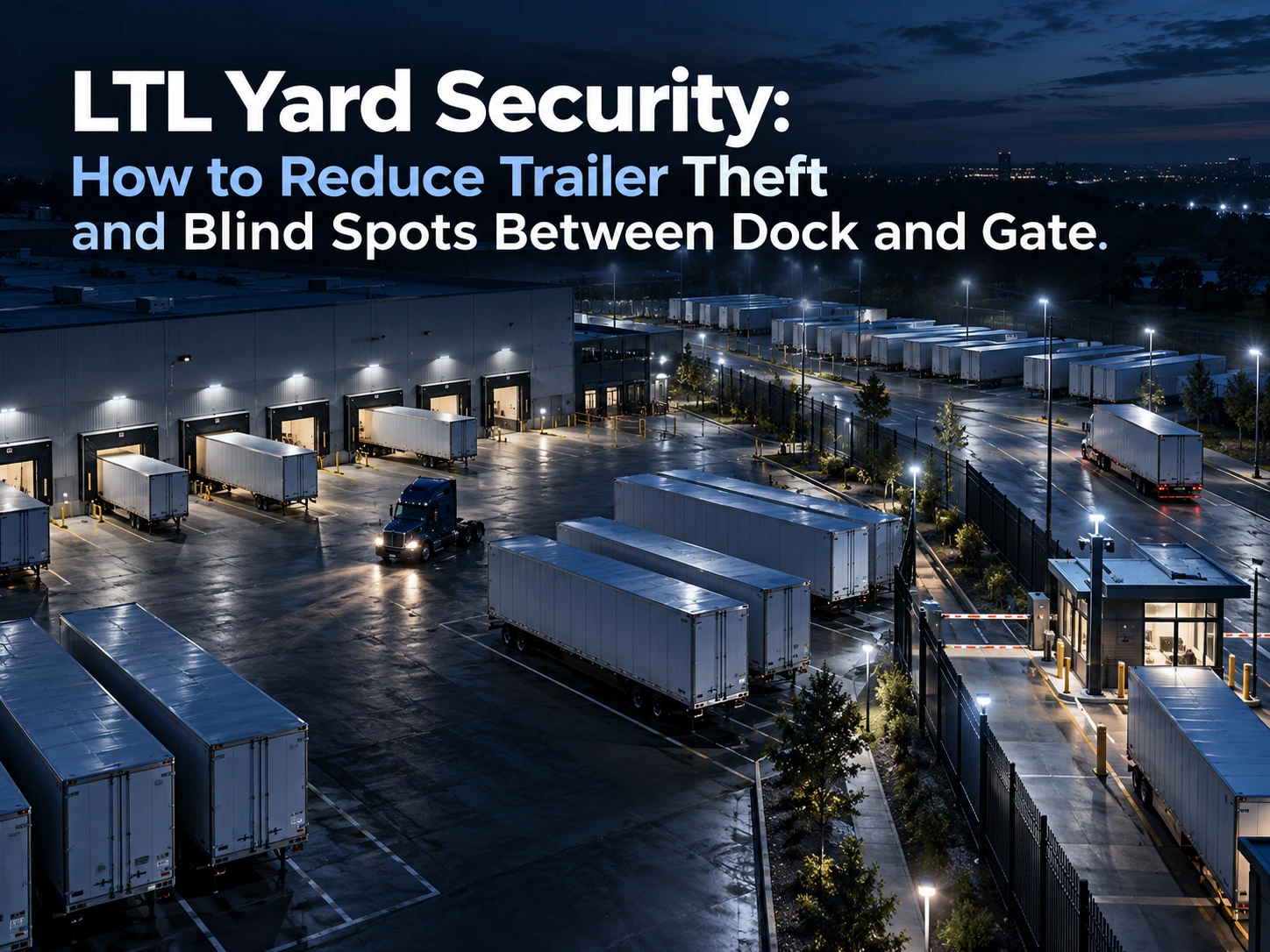
Less-than-truckload terminals are built around movement.
Trailers arrive, freight moves across the dock, equipment is repositioned, drivers change, and outbound trailers leave again — often within a relatively short period of time.
That speed makes LTL operations efficient.
It can also make the yard difficult to secure.
Effective LTL yard security requires more than cameras. Terminals need visibility into trailer activity, controlled gate access, perimeter protection, searchable transaction records, and a way to respond when activity does not match normal operations.
Quick Answer: How Can LTL Terminals Improve Yard Security?
| Security Area | What LTL Terminals Should Prioritize |
|---|---|
| Trailer visibility | Know which trailers are present, where they are staged, and when unusual activity occurs |
| Gate control | Verify drivers, tractors, trailers, and access before entry or exit |
| Perimeter protection | Monitor fences, gates, trailer rows, and vulnerable areas in real time |
| Exception detection | Identify movement or activity that does not fit expected operations |
| Digital records | Connect gate transactions, trailer activity, incidents, and video for faster review |
Why LTL Yards Are Difficult to Secure
An LTL terminal is rarely static.
Tractors arrive and leave throughout the day. Trailers are moved between doors and staging areas. Yard tractors reposition equipment. Employees, contractors, and drivers may all be active across the same property.
Loaded and partially loaded trailers may sit beside empty equipment. At a busy terminal, a great deal of movement is completely normal.
That creates the central security challenge:
How do you recognize the movement that is not normal?
A person near a trailer may belong there. A trailer moving at 2:00 AM may be part of normal operations. A tractor entering an unusual part of the yard may have a legitimate reason. Or it may not.
Security systems need enough context to distinguish routine activity from situations that deserve attention.
1. Trailer Rows Can Become Security Blind Spots
Rows of parked trailers create a difficult surveillance environment.
One trailer can obstruct the view of another. Long rows can block cameras. Lighting may vary from one section of the yard to another. Activity between trailers can be difficult to see from a guard booth or office.
This becomes particularly important when freight is sitting inside loaded equipment.
A trailer does not stop being valuable cargo simply because it is temporarily parked in the yard.
LTL operators should regularly evaluate:
- Camera coverage between trailer rows
- Lighting around staging areas
- Visibility along perimeter fencing
- Activity near loaded equipment
- Restricted or high-value trailer zones
- After-hours yard activity
The goal is not simply to record the yard.
The goal is to recognize meaningful activity while there is still time to respond.
2. Unexpected Trailer Movement Should Stand Out
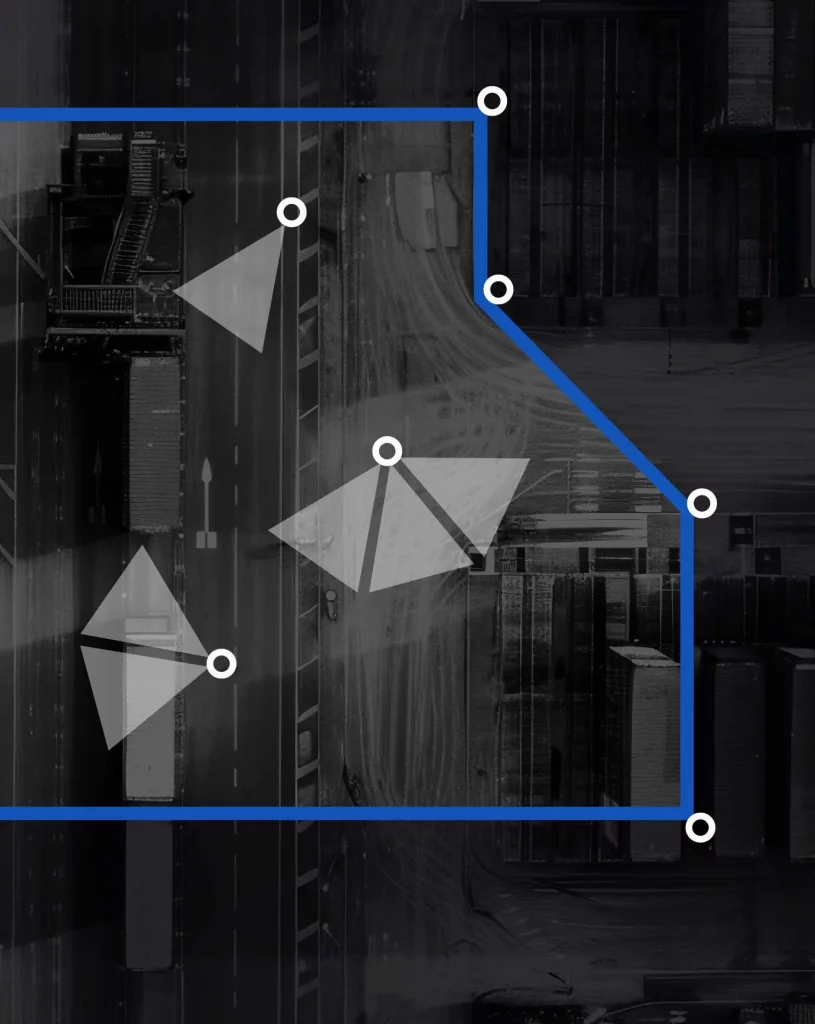
Trailer movement is normal in an LTL terminal. But not every trailer should move at every time.
Security teams should be able to identify situations such as:
- A trailer moving from an unexpected location.
- Activity around a loaded trailer outside normal operating hours.
- A vehicle entering a restricted staging area.
- A trailer leaving without the expected gate transaction.
- A person repeatedly moving between equipment without an obvious operational purpose.
The busier the yard becomes, the more important exception-based monitoring becomes.
Teams should not have to manually watch dozens of camera feeds hoping to notice something unusual.
AI-assisted monitoring can help surface activity that deserves attention, while trained personnel can verify whether the event represents a real threat or normal terminal operations.
3. The Gate and the Yard Need to Share Context
A common problem with physical security is that the gate and the yard operate as separate systems.
The gate knows which truck entered. The cameras know what happened in the yard. But the two systems do not necessarily know anything about each other. That makes investigations harder.
A stronger security process connects:
Driver → Tractor → Trailer → Gate transaction → Yard activity → Exit.
If unusual activity occurs around a trailer, security teams should be able to determine:
- When the trailer entered
- Which driver brought it in
- Which tractor was involved
- Where the trailer was expected to go
- Whether it was authorized to leave
- When the exit transaction occurred
This creates context that a standalone camera system cannot provide.
4. Exit Security Is Just as Important as Entry Security
Many facilities pay close attention to vehicles entering the property.
But for cargo theft prevention, the outbound gate may be even more important.
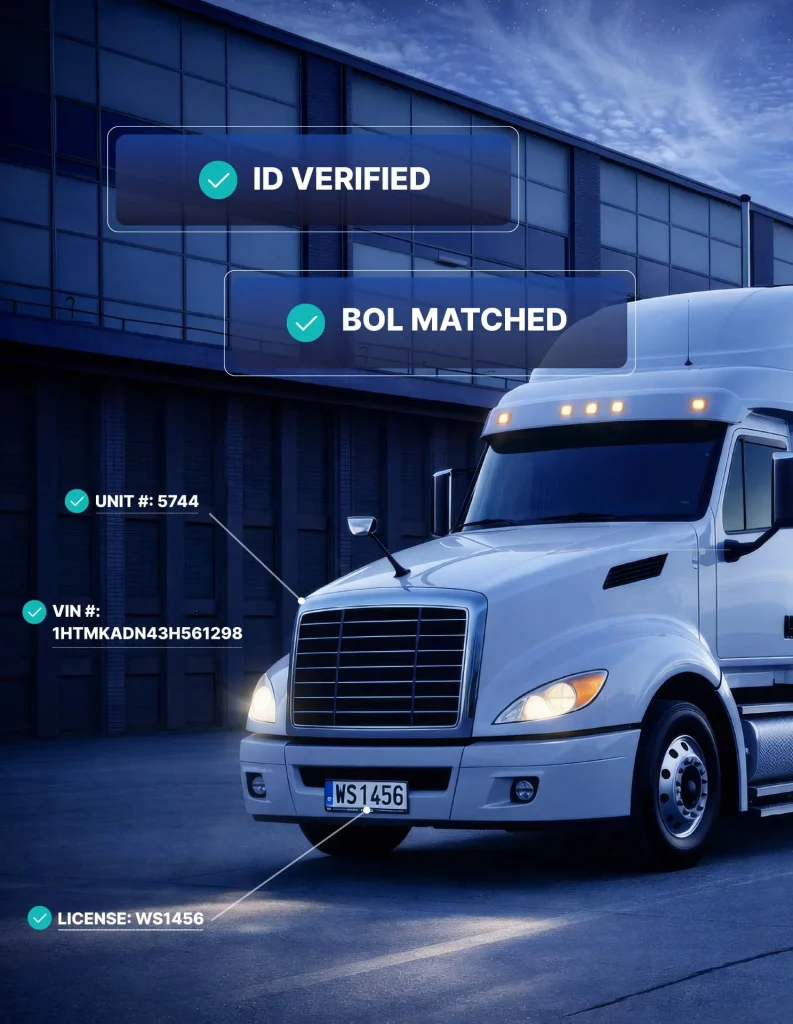
When a trailer leaves the yard, the facility should know:
- Which trailer is leaving?
- Which driver is taking it?
- Which tractor is attached?
- Is that driver authorized?
- Is the trailer expected to leave?
- Does the transaction match the operational record?
The final opportunity to prevent an unauthorized removal may be the exit gate.
That is why digital gate transactions should cover both inbound and outbound activity.
5. Perimeter Security Matters Around Trailer Yards
LTL terminals often have large physical footprints. Long fence lines, multiple gates, trailer parking areas, employee lots, and secondary access points can create perimeter vulnerabilities.
Facilities should pay particular attention to:
- Fence lines behind trailer rows
- Areas with poor nighttime visibility
- Unused or secondary gates
- Vegetation blocking cameras
- Areas where trailers sit close to the property boundary
- Places where people could approach without crossing the main gate
Perimeter detection is most valuable when it leads to verification and action.
An alert that nobody evaluates is simply another notification.
A verified event can trigger Voice-Down™, escalation, site communication, or law-enforcement response when appropriate.
6. Camera Coverage Should Be Designed for the Yard, Not Just the Building
Many older surveillance systems were designed primarily around buildings. They cover doors, docks, entrances, and offices well. The yard is often treated as secondary. For an LTL terminal, that is backwards. The yard is where large amounts of mobile equipment and freight spend time between movements.
Camera coverage should account for:
- Trailer rows.
- Gate approaches.
- Perimeter fencing.
- Dock approaches.
- Staging lanes.
- High-value areas.
- Yard tractor routes.
The security design should follow how freight actually moves through the terminal.
7. Paper Logs Are Not Enough for a High-Volume LTL Yard
When hundreds of movements occur across a terminal, handwritten gate logs quickly become difficult to use.
If a customer asks about a shipment, the security team may need to reconstruct events from:
- A paper log.
- A dispatch record.
- A spreadsheet.
- Camera footage.
- A trailer inventory system.
- And conversations with employees.
That is too fragmented.
A digital gate transaction can connect important information such as:
- Driver
- Tractor
- Trailer
- License plate
- Entry time
- Exit time
- Access decision
- Exception status
- Relevant security events
When something goes wrong, faster reconstruction matters.
For more detail, see our guide to digital gate transaction records.
8. LTL Security Has to Work Without Slowing Freight
LTL terminals cannot turn every truck arrival into a lengthy manual security process.
- The operation depends on speed.
- That makes automation particularly valuable.
- Routine gate activity can be verified automatically.
- Normal yard activity can be monitored continuously.
- AI can help identify anomalies.
- Digital records can be created without handwritten logging.
But automation should not be forced to make decisions when the situation is unclear.
The most effective model automates routine activity and escalates the exception to a trained person.
That helps terminals improve security without treating every normal transaction like a security incident.
How Birdseye Supports LTL Yard Security
Birdseye connects security across the gate, yard, and perimeter.
GATECORE supports automated driver, tractor, trailer, and access verification.
YARDCORE provides greater visibility across trailer yards and operational areas.
SAFECORE combines AI-powered monitoring with trained human verification and real-time intervention.
The Portal brings important facility events and records together for faster review.
Automation handles routine activity. Birdseye agents step in when the situation requires judgment.
LTL Yard Security Checklist
Ask the following questions during your next terminal security review:
- Can we see between trailer rows at night?
- Do cameras cover our highest-risk staging areas?
- Can we identify unexpected trailer movement?
- Are all inbound and outbound gate transactions documented?
- Can we connect a driver to the tractor and trailer involved?
- Are secondary gates and fence lines actively monitored?
- Can someone respond when suspicious activity is detected?
- Can we quickly reconstruct an event when a customer asks what happened?
- Can routine gate activity be automated without slowing drivers?
If several answers are no, the terminal may have more than a camera problem.
It may have a visibility and response problem.
Frequently Asked Questions About LTL Yard Security
What is LTL yard security?
LTL yard security includes the systems and procedures used to protect trailers, freight, drivers, tractors, staging areas, gates, and perimeter zones at less-than-truckload terminals.
Why are trailer yards difficult to secure?
Trailer yards have constant legitimate movement, large physical footprints, visual obstructions, multiple vehicles, and frequent equipment changes. That can make suspicious activity difficult to distinguish from normal operations.
How can LTL terminals reduce trailer theft risk?
Terminals can improve gate verification, outbound access control, yard camera coverage, perimeter monitoring, trailer visibility, digital transaction records, and real-time response to unusual activity.
Are security cameras enough for an LTL yard?
No. Cameras provide visibility, but stronger security combines monitoring with access control, AI-assisted detection, human verification, searchable records, and real-time intervention.
Can LTL terminals automate gate security?
Yes. Routine driver, tractor, trailer, and access verification can be automated while unusual transactions are escalated to trained personnel for review.