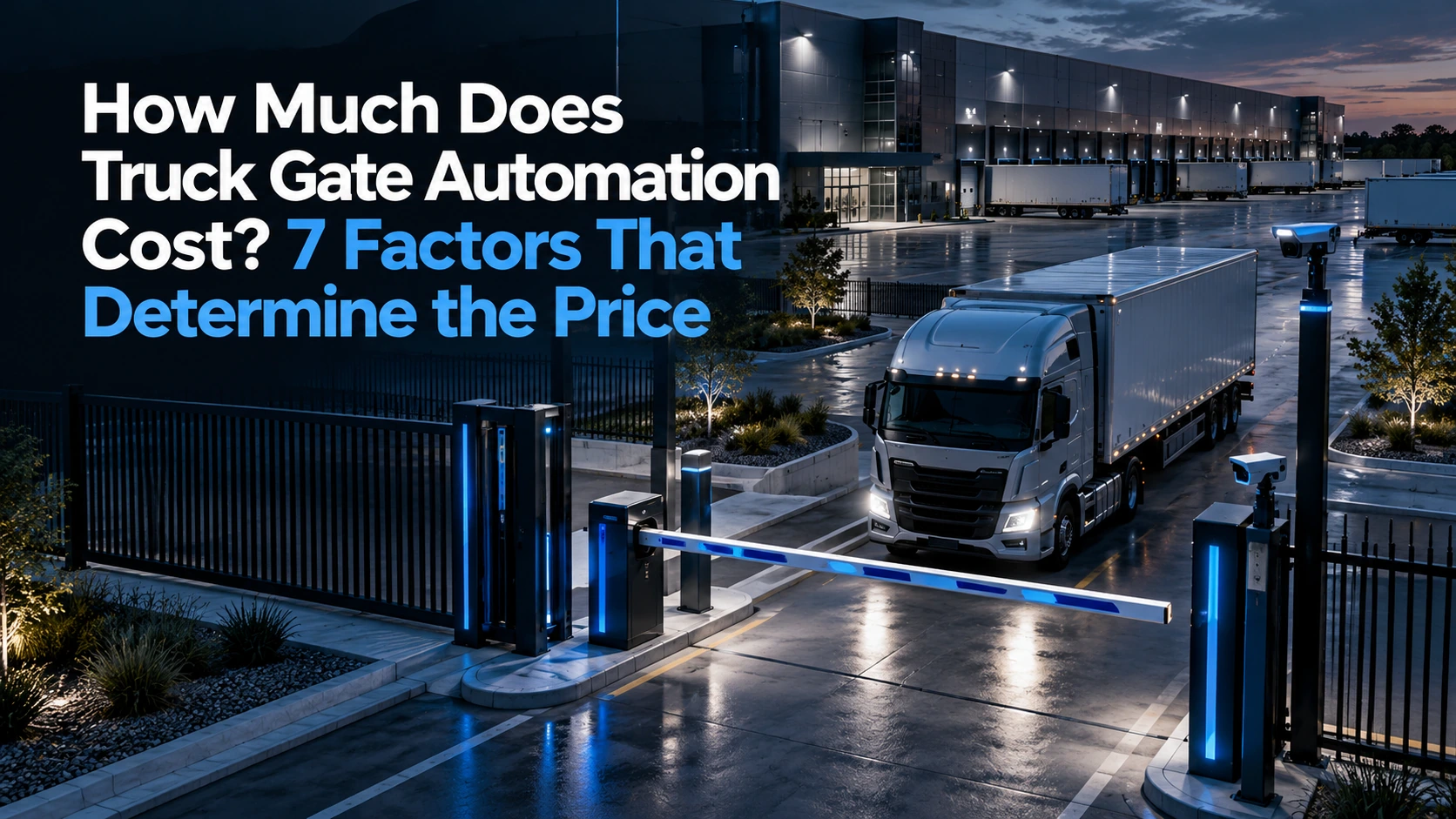
There is no single price for truck gate automation.
A simple gate that only needs vehicle access control is very different from a logistics facility that needs driver verification, trailer identification, Bills of Lading, seal checks, remote communication, exception handling, and 24/7 support.
The cost of truck gate automation depends on the number of gates, workflow complexity, hardware, connectivity, integrations, human support, and the level of verification required.
Quick Answer: What Determines Truck Gate Automation Cost?
| Cost Factor | Why It Matters |
|---|---|
| Number of gates | More lanes generally require more equipment and configuration |
| Verification requirements | Driver, truck, trailer, BOL, and seal workflows add complexity |
| Hardware | Cameras, kiosks, intercoms, barriers, sensors, and mounting requirements vary |
| Connectivity | Fiber, existing network infrastructure, cellular, or other connectivity may be required |
| Integrations | TMS, WMS, access control, appointment, or customer systems may need to connect |
| Human support | Remote agents may be required for exceptions or 24/7 operation |
| Multi-site deployment | Enterprise reporting and standardization affect project scope |
Why Vendors Cannot Give One Universal Gate Automation Price
The phrase “gate automation” can describe very different systems. At one facility, automation may mean opening a barrier after a badge scan. At another, the system may need to verify a commercial driver, identify the truck and trailer, capture shipment documents, confirm a seal, communicate with the driver, provide yard instructions, and document the entire transaction.
The more decisions the gate needs to make, the more important workflow design becomes.
1. Number of Gates and Traffic Lanes
The first pricing factor is physical scale.
A facility with one inbound lane and one outbound lane has different requirements from a distribution campus with multiple entrances, employee access points, visitor gates, and separate truck lanes.
Each lane may require its own combination of:
- Cameras
- Kiosk or communication equipment
- Gate controls
- Vehicle detection
- Mounting infrastructure
- Connectivity
Before comparing prices, make sure every vendor is pricing the same physical scope.
2. Driver and Vehicle Verification Requirements
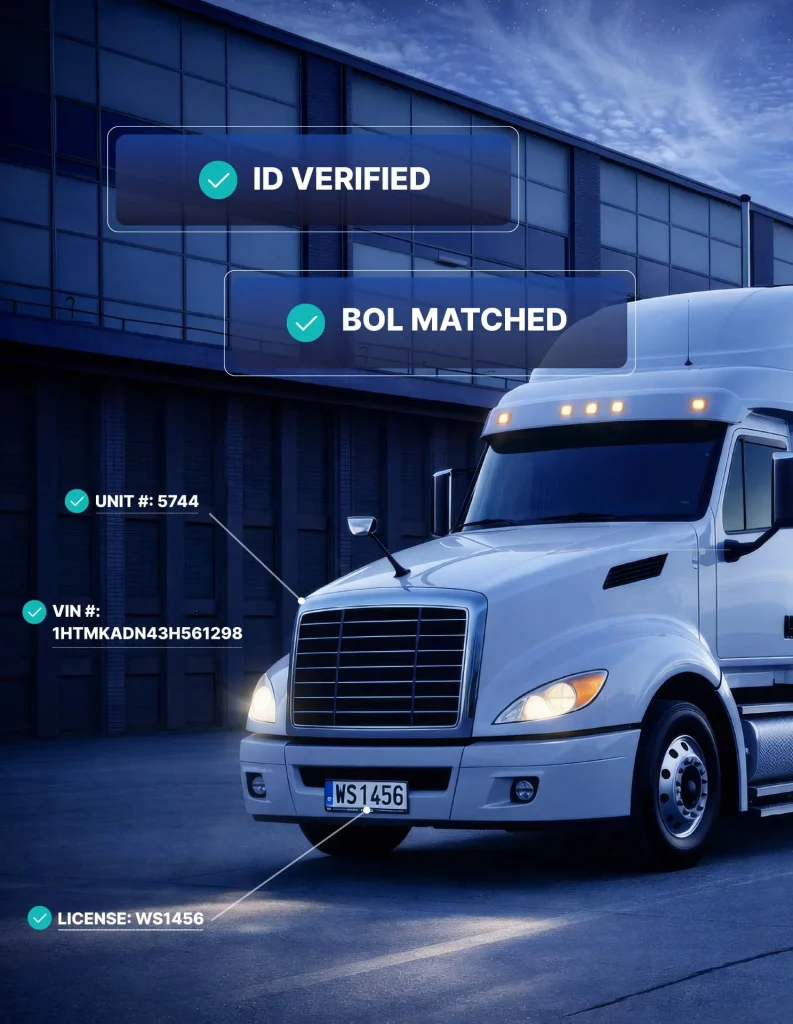
A large part of the cost depends on what the system is expected to verify. A facility may require only basic access authorization. Another may need to confirm:
- Driver identity
- Carrier
- License plate
- Truck number
- Trailer number
- Appointment
- Pickup number
- BOL
- Seal number and condition
These workflows can also help strengthen cargo theft controls.
The FBI recommends confirming driver identities at pickup along with truck and trailer identifier information and using secure pickup numbers where appropriate.
See the FBI cargo theft guidance.
3. Hardware and Installation
Truck gate automation usually involves more than software.
Depending on the facility, the deployment may include:
- Gate kiosks
- Security cameras
- License plate cameras
- Intercom equipment
- Gate controllers
- Vehicle sensors
- Mounting
- Networking
- Power infrastructure
Some facilities already have usable infrastructure.
Others require a more complete deployment.
A good quote should clearly separate what is included so the buyer is not comparing one fully installed system against another proposal that excludes infrastructure.
4. Connectivity and Power
Not every industrial gate has convenient fiber, networking, or power.
Remote gates, temporary entrances, large yards, and newly developed sites may require different deployment options. Cellular connectivity can reduce dependence on existing site network infrastructure. Solar power may also be an option for certain deployments.
Infrastructure availability can materially change the cost and speed of installation.
5. Integration With Existing Systems
Gate automation becomes more valuable when it can exchange information with the systems the facility already uses.
That may include:
- Transportation management systems
- Warehouse management systems
- Appointment scheduling
- Access control platforms
- Customer databases
- Trailer management systems
The more integration required, the more important technical scoping becomes.
But integrations can also reduce duplicate data entry and make gate decisions more useful operationally.
6. How Exceptions Are Handled
This is one of the most important questions in any gate automation proposal.
What happens when the normal workflow fails?
The driver is not recognized. The trailer changed. The seal is wrong. The appointment cannot be found. The BOL is unclear. A customer requires manual approval.
A cheap automated gate can become expensive operationally if every unusual situation requires someone from the facility to leave their job and resolve it.
When comparing systems, ask whether exception handling is included and who actually handles the issue.
7. Reporting and Multi-Site Management
A single-site system may only need basic transaction history.
Enterprise operations may want:
- Multiple facilities in one platform
- Standardized gate workflows
- Central reporting
- Exception reporting
- Transaction search
- Video-backed events
- User permissions
These capabilities affect pricing but may also produce substantially more value for operators managing many locations.
Do Not Compare Automation Cost Against Zero
One of the biggest mistakes in gate automation buying is treating the technology as a new expense without calculating the cost of the existing process.
Your current gate already costs money.
Consider:
- Security guard payroll
- Overtime
- Coverage for breaks and absences
- Training
- Turnover
- Supervision
- Gate delays
- Manual administration
- Paper logging
- Time spent investigating old transactions
The real financial comparison is current operating cost versus future operating cost.
Gate Delays Have a Cost Too
Security cost is not the only consideration.
If manual processing creates truck queues, the operation may also experience:
- Driver waiting.
- Dock scheduling problems.
- Yard congestion.
- Administrative calls.
- Delayed pickups.
- Slower outbound freight movement.
Automation can therefore create value through both security labor reduction and operational efficiency.
What Should Be Included in a Truck Gate Automation Quote?
A strong proposal should make it clear whether the price includes:
- Hardware
- Installation
- Software
- Connectivity
- Maintenance
- Remote support
- Human exception handling
- Integrations
- Reporting
- Training
Without that detail, two quotes that appear very different in price may not actually cover the same solution.
How Birdseye Approaches Gate Automation
GATECORE combines automated gate workflows with trained human backup for complex exceptions.
Deployment can include pre-configured equipment such as kiosks, cameras, connectivity, mounting, and other infrastructure based on site requirements.
The objective is not simply to automate the barrier. It is to automate the gate operation.
Frequently Asked Questions
How much does truck gate automation cost?
Pricing varies significantly based on gate count, hardware, verification requirements, infrastructure, integrations, remote support, and workflow complexity. A site assessment is usually necessary for an accurate proposal.
Can gate automation reduce security guard costs?
Yes. Repetitive gate tasks such as verification, documentation, access control, and communication can often be automated or handled remotely, reducing the amount of manual labor required at the gate.
Does gate automation require fiber internet?
Not always. Depending on the system and site, cellular connectivity or other network options may be available.
Can truck gate automation work with complex procedures?
Yes, but the system should have a defined process for exceptions. Facilities with complex protocols should evaluate how the vendor handles situations automation cannot resolve on its own.