Artificial intelligence can monitor more cameras, recognize patterns, identify activity, and automate security decisions faster than a person can.
But industrial facilities do not operate in perfect conditions. Drivers change.Weather affects visibility. Documents are unclear. Vehicles stop in unexpected places. Employees enter areas they normally do not use.
The question is not whether AI can help security operations. It can. The more important question is what happens when AI is uncertain or wrong.
Quick Answer: Why Does AI Security Need Human Verification?
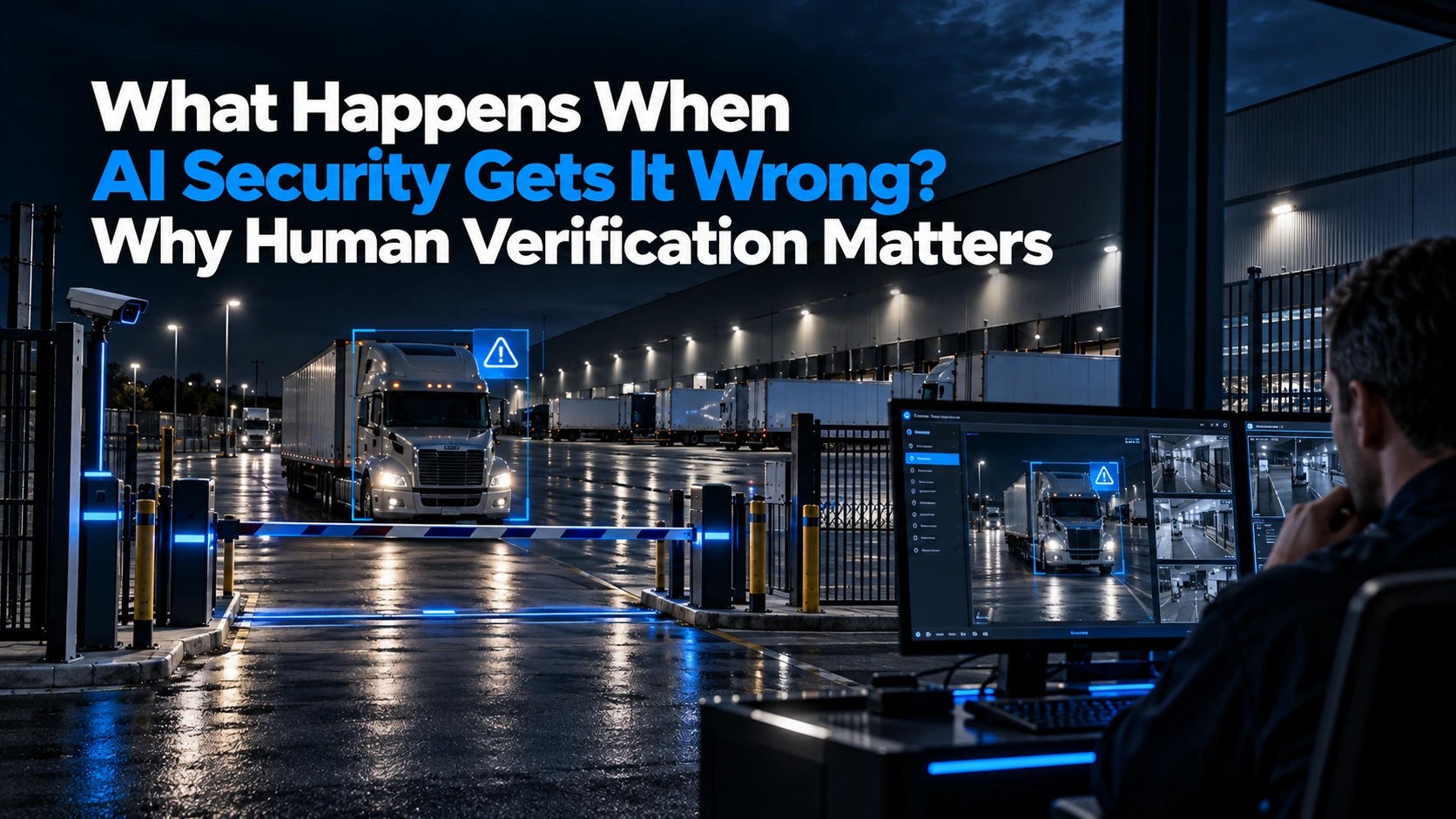
AI is effective at detecting patterns and automating repetitive decisions, but complex security events often require operational context. Human verification provides a second layer when the system encounters an exception.
A trained person can review what happened, consider the facility protocol, communicate with people on site, and decide whether the event requires intervention.
The strongest security model is not AI versus humans. It is AI handling scale and humans handling judgment.
AI Detection Is Not the Same as Understanding
An AI system may correctly identify:
- A person crossing a defined area
- A vehicle approaching a gate
- A truck stopping unexpectedly
- Movement around a trailer
- A license plate
- A document field
But recognizing an object or event is only part of the security decision.
The system may not know why the activity is happening. A person near the perimeter could be an intruder. Or a maintenance contractor. A vehicle stopped beside a trailer could be suspicious. Or it could be part of normal operations.
Context determines whether detection becomes a security incident.
What Is Human-in-the-Loop Security?
Human-in-the-loop security means AI performs defined detection or automation tasks while a trained person remains available to verify uncertain situations or make decisions that require context.
This approach is relevant well beyond physical security.
The National Institute of Standards and Technology’s AI Risk Management Framework recognizes that different AI applications may require different levels of human oversight and that human roles and responsibilities should be clearly defined.
Read the NIST AI Risk Management Framework.
For industrial security, this model can be particularly valuable because actions can affect physical access, cargo, employees, drivers, and facility operations.
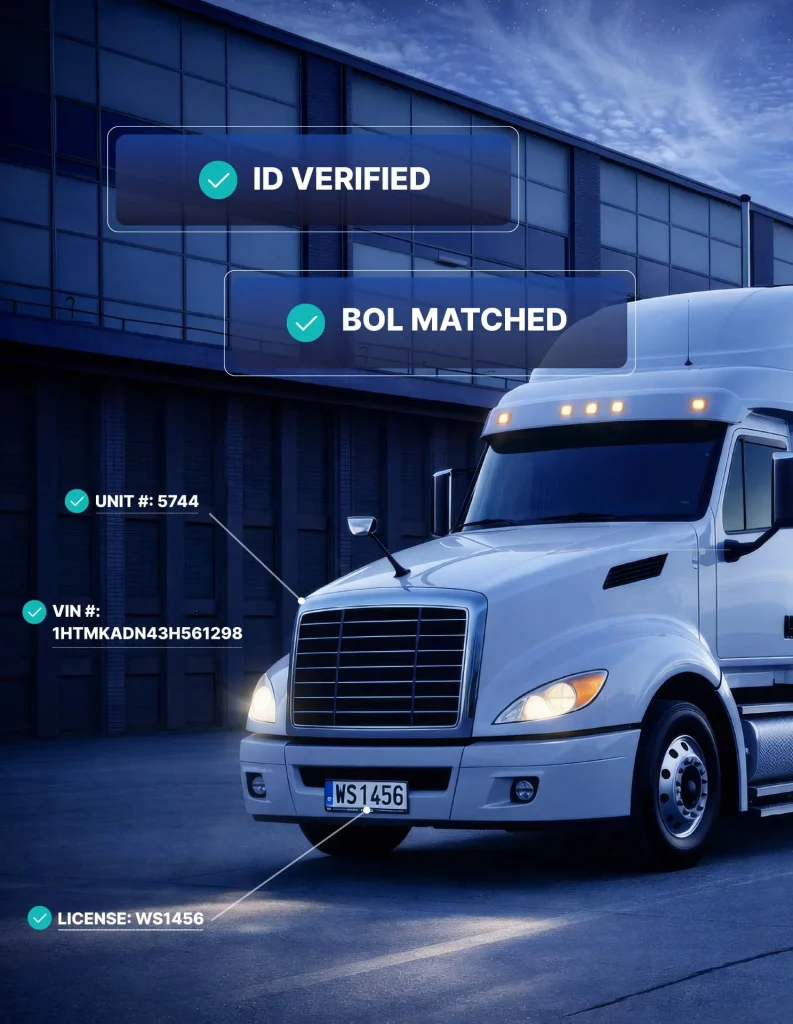
Example 1: The Gate Cannot Verify the Driver
Imagine an automated truck gate receives a driver who is expected to collect a shipment.
The appointment exists. The carrier name is correct. But the driver information does not match. A purely automated system has limited options.
Approve. Deny.
Or stop the transaction completely.
A human-backed system creates another option.
Escalate the exception.
A trained agent can review the details, communicate with the driver, follow the customer’s protocol, contact the appropriate person when required, and document the final decision.
This becomes particularly important because the FBI identifies fictitious pickups, identity theft, fraudulent carriers, account takeovers, and double brokering as forms of strategic cargo theft.
See the FBI cargo theft guidance.
Example 2: AI Detects Someone Near the Perimeter
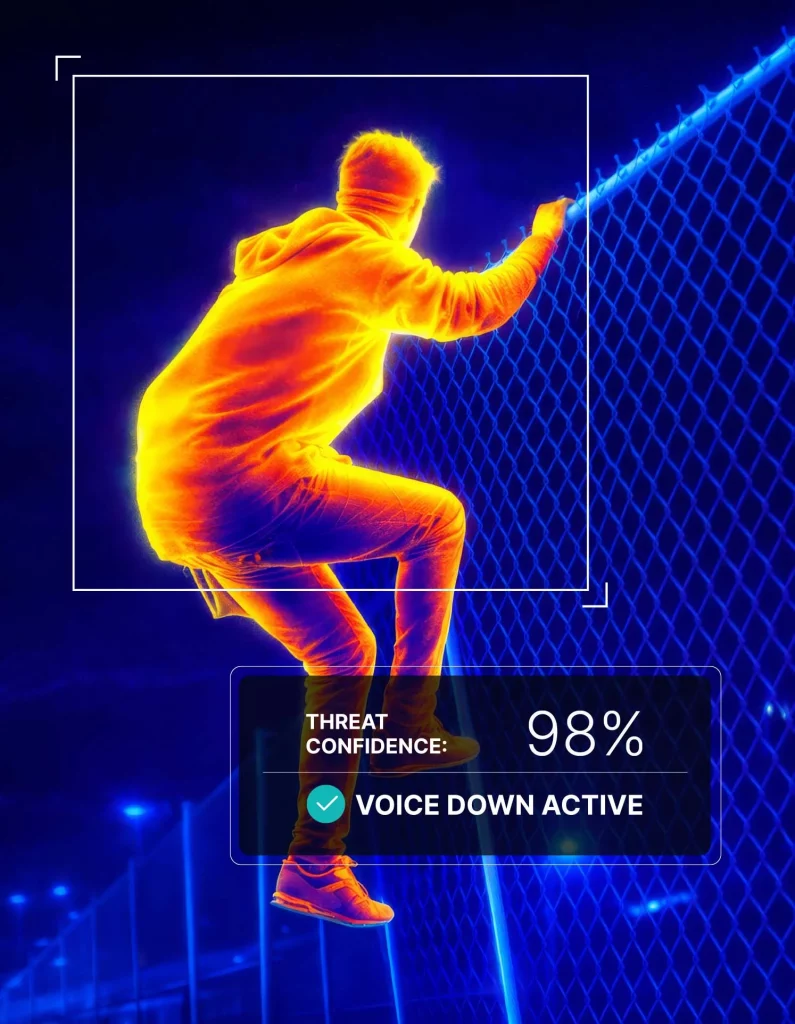
AI video analytics may detect a person near a fence after hours.
That is useful. But the alert alone does not resolve the situation.
Someone still needs to determine:
- Is the person authorized?
- Are they inside or outside the perimeter?
- Are they moving toward a restricted area?
- Is there another related event?
- Should someone communicate with them?
- Does the site need to be notified?
- Should law enforcement be contacted?
Detection creates awareness. Verification determines the response.
Example 3: The Event Looks Wrong but Is Operationally Normal
False alarms are not always caused by poor AI.
Sometimes the system correctly detects something unusual, but the event is legitimate.
For example:
- An employee enters a restricted zone because of maintenance.
- A trailer is moved after hours due to a schedule change.
- A contractor arrives at an unusual gate.
- A truck waits in an area that is normally empty.
A human reviewer can use operational context to determine whether the situation requires action.
Why Fully Autonomous Security Can Create Problems
When every AI detection automatically triggers a response, the facility may create:
- Unnecessary alarms
- Driver frustration
- Operational delays
- False escalations
- Alert fatigue
- Loss of trust in the system
Eventually, employees may begin ignoring alerts because too many are not meaningful.
The objective should not be to generate the highest number of alerts. It should be to identify the events that actually require action.
Human Verification Is Not the Same as Watching Cameras All Day
The purpose of human-backed AI is not to recreate the traditional guard model remotely. A person should not have to stare continuously at dozens of screens waiting for something to happen. AI can monitor activity continuously and surface events that meet defined criteria.
The human then focuses on the smaller number of situations that require evaluation. This changes the role of the operator from passive observation to active decision-making.
Where Human Verification Adds the Most Value
Human verification becomes especially valuable when:
- A driver does not match expected information
- A document cannot be confirmed
- A seal or trailer creates an exception
- Someone enters a restricted area
- Perimeter activity appears suspicious
- A vehicle behaves unexpectedly
- A facility-specific protocol needs interpretation
- A live intervention is required
These are the moments where operational knowledge matters.
AI Should Make People More Effective, Not Remove Them From Every Decision
The strongest use of AI in physical security is often to eliminate repetitive work.
AI can watch continuously. AI can compare information. AI can identify patterns. AI can flag anomalies. AI can automate routine gate transactions.
Then people can spend their time on the smaller percentage of events where judgment matters.
That is a more scalable model than asking humans to manually monitor everything or asking software to autonomously decide everything.
What Should Facilities Ask an AI Security Vendor?
Before deploying an AI-powered security system, ask:
- What does the AI actually detect?
- What decisions does it make automatically?
- What happens when confidence is low?
- Who verifies exceptions?
- Can someone intervene in real time?
- How are events documented?
- Can workflows follow our facility protocols?
- Can the system escalate to our team when required?
The answers matter more than simply hearing that the platform “uses AI.”
How Birdseye Uses AI and Human Verification
Birdseye uses AI to handle routine detection, verification, and monitoring across gates, yards, and perimeters.
When an event requires context, trained Birdseye agents can step in, verify the situation, communicate, follow facility protocols, and escalate when necessary.
AI handles what can be automated. People handle what should not be guessed.
Frequently Asked Questions
What is human-verified AI security?
Human-verified AI security uses artificial intelligence to detect or automate routine events while trained people review exceptions and situations that require additional context or judgment.
Can AI security systems make mistakes?
Yes. AI systems can encounter uncertain conditions, unusual events, incomplete information, or scenarios outside the patterns they were designed to handle. Human verification provides another decision layer.
Does human verification make AI slower?
Not necessarily. Routine events can remain automated. Humans become involved primarily when the system identifies an exception that requires additional review.
Why is human verification important for gate automation?
Truck gates regularly encounter substitutions, paperwork issues, schedule changes, and unusual access requests. Human backup allows those exceptions to be resolved without forcing software to guess or requiring a full-time guard at every transaction.
Is AI better than traditional security monitoring?
AI can improve scale and consistency, while human verification adds context and judgment. For many industrial environments, the combination is more useful than relying exclusively on either approach.
Do Not Ask AI to Guess With Your Facility
Automation should reduce repetitive security work. It should not remove judgment when judgment matters.
Schedule a Birdseye demo to see how AI-powered monitoring and trained human verification work together across GATECORE, SAFECORE, YARDCORE, and The Portal.