Trailer dwell time is usually treated as an operations metric.
How long is a trailer waiting for a dock? How long does it remain in staging? How quickly can the yard turn equipment?
But dwell time can also be a security issue.
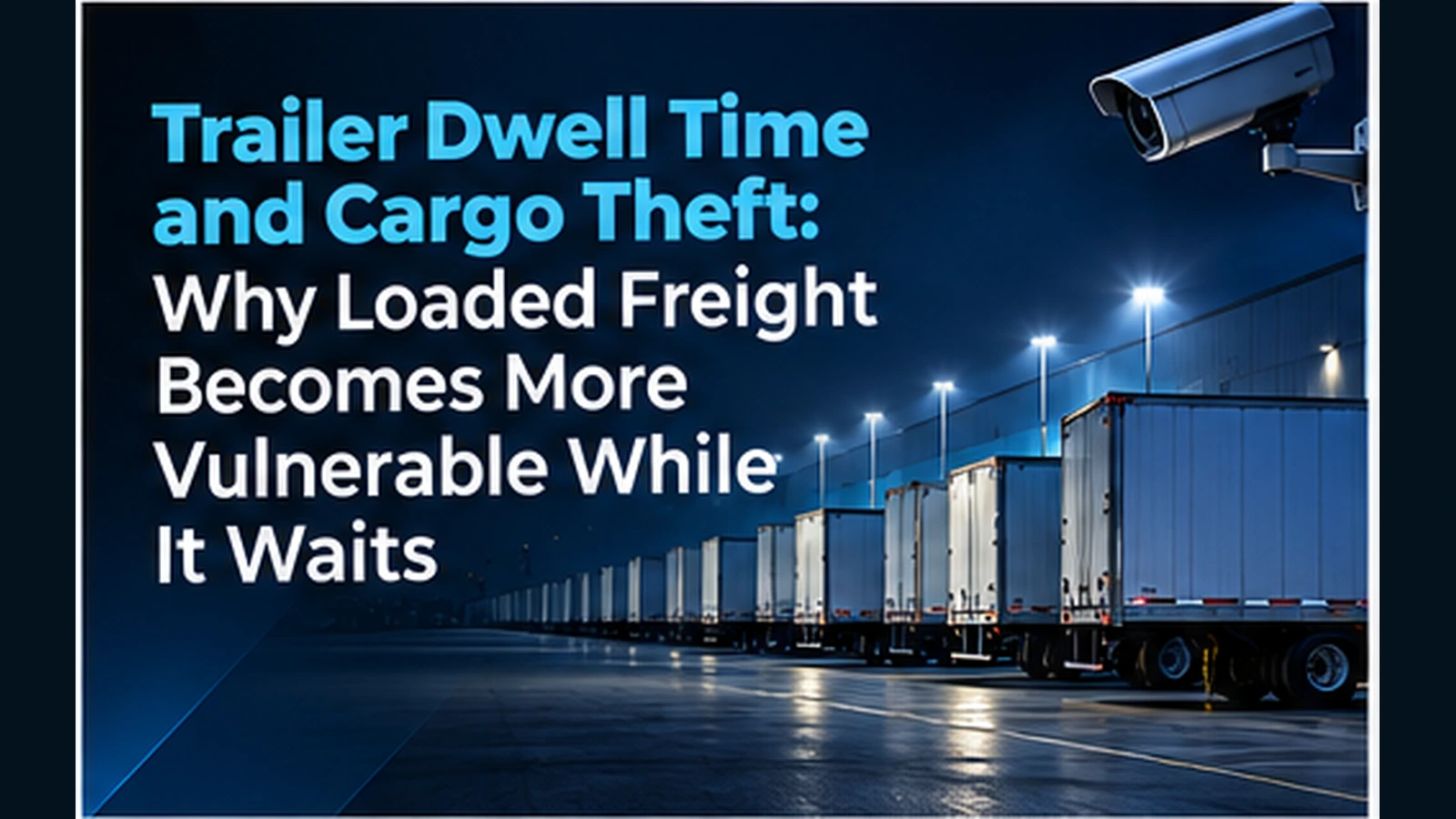
The longer loaded freight sits without moving, the longer it remains exposed to theft, tampering, unauthorized access, and information gaps.
This does not mean every trailer that waits is unsafe. Dwell is a normal part of logistics. The risk increases when long dwell is combined with weak perimeter control, poor lighting, incomplete trailer visibility, reduced staffing, unsecured parking, or uncertain custody.
CargoNet has repeatedly advised shippers and carriers to reduce loaded-equipment dwell where possible and avoid leaving loaded trailers unattended in unsecured locations. Its year-end guidance specifically notes that holiday closures, reduced staffing, and increased freight dwell time can create additional opportunities for cargo crime. Read CargoNet’s holiday security guidance.
Quick Answer: Why Does Trailer Dwell Time Matter for Security?
| Dwell Condition | Potential Security Effect |
|---|---|
| Loaded trailer sits overnight | Longer exposure window with fewer employees present |
| Trailer staged near perimeter | Easier physical access from outside secure areas |
| Trailer location not updated | Harder to recognize unexpected movement |
| Trailer waits through shift change | Custody and supervision can become less clear |
| Driver delayed after loading | Freight remains available longer than planned |
| Holiday or weekend dwell | Reduced staffing and closures increase exposure |
| Unsecured overflow parking | Physical deterrence and monitoring may be weaker |
What Is Trailer Dwell Time?
Trailer dwell time is the amount of time equipment remains at a facility or staging location before the next operational move.
Examples include:
- Waiting for a dock
- Waiting to be unloaded
- Waiting after loading
- Staged for a driver
- Held for an appointment
- Waiting for paperwork
- Staged overnight
- Waiting for dispatch or customer release
Operations teams usually measure dwell because it affects throughput, driver detention, dock planning, and asset utilization.
Security teams should also care because dwell changes how long freight remains stationary and how many opportunities exist for interference.
Why Stationary Freight Can Be More Vulnerable
Moving freight is not automatically secure, but movement usually means the shipment is under active operational control.
Stationary freight can spend long periods in a trailer row with no driver attached and no employee nearby.
The FBI notes that straight cargo theft often occurs when cargo is left unattended at locations such as truck stops, parking lots, drop lots, rail yards, and other areas. See the FBI cargo theft overview.
Inside a secure facility, the risk may be lower, but the same principle applies: time creates opportunity.
1. Overnight Dwell Changes the Risk Environment
A trailer staged at 2:00 p.m. is surrounded by a different environment than the same trailer at 2:00 a.m.
During the day there may be drivers, dock teams, managers, yard tractors, vendors, and maintenance staff nearby.
At night, activity may fall dramatically.
This is why security controls should consider not only where freight is staged but also when it will remain there.
High-value loaded trailers parked overnight may justify stronger monitoring, dedicated zones, or additional verification.
2. Holiday Dwell Can Combine Several Risk Factors
Holiday periods often create a unique combination:
- Freight is staged before closure
- Drivers may be unavailable
- Facilities operate with smaller teams
- Normal managers may be off site
- Trailers remain stationary longer
- Phone and approval workflows may be disrupted
CargoNet’s 2026 Labor Day analysis describes two overlapping holiday risks: physical exposure from loaded freight sitting during closures or disruptions, and verification exposure from reduced staffing and time pressure. Read the 2026 Labor Day analysis.
Dwell time is therefore not an isolated metric. It amplifies whatever weaknesses already exist in the facility’s security process.
3. Long Dwell Makes Trailer Location Accuracy More Important
If a trailer remains in the yard for 20 minutes, a location error may be an inconvenience.
If it remains for 20 hours, the same location error can become a major visibility problem.
A strong yard process should help answer:
- Which loaded trailers are currently on site?
- Where are they staged?
- When did they arrive?
- When are they expected to move?
- Which trailers are overdue?
- Which have moved unexpectedly?
The goal is not necessarily real-time GPS on every trailer. It is having enough operational visibility to recognize when equipment activity does not make sense.
4. Perimeter Proximity Matters
A loaded trailer staged deep inside an actively monitored yard has a different exposure profile from one parked directly along an exterior fence.
Facilities should consider where high-value or long-dwell freight is placed.
Questions include:
- Can someone approach the trailer from outside the fence?
- Do cameras see both sides?
- Is the area properly illuminated?
- Does vegetation block sightlines?
- Is the trailer near a secondary gate?
- Would unusual activity trigger a response?
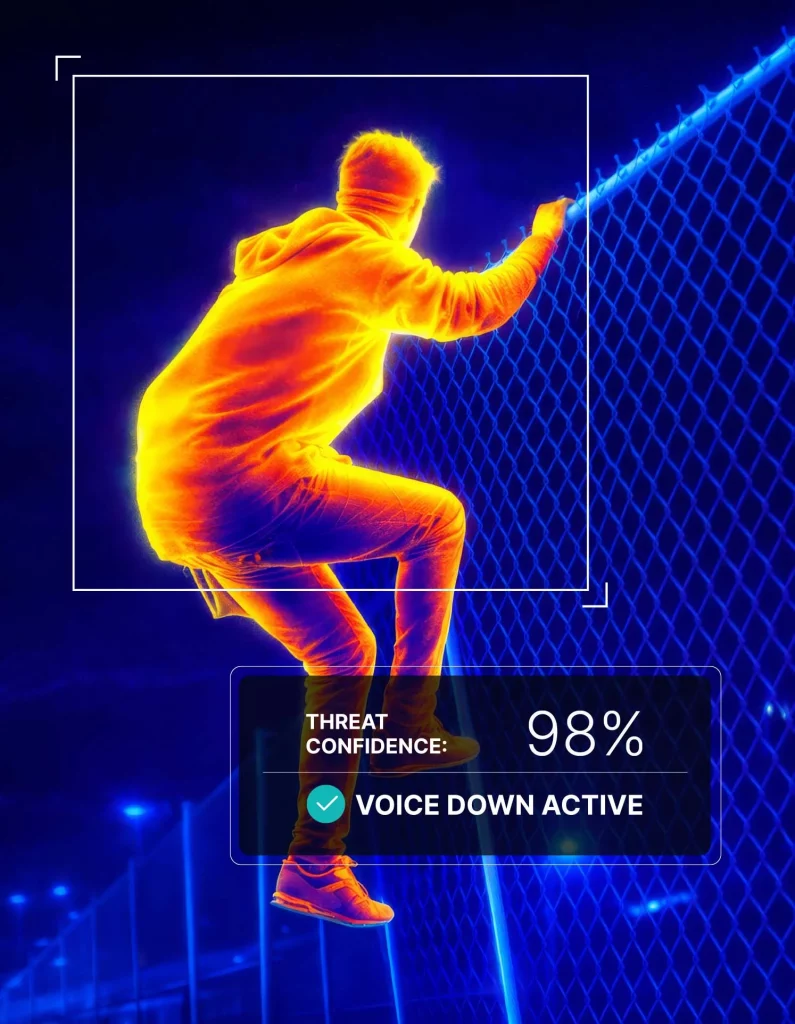
CISA physical security guidance notes that adequate lighting supports surveillance and detection and can help deter perimeter breaches. Review CISA physical security guidance.
5. Dwell Can Blur Chain of Custody
A loaded trailer may pass through multiple operational hands while waiting.
It leaves the dock.
A yard driver moves it.
Another employee repositions it.
A carrier driver eventually arrives.
If the handoffs are not visible, it becomes harder to understand who had control when a discrepancy occurred.
This is why trailer dwell and freight chain of custody are closely connected.
Long-dwell equipment benefits from clear timestamps, trailer identification, movement records, seal checks where relevant, and a documented exit transaction.
6. Dwell Time Can Create False Confidence
A trailer sitting in a fenced yard may feel secure simply because it is “inside.”
But physical boundaries alone do not guarantee active supervision.
A yard can still have:
- Camera blind spots
- Dead lighting
- Unmonitored secondary gates
- Overgrown sightlines
- Weak access records
- Inconsistent after-hours response
That is why facilities should evaluate the actual supervision around staged freight rather than relying on the fence as the entire security plan.
7. Security Should Prioritize Dwell, Not Treat Every Trailer the Same
A useful risk model can prioritize trailers based on:
- Commodity value
- Expected dwell time
- Time of day
- Location in yard
- Customer requirements
- Known theft patterns
- Whether the trailer is sealed
- Whether it is scheduled for immediate departure
This helps the facility apply stronger controls to the freight that needs them most.
8. Reduce Avoidable Dwell Through Better Gate and Yard Operations
Some security improvements are operational improvements.
Examples:
- Faster driver verification
- Better appointment visibility
- Quicker document processing
- Clearer trailer staging
- Automated gate transactions
- Faster exception resolution
If a loaded trailer is waiting because nobody can resolve an access or paperwork issue, security technology that shortens that wait may reduce both operational friction and exposure.
9. Create Specific Procedures for Extended Dwell
Facilities can define rules for equipment that remains longer than expected.
For example:
- Move high-value trailers to a monitored zone
- Confirm seal status before overnight staging
- Increase camera attention around extended-dwell equipment
- Verify weekend pickup schedules
- Escalate trailers that remain beyond a defined threshold
- Reconfirm outbound driver details after long staging periods
The procedure should fit the operation, but long dwell should not become invisible simply because it is common.
10. Measure Security-Related Dwell Metrics
Useful metrics may include:
- Average loaded trailer dwell
- Number of loaded trailers staged overnight
- Number of high-value loads staged after hours
- Dwell by yard zone
- Trailers exceeding expected dwell thresholds
- Unexpected trailer movement events
- After-hours outbound releases
- Seal exceptions after extended dwell
These measurements can help security and operations teams work from the same data rather than treating dwell as an operations-only issue.
Related guidance: review our articles on after-hours truck yard security, LTL yard security, and 3PL cargo theft prevention for additional controls around staged freight.
How Birdseye Supports Trailer Dwell Security
YARDCORE helps provide visibility across trailer yards and operational areas.
SAFECORE supports perimeter monitoring and human-verified response when suspicious activity occurs.
GATECORE strengthens the entry and exit transactions that bookend a trailer’s time on site.
The Portal helps connect events and records so teams can review what happened before, during, and after a long dwell period.
Trailer Dwell Security Checklist
- Do we know which loaded trailers are currently on site?
- Do we know where they are staged?
- Can we identify extended dwell quickly?
- Are high-value trailers placed in stronger security zones?
- Are long-dwell areas well lit and visible to cameras?
- Are trailers near the perimeter receiving enough coverage?
- Do holiday and weekend procedures address loaded equipment?
- Can we detect unexpected movement?
- Do we reconfirm outbound authorization after long dwell?
- Can we reconstruct the trailer’s timeline later?
11. Make Security and Operations Share the Same Dwell Conversation
Dwell is often owned by operations while trailer security is owned by security.
That separation can hide risk.
Operations may know that a loaded trailer has been waiting for 18 hours because a driver is unavailable. Security may simply see another trailer in row seven.
A stronger process makes unusually long dwell visible to both teams.
This does not require a complex command center. It requires defined thresholds and ownership.
For example, a facility might flag loaded trailers that remain beyond an expected departure window, then apply additional review based on value, location, and time of day.
12. Use Dwell Data to Improve Yard Design
Repeated long dwell in the same zones can reveal a physical-security design problem.
If overnight-loaded trailers consistently accumulate near a dark perimeter because that is where space is available, the facility may need to rethink staging rather than simply add another camera.
Dwell analysis can inform:
- Dedicated high-value staging zones
- Camera placement
- Lighting upgrades
- Fence setbacks
- Gate routing
- Weekend staging plans
Security should influence where freight waits, not only how it is watched after it gets there.
Questions to Ask About Trailer Dwell Risk
- What percentage of loaded trailers remain overnight?
- Where do our longest-dwell trailers usually sit?
- Which customers or commodities create the longest dwell?
- Do we have a special process for holiday closures?
- Can we identify a loaded trailer that has not moved when expected?
- Can security see the same dwell exceptions that operations sees?
Implementation Tip: Create a Loaded-Trailer Watchlist
A simple improvement is to create a daily list of loaded trailers that deserve extra attention because of value, extended dwell, location, or schedule.
The list can include the trailer number, customer, commodity category, staging zone, arrival time, expected departure, and any special controls.
Security does not need to manually watch every trailer constantly. The goal is to make the highest-risk staged freight visible enough that unusual activity does not disappear into normal yard movement.
Prioritization is often more useful than treating every parked trailer as if it carries the same risk.
One final principle: dwell risk should be reviewed whenever the operating plan changes. A new customer, new shift, yard expansion, seasonal surge, or change in carrier schedules can alter where loaded equipment waits and how long it remains exposed.
Frequently Asked Questions About Trailer Dwell Time and Security
What is trailer dwell time?
Trailer dwell time is the amount of time a trailer remains at a facility, yard, staging area, or parking location before its next operational movement.
Does longer dwell increase cargo theft risk?
Longer dwell can increase exposure, especially when loaded equipment is unattended, staged after hours, parked near weak perimeter areas, or left in unsecured locations.
How can warehouses secure loaded trailers overnight?
Facilities can use monitored staging areas, strong lighting, camera coverage, clear trailer location records, perimeter monitoring, seal procedures, and controlled outbound verification.
Should high-value trailers be staged differently?
Often yes. Risk-based staging can place higher-value or long-dwell freight in areas with better lighting, stronger camera coverage, and more controlled access.
Can reducing dwell improve security?
Yes. Reducing avoidable dwell reduces the time freight remains exposed while also improving operational throughput.
Loaded Freight Is Most Vulnerable When Nobody Is Actively Thinking About It
Dwell time becomes dangerous when a trailer simply becomes part of the background.
The goal is not to eliminate waiting. It is to make sure long waits do not create invisible risk.