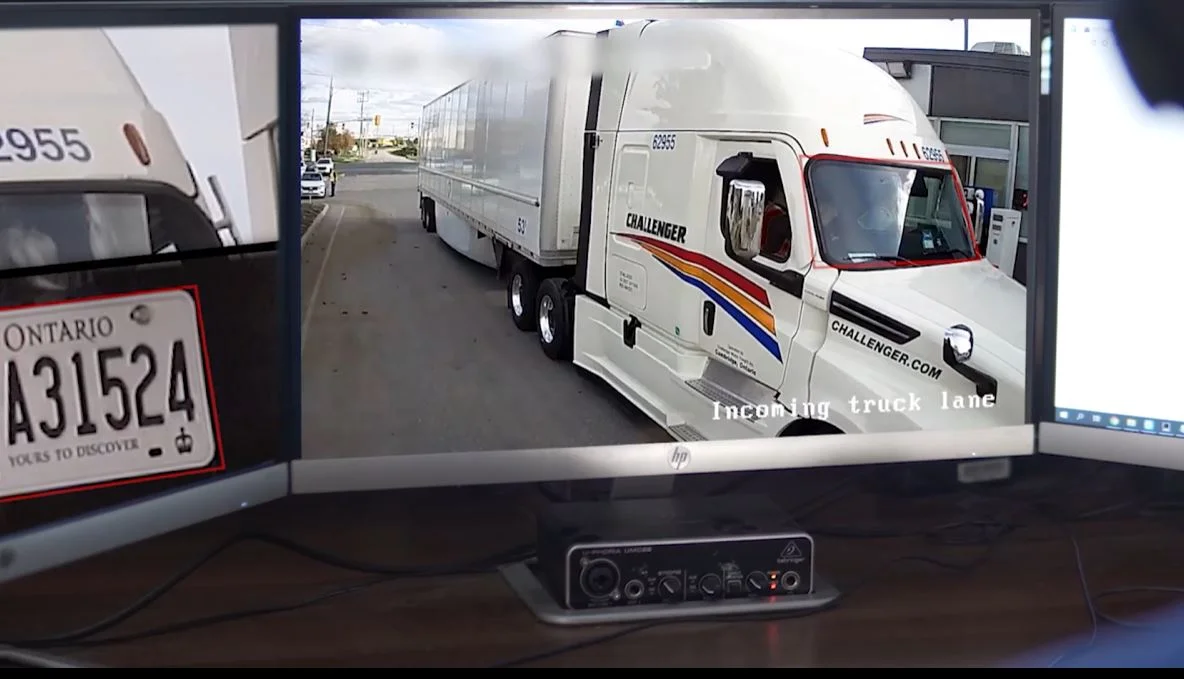
Freight security in 2026 is defined by enforcement, not observation.
Cargo theft losses continue to climb in financial impact. Fraudulent pickups are increasingly coordinated. Identity manipulation at the gate is now a core tactic used by organized theft groups. The pressure on logistics operators has shifted from detecting incidents to preventing unauthorized access before freight moves.
License plate readers have moved into a new role inside this environment. With AI applied correctly, plate recognition is becoming the enforcement backbone of freight facilities.
2025 Data Confirms the Escalation
In 2025, CargoNet reported that estimated cargo theft losses reached nearly $725 million, representing a 60 percent increase over the prior year. Confirmed theft incidents increased 18 percent year over year, with freight yards and distribution facilities remaining primary targets.
According to Verisk CargoNet, nearly one-third of cargo thefts were the result of identity-based scams including false identities, impersonated carriers, and fictitious pickup schemes , highlighting the growing sophistication of fraud tactics impacting freight security
The FBI has issued ongoing industry alerts warning about identity-based cargo theft schemes and organized criminal groups exploiting dispatch verification gaps.
The risk pattern is consistent across North America. Fraud entry at the gate remains one of the highest leverage vulnerabilities in a freight operation.
Fraud Entry Has Become a Systemic Risk
Fraud groups increasingly focus on procedural gaps rather than perimeter breaches.
Common 2025 patterns include:
- Drivers presenting cloned or manipulated carrier credentials
- Pickup numbers tied to legitimate loads but used by unauthorized vehicles
- Trailer swaps executed inside large yards
- Repeat vehicles cycling across facilities under different driver identities
- After-hours access attempts aligned with dispatch manipulation
Manual verification processes struggle under throughput pressure. High-volume yards process hundreds of trucks per day. Visual ID checks and paper-based BOL review introduce variability in enforcement. Organized groups test that variability.
Vehicle-level verification closes that exposure.
AI Changes the Role of License Plate Readers
Basic license plate capture produces records. AI produces enforcement logic.
The strategic shift in 2026 is the application of machine intelligence to vehicle identity data in real time.
When AI is embedded into gate systems, license plate data becomes an active decision layer:
- Vehicles are validated instantly against dispatch authorization
- Plates are cross-referenced with approved carrier databases
- Repeat vehicles linked to prior incidents are flagged automatically
- Abnormal entry timing patterns are identified
- Mismatched vehicle-trailer pairings are escalated immediately
AI enables continuous pattern recognition across sites, time, and vehicle behavior.
This creates a persistent vehicle identity graph. Over time, facilities build structured intelligence on which vehicles belong, which vehicles raise risk indicators, and which vehicles require intervention.
The value is cumulative. Each entry event strengthens the enforcement model.
From Surveillance to Predictive Control
The freight industry is entering a phase where access control must be predictive rather than reactive.
AI-enabled plate systems allow operators to:
- Detect coordinated vehicle behavior across multiple locations
- Identify dwell anomalies tied to specific plates
- Flag high-risk access attempts before loading occurs
- Generate structured risk scoring tied to vehicle history
This level of intelligence changes how facilities allocate resources. Security teams move from monitoring screens to managing risk indicators. Insurance conversations shift from incident response to preventive control. Executive reporting becomes data-driven at the vehicle level.
Vehicle identity becomes the foundation of yard security strategy.
The 2026 Standard
Freight facilities that manage high-value cargo and high traffic volume require enforceable vehicle-level control.
Fraud schemes continue to target identity gaps. Losses are increasing in financial impact. Insurers are tightening underwriting expectations. Multi-site operators require cross-facility visibility.
AI-driven license plate recognition provides the enforcement layer capable of meeting these pressures.
When integrated across gate, yard, and perimeter systems, vehicle-level intelligence establishes measurable control across the entire facility footprint.
Birdseye Security Solutions integrates AI-powered license plate recognition across GateCore, YardCore, and SafeCore to deliver that level of enforcement and structured visibility for modern freight operators.