Cargo theft in 2026 is increasingly driven by identity manipulation at facility entry points. Criminal groups are no longer relying primarily on forced perimeter breaches. They are exploiting weak credential verification at the gate.
Identity fraud has become the dominant vulnerability in transportation and logistics security.
According to the 2026 Cargo and Logistics ID Fraud Report from IDScan.net, identity fraud attempts in cargo and logistics increased more than 200% between 2023 and 2025, with 2025 marking the highest quarterly fraud rate ever recorded.
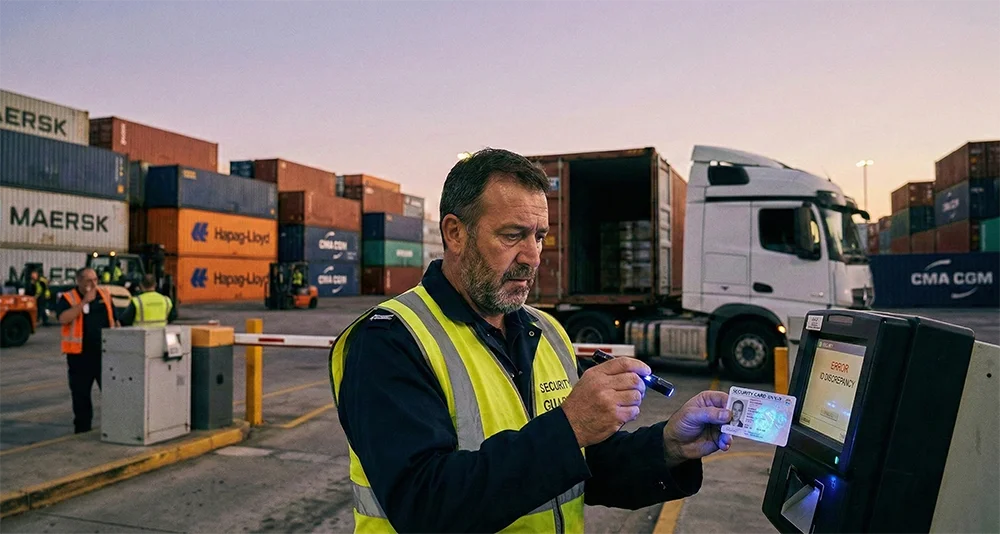
This surge reflects a structural issue inside supply chain access control. When gate processes rely on visual ID checks, paper logs, and manual seal verification, fraudulent drivers can remove high-value freight without triggering alarms.
The gate has become the decisive risk layer.
Identity Fraud Has Replaced Forced Entry as the Primary Tactic
Industry analysis from Équité Association highlights the rise of fictitious pickups, synthetic identities, and falsified documentation in organized cargo theft operations.
These schemes depend on one assumption: Facility access is granted based on visual inspection rather than verified credentials.
When a fraudulent CDL passes visual review and paperwork appears legitimate, freight exits the yard legally on record. Loss is often discovered hours or days later.
The financial impact compounds quickly.
Food Logistics reports that identity fraud in cargo and logistics surged 213% in two years, driven by organized crime groups targeting weak verification systems.
This pattern confirms a shift in criminal behavior toward identity-based access exploitation.
Visual Inspection Is No Longer Sufficient
Manual gate operations commonly include:
- Visual review of driver ID
- Paper-based logging
- Manual seal number entry
- Basic BOL confirmation
These processes create exposure at scale. Human review cannot detect sophisticated synthetic IDs, tampered holograms, or mismatched credential databases in real time.
Fraud groups rely on this limitation.
The solution is structured, automated identity validation embedded directly into gate workflows.
2026 Best Practice: Verified Identity Before Release
Security leaders in transportation and warehousing are implementing five core controls:
1. Real-Time CDL Verification
Credential validation must connect to authoritative databases before gate approval is granted.
2. Camera-Verified License Plate & Equipment Logging
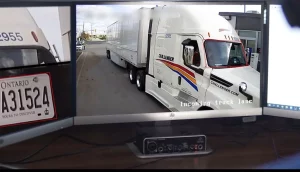
Driver ID, truck number, trailer number, and plate recognition must be digitally recorded and time-stamped.
3. Digital Bill of Lading Capture
BOL data should be scanned and logged into a structured system with audit history.
4. Automated Trailer Seal Documentation
Seal number logging must include camera confirmation and discrepancy alerts.
5. Centralized Audit Trails
Every gate transaction should generate retrievable, standardized data for compliance and insurance review.
These measures convert the gate from a checkpoint into a control system.
Identity Control Is Now a Competitive Requirement
Carriers, 3PLs, and warehouse operators managing high-value freight are facing increasing scrutiny from insurers and enterprise clients.
Recent theft incidents have shown that once freight leaves under fraudulent credentials, recovery rates drop sharply. The only reliable prevention layer is identity validation at entry and exit.
Organizations that maintain manual gate protocols face measurable risk exposure.
Those implementing automated verification frameworks are reducing fraudulent pickup incidents and strengthening compliance documentation.
The freight industry has reached a point where identity control at the gate directly influences loss ratios, insurance costs, and contractual trust.
The gate is no longer a traffic management function.
It is the primary enforcement layer of supply chain risk management.
In 2026, controlling identity at the gate determines whether freight remains protected or becomes another data point in rising cargo theft statistics.
References & Further Reading
- Read the full 2026 Cargo and Logistics ID Fraud Report on IDScan.net: 2026 Cargo and Logistics ID Fraud Report: Rising Fake IDs and Supply Chain Risk
- Learn how cargo theft tactics like fictitious pick-ups and double brokering impact the industry: Faking the Load: Identity Theft in Cargo Theft (Équité Association)
- See the latest industry analysis on how identity fraud attacks are climbing yearly: Identity Fraud in Cargo and Logistics Surges 213% in Two Years