Choosing the right video surveillance system used to be mostly about camera types. Should you use dome cameras, bullet cameras, PTZ cameras, night vision cameras, or thermal cameras?
Those details still matter. But for modern warehouses, logistics yards, distribution centers, manufacturing sites, and industrial facilities, camera selection is only one part of the decision.
The better question is:
Will your surveillance system simply record what happened, or will it help your team detect, verify, and respond in real time?
A camera can capture footage. A smarter surveillance system can protect the operation.
At Birdseye Security, we help facilities move beyond passive camera coverage with AI-powered monitoring, human verification, live remote agents, GateCORE, SafeCORE, YardCORE, and the Facility Supervisor Portal. The result is a video surveillance system that supports security, safety, compliance, and operational control.
What Are the Main Types of Video Surveillance Cameras?
There are several common types of security cameras used in commercial and industrial environments. Each has a purpose, but none of them should be evaluated in isolation.
Dome Cameras
Dome cameras are commonly used indoors or in covered areas. Their compact design makes them less obvious, and they can be useful for entrances, hallways, lobbies, offices, and interior warehouse areas.
They work well when you need general visibility, but they may not be ideal for long-distance perimeter views or large outdoor yards.
Bullet Cameras
Bullet cameras are more visible and are often used outdoors. Their shape makes them easy to aim at specific areas such as gates, fence lines, trailer rows, parking lots, and loading zones.
Because they are noticeable, they can also act as a deterrent. For industrial facilities, bullet cameras are often useful when there is a clear target area that needs consistent coverage.
PTZ Cameras
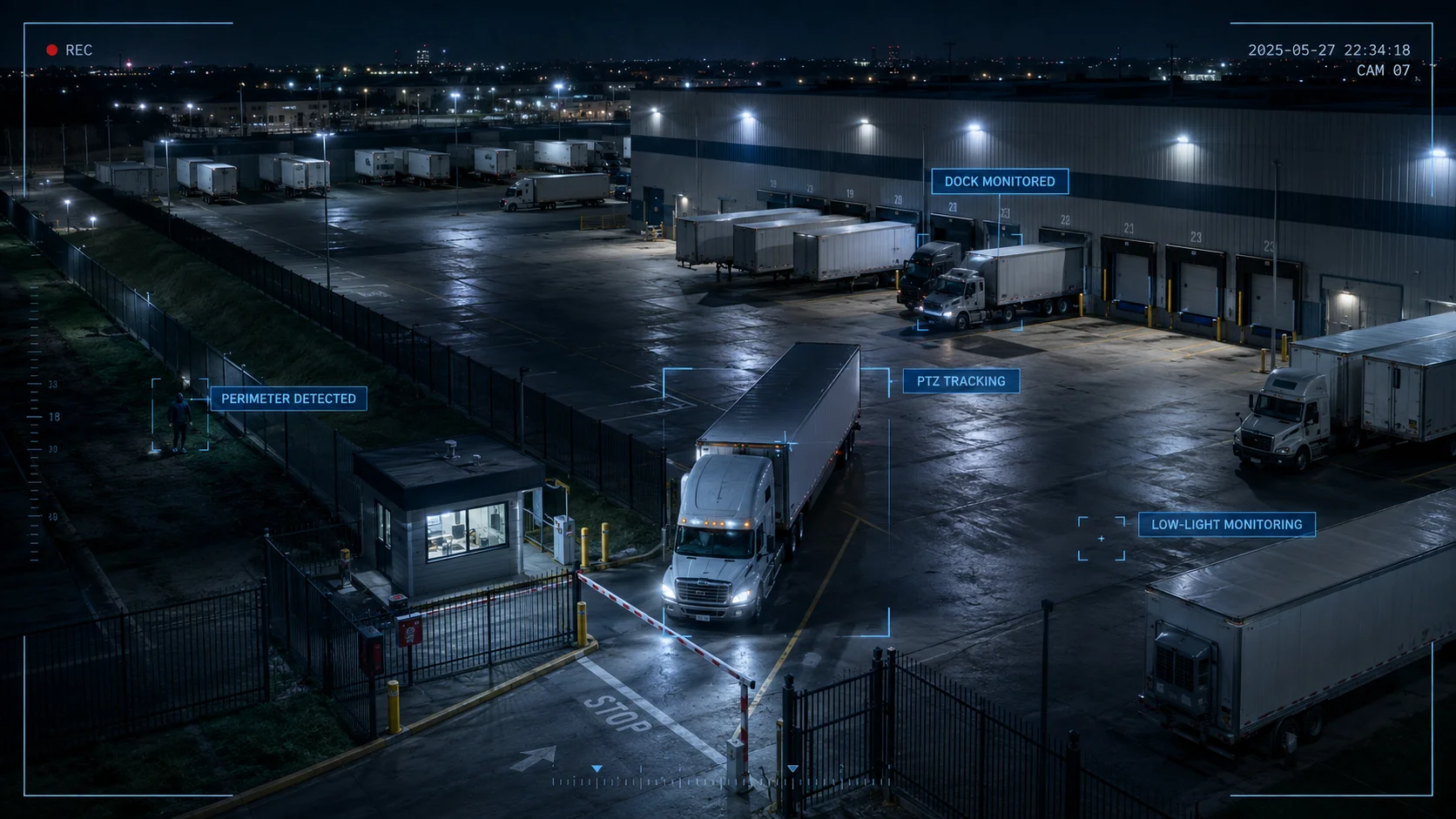
PTZ cameras can pan, tilt, and zoom. This makes them useful for wide areas where operators may need to follow activity or zoom in on details such as vehicles, people, trailers, or gate activity.
However, PTZ cameras are most valuable when someone is actively controlling or monitoring them. If no one is watching, a PTZ camera may be pointed in the wrong direction when an important event happens.
Night Vision and Low-Light Cameras
Many security events happen after hours, so night visibility matters. Night vision and low-light cameras help monitor areas when lighting is limited.
For warehouses and yards, these cameras can be important around fence lines, gates, dock areas, equipment storage, and trailer parking areas. But again, recording at night is not the same as responding at night.
Thermal Cameras
Thermal cameras detect heat signatures, which can make them helpful for perimeter protection, low-light environments, and large outdoor areas. They are often used where standard video cameras may struggle because of darkness, glare, weather, or distance.
Thermal cameras can be powerful, but they work best as part of a broader security strategy that includes verification and response.
Camera Type Is Only the Beginning
Many companies make the mistake of asking, “What camera do we need?” before asking, “What problem are we trying to solve?”
A warehouse with slow gate check-ins has a different problem than a facility with after-hours perimeter activity. A transportation yard with trailer movement issues has different needs than a manufacturing site with restricted zones. A distribution center concerned about driver safety needs different coverage than a site focused on unauthorized access.
That is why the right video surveillance system should be designed around the operation, not just the camera hardware.
CISA’s physical security resources reinforce the importance of looking at physical security as a broader program, not a single device or tool: CISA Physical Security Resources.
For industrial sites, cameras should connect to access control, monitoring procedures, incident response, reporting, and operational workflows.
Why AI and Human Verification Matter
Modern video surveillance is no longer just about recording footage. AI video analytics can detect people, vehicles, motion, unusual activity, and potential threats faster than a person manually watching every camera feed.
That is valuable, especially across large warehouse yards and outdoor industrial environments. ASIS has noted that AI-enabled video analytics can help monitor large outdoor areas and reduce false alarms by distinguishing between human intrusion, vehicle movement, wildlife, weather, and other environmental factors: ASIS: How to Secure the Modern Warehouse.
But AI alone is not enough.
Industrial facilities are complex. A person near a fence line may be an employee, a driver, a vendor, or a trespasser. A truck at the gate may be expected or unauthorized. A trailer leaving the yard may be routine or a compliance issue.
That is why human verification matters.
Birdseye combines AI-powered detection with trained human verification. AI helps identify the event. Remote agents verify what is happening. Then the correct response happens based on your facility’s procedures.
This is what separates passive surveillance from active facility supervision.
Choosing Video Surveillance for Gate Security
The gate is one of the most important areas to monitor because it controls who and what enters the property.
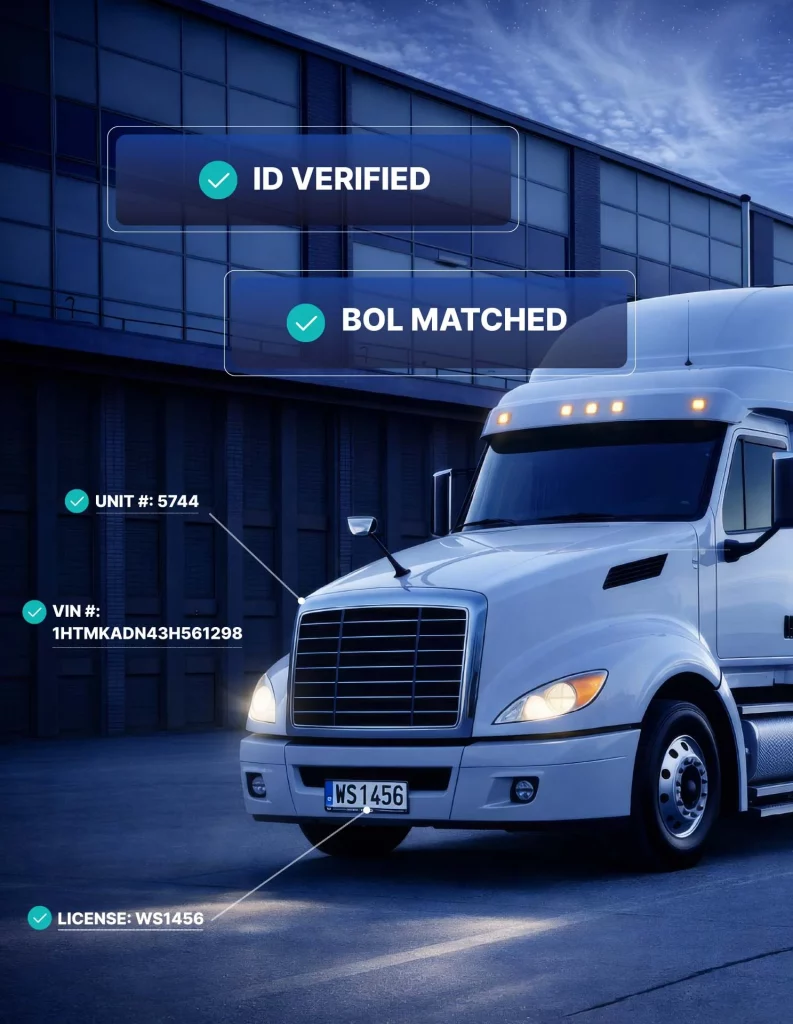
A basic camera may record a truck arriving. But a smarter system should help verify the driver, vehicle, trailer, documentation, and access event.
Birdseye GateCORE is built for this. It supports driver verification, vehicle and trailer logging, Bills of Lading capture, seal checks, access workflows, and gate transaction records.
With GateCORE, the gate becomes more than a camera view. It becomes a controlled and documented part of the operation.
This helps reduce manual errors, improve consistency, strengthen compliance, and support faster gate flow.
Choosing Video Surveillance for Perimeter Protection
Perimeter cameras are often installed around fences, gates, outdoor storage areas, trailer lots, and restricted zones. These cameras are important, but they need live response behind them.
If someone approaches a fence after hours and the camera only records it, the facility may not know until the next morning.
Birdseye SafeCORE helps solve that problem. SafeCORE combines AI-powered perimeter detection with live human verification and response. When suspicious activity is confirmed, Birdseye can issue voice-down warnings, notify site contacts, escalate according to procedure, and document the event.
This makes perimeter surveillance proactive instead of purely reactive.
Choosing Video Surveillance for Yard Operations
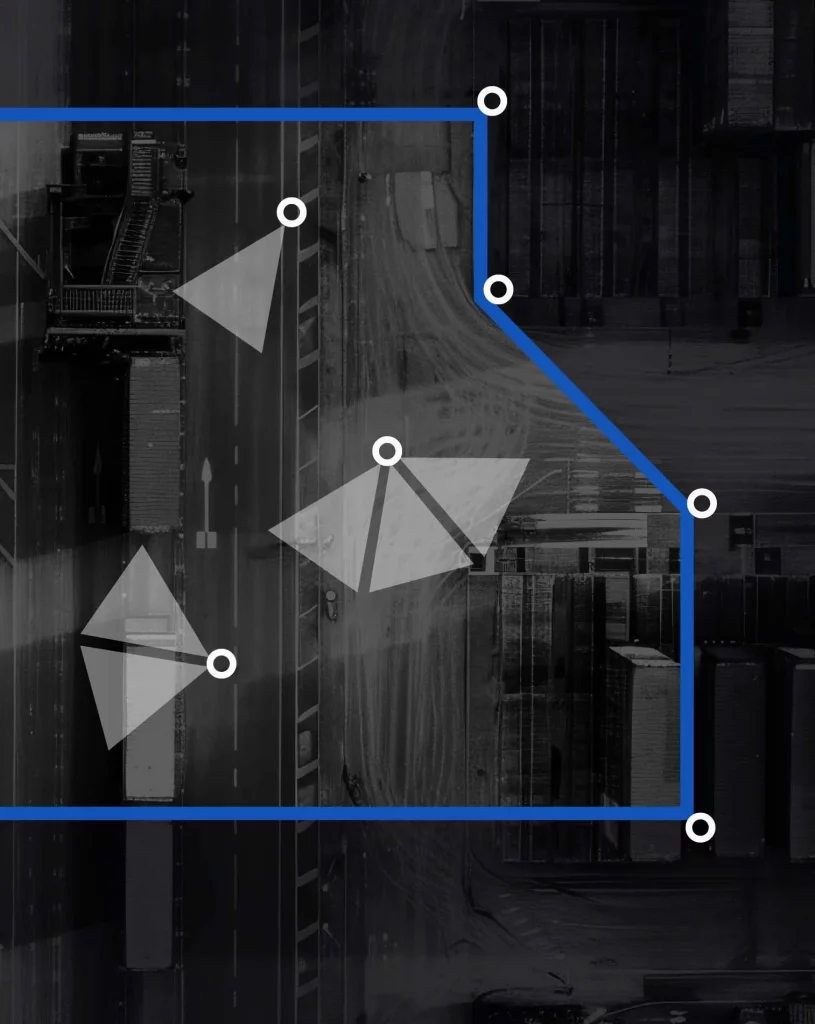
Warehouse and logistics yards are difficult to manage because they are always changing. Trailers move. Drivers wait. Employees cross traffic zones. Docks get busy. Equipment and inventory may be exposed.
A traditional camera system can show activity, but it may not help manage it.
Birdseye YardCORE gives facilities better visibility across yard activity. It helps monitor movement, support safety procedures, capture incidents, and improve awareness across large outdoor environments.
This is especially important because yard security and yard operations are connected. A safer yard is usually a better-run yard.
Use the Portal to Turn Video Into Operational Intelligence
One of the biggest problems with traditional surveillance is that information stays scattered. Video footage may live in one system. Gate logs may be manual. Incident notes may be in emails. Safety records may be somewhere else.
Birdseye’s Portal helps bring key activity together. It gives teams a centralized view across gates, yards, and perimeters, with structured event records that support security, operations, compliance, and leadership reporting.
Instead of digging through hours of footage, teams can review meaningful events tied to real operational activity.
Do Not Forget Data Security and Retention
When choosing a video surveillance system, businesses should also think about how footage is stored, who can access it, and how long it is kept.
The FTC recommends that businesses understand what information they collect, keep only what they need, protect what they keep, dispose of what they no longer need, and plan ahead for security incidents: FTC: Protecting Personal Information.
For video surveillance, that means your footage should be useful, accessible to authorized people, protected from misuse, and retained according to your operational needs.
How to Choose the Right Video Surveillance System
The right system depends on your facility, but a strong decision starts with a few practical questions.
What areas create the most risk? Are you trying to protect the perimeter, improve gate control, monitor yard activity, reduce guard dependency, improve documentation, or support safety procedures?
Do you need someone watching live, or are you only recording for later review? Can your system verify events in real time? Can it create useful records? Can it support your operation instead of simply storing footage?
For industrial facilities, the best video surveillance system is not just the one with the best cameras. It is the one that helps your team see more, respond faster, and operate with better control.
Choose a Surveillance System That Does More Than Watch
Dome cameras, bullet cameras, PTZ cameras, night vision cameras, and thermal cameras all have a place in modern security. But camera hardware alone is not enough.
Your facility needs a system that can detect activity, verify what is happening, respond in real time, and turn events into useful records.
That is the Birdseye advantage.
With GateCORE, SafeCORE, YardCORE, and the Facility Supervisor Portal, Birdseye helps warehouses, logistics yards, distribution centers, manufacturing facilities, and industrial sites move beyond passive surveillance.