Direct Answer: What Should Logistics Facilities Look for in AI Physical Security?
Logistics facilities should look for AI physical security that connects gate verification, yard visibility, perimeter protection, human verification, data controls, and centralized reporting.
The physical security market is moving quickly. Recent industry announcements show growing demand for perimeter protection, video AI agents, cloud-based security platforms, and stronger accountability controls. Those are important signals, but they do not solve the full problem by themselves.
- A logistics facility is not just a fence line.
- It is not just a camera system.
- It is not just a gate.
- It is not just a yard.
- It is not just a dashboard.
A logistics facility is a moving operation where drivers, vehicles, trailers, freight, employees, vendors, contractors, and security events all interact throughout the day.
That is why modern facility security needs to do more than detect activity. It needs to verify access, understand movement, protect the perimeter, document events, and give teams a clear record they can use later.
Birdseye helps industrial and logistics facilities do that with GATECORE, SAFECORE, YARDCORE, The Portal, AI-powered monitoring, and trained human verification.
Quick Summary: The Market Is Moving, But Buyers Need the Whole Picture
| Market signal | What it shows | What logistics facilities should ask next |
|---|---|---|
| Perimeter protection is getting more attention | Facilities want faster detection at fence lines, yards, and vulnerable outdoor areas | Does the perimeter system connect to gate, yard, and incident records? |
| Video AI agents are becoming a category | Buyers want cameras to become more actionable | Is AI supported by trained human verification and site-specific procedures? |
| Cloud physical security adoption is accelerating | Teams want easier access, scalability, and AI features | Does the platform produce operational visibility or just cloud-based footage? |
| Privacy and accountability are under scrutiny | Buyers need audit trails, retention policies, MFA, and access controls | Can the provider explain how data is accessed, retained, secured, and reviewed? |
| Thought leadership is increasing | Vendors are trying to own the conversation around cargo theft and perimeter security | Does the content explain real facility workflows or only promote one product layer? |
Why This Topic Matters Now
The physical security market is shifting fast.
ISCPO recently announced a Preferred Partner relationship focused on perimeter protection across logistics and distribution hubs. Spot AI announced Video AI Agents for the Physical World, positioning cameras as tools that can help surface and resolve safety, security, and operations incidents. Verkada’s 2026 State of Cloud Physical Security report reported that organizations with cloud-based physical security are using AI at 2.6 times the rate of those with on-premise systems. Flock Safety also announced new privacy, accountability, security, and transparency safeguards, including a recommended seven-day ALPR retention period, required misuse detection, case codes, and mandatory MFA.
These signals point in the same direction:
Physical security is becoming more intelligent, more connected, more accountable, and more operational.
But for logistics and industrial facilities, the biggest mistake is choosing a point solution and assuming the entire facility is covered.
- A camera at the fence is useful.
- AI detection is useful.
- Cloud access is useful.
- Audit trails are useful.
- A dashboard is useful.
But none of those pieces are enough unless they are connected to how the facility actually works.
The Problem With Point Solutions in Logistics Security
A point solution solves one part of the security problem.
- A perimeter system may detect suspicious activity near a fence.
- A camera platform may make video easier to search.
- An AI tool may identify people or vehicles.
- An access control system may open or close a gate.
- A guard may verify a driver manually.
- A spreadsheet may track trailer movement.
Each tool may be helpful. The problem is that logistics risk does not stay inside one tool.
- A driver arrives at the gate.
- A carrier needs to be verified.
- A trailer needs to be logged.
- A Bill of Lading needs to be captured.
- A seal needs to be checked.
- A truck enters the yard.
- A trailer moves.
- A person enters a restricted zone.
- A perimeter alert happens after hours.
- A manager needs to review the full timeline later.
If each part of that process lives in a separate system, the facility may still have blind spots.
The future of AI physical security is not just smarter cameras. It is connected facility supervision.
Why Perimeter Protection Is Important — But Not Enough
Perimeter protection is one of the most important layers in logistics security.
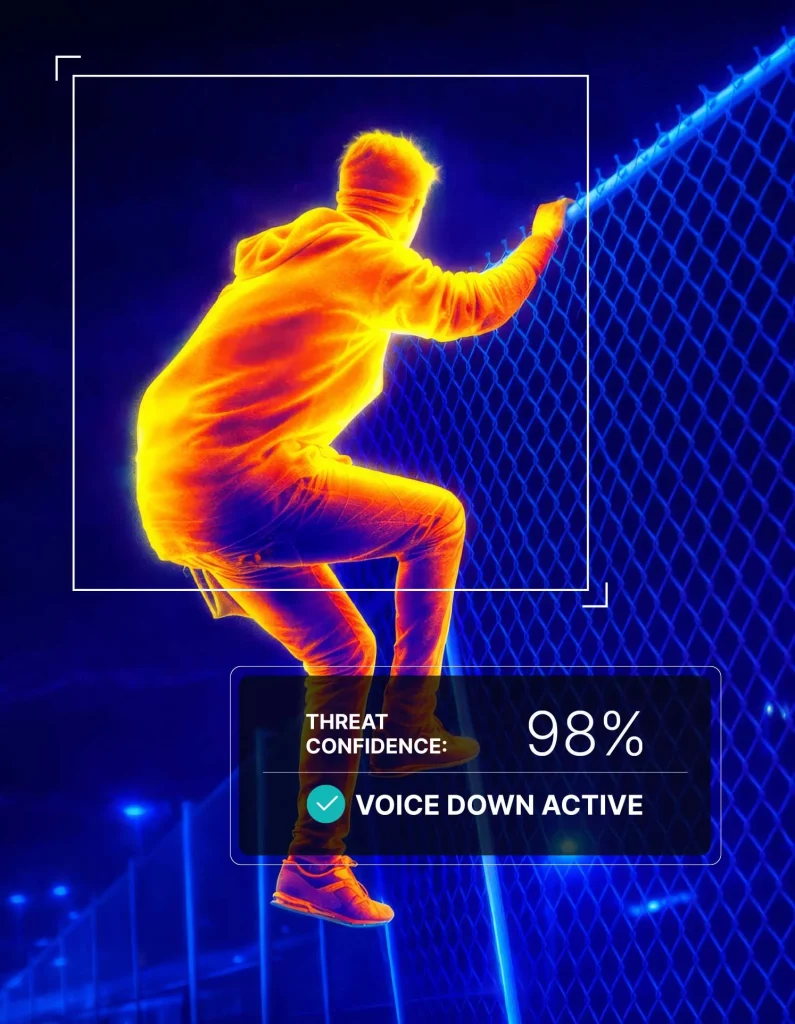
Fence lines, side gates, trailer rows, outdoor storage areas, employee lots, and restricted zones can all create exposure. Suspicious movement near those areas should be detected and verified quickly.
CISA’s physical security resources support the broader idea that facility protection should be planned around prevention, resilience, and layered physical security.
But perimeter protection is still only one layer.
- A perimeter camera cannot verify whether a driver at the gate is authorized.
- It cannot confirm whether a trailer matches the pickup record.
- It cannot document a Bill of Lading.
- It cannot check a seal.
- It cannot track what happened after a vehicle entered the yard.
- It cannot automatically connect a fence-line alert to gate records and yard movement.
That does not mean perimeter protection is weak. It means perimeter protection should be connected.
SAFECORE helps facilities protect perimeter areas with AI-powered detection, human verification, live intervention, escalation procedures, and incident documentation.
But the stronger model is when perimeter protection works together with GATECORE, YARDCORE, and The Portal.
Why Gate Verification Is the Security Layer Buyers Cannot Ignore
The gate is one of the most important control points in any logistics, warehouse, manufacturing, or distribution environment.
Every gate event creates a security decision.
- Who is the driver?
- Is the carrier expected?
- Does the truck match the record?
- Does the trailer match the shipment?
- Was the Bill of Lading captured?
- Was the seal checked?
- Was access approved?
- Can the team review the event later?
This is where many security and operations problems begin.
A facility may have strong perimeter cameras but still release freight to the wrong party. It may have AI detection but still rely on manual logs. It may have cloud video but still struggle to prove who entered, what trailer was involved, and what documentation was reviewed.
The FBI’s cargo theft overview explains that cargo theft can occur at warehouses, freight distribution facilities, truck stops, drop lots, rail yards, and other locations where freight is stored, moved, or left unattended.
That makes gate verification a supply chain security issue, not just a property security issue.
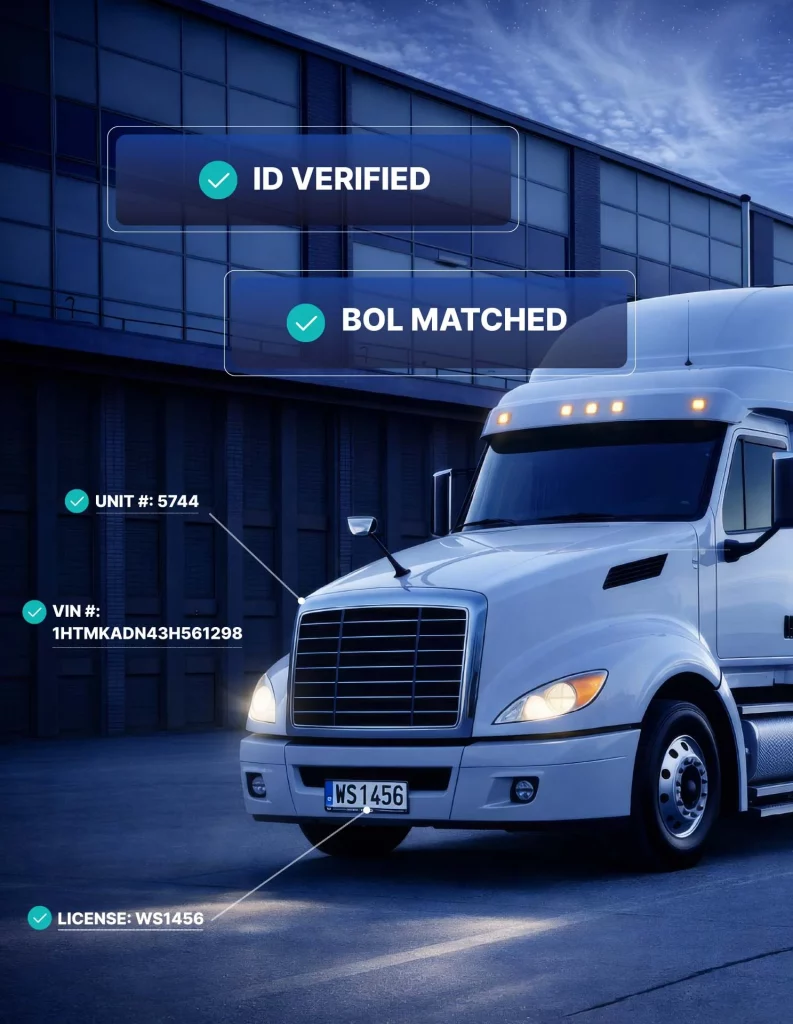
GATECORE helps facilities verify and document gate activity, including driver verification, vehicle and trailer logging, license plate capture, Bill of Lading documentation, seal checks, access workflows, and gate transaction records.
The goal is not simply to open the gate faster. The goal is to create a verified access event the facility can trust.
Why Yard Visibility Matters After Access Is Granted
A verified gate event is important, but risk does not stop once the truck enters.
The yard is where freight, vehicles, trailers, people, and exceptions continue to move.
- Trailers may be dropped.
- Vehicles may move between docks.
- Drivers may wait in the wrong area.
- Vendors may enter operational zones.
- Equipment may sit outside.
- High-value freight may be staged longer than planned.
- A safety issue may develop away from the gate.
If the yard is not visible in real time, the facility may only discover a problem after a load is missing, damaged, delayed, or disputed.
YARDCORE helps facilities improve visibility across yard activity. It supports monitoring of movement, exceptions, restricted areas, safety events, and procedure enforcement.
This is where many point solutions fall short.
- A perimeter system watches the edge.
- A gate system controls entry.
- A camera system records footage.
- But yard supervision helps answer what happened after access was granted.
For logistics operations, that difference matters.
Why AI Detection Needs Human Verification
AI is becoming a major part of physical security. That is a good thing.
AI can help detect people, vehicles, motion, unusual patterns, loitering, restricted-zone activity, after-hours movement, and perimeter events faster than manual monitoring alone.
The Security Industry Association notes that modern video systems can include analytics and machine learning, and that AI-powered systems can recognize people, vehicles, objects, and events to generate alarms that support faster response: SIA Data Privacy Code of Practice for Video Surveillance.
But AI detection should not be confused with complete understanding.
- A person near a fence may be an intruder, employee, contractor, vendor, or driver.
- A truck at the gate may be expected, early, late, or unauthorized.
- A trailer movement may be routine or suspicious.
- A person in a restricted zone may be violating procedure or completing approved work.
AI can detect the event.
Human verification helps determine what the event means.
That is why Birdseye uses AI-powered monitoring with trained remote agents. AI helps surface the signal. Human agents review context, follow site-specific procedures, and support the correct response. More alerts are not the same as better security. Better verification is better security.
Why Accountability and Data Controls Are Becoming Part of the Buying Decision
The next phase of physical security will not only be about detection. It will also be about accountability.
As more facilities use cameras, AI, license plate capture, remote access, cloud platforms, and centralized reporting, buyers need to ask tougher questions about data governance.
- Who can access footage?
- Who can search records?
- Are actions logged?
- Is MFA required?
- How long is data retained?
- Can the facility restrict access by role?
- Can administrators review activity?
- Can the provider explain what data is collected and why?
Flock Safety’s recent update around privacy, accountability, security, and transparency safeguards is a clear signal that the market is moving in this direction.
The FTC’s Protecting Personal Information guide also gives businesses a practical framework: know what information you have, keep only what you need, protect what you keep, dispose of what you no longer need, and plan ahead for security incidents.
For logistics facilities, this matters because video and access systems may capture drivers, employees, visitors, vendors, license plates, shipment documents, vehicle records, and operational activity.
Security systems should protect the facility without creating unnecessary data risk.
Why Cloud Physical Security Needs Operational Context
Cloud physical security can make systems easier to access, scale, and manage across multiple sites. It can also help teams use AI features more quickly.
Verkada’s 2026 State of Cloud Physical Security report reported that cloud-based physical security users are adopting AI at 2.6 times the rate of on-premise users, and that 94% of organizations not yet fully cloud-managed are planning a transition or already in one.
That is an important trend.
But logistics facilities should not adopt cloud security only for easier video access. They should ask whether the platform improves operational control.
- Can it connect gate events to video?
- Can it document trailers, BOLs, and seals?
- Can it show what happens in the yard?
- Can it help verify perimeter alerts?
- Can it support site-specific procedures?
- Can it centralize incidents and transaction records?
- Can managers use the data to improve performance?
Cloud matters. AI matters. But workflow matters too. A cloud camera system without operational context may still leave teams searching through footage after the fact.
Why Alarm Validation and Verified Response Matter
False alarms and low-quality alerts waste time.
- A motion alert may not be a threat.
- A person detection may not be unauthorized.
- A vehicle alert may not require response.
- A perimeter event may be harmless or urgent.
That is why validation matters.
The Monitoring Association’s AVS-01 Alarm Validation Scoring Standard provides a standardized method for classifying alarm events based on validity and potential threat level, helping support better response prioritization.
For logistics facilities, this principle is important even beyond formal alarm scoring. The point is simple:
The facility needs better information before it decides how to respond.
- AI can help detect activity.
- Human verification can help classify it.
- Site-specific procedures can guide the response.
- The Portal can document the outcome.
That is how alerts become action.
What Logistics Facilities Should Demand From AI Physical Security
The market is full of AI claims. Facilities should translate those claims into practical operational questions.
1. Does it verify access at the gate?
A strong solution should help verify drivers, carriers, vehicles, trailers, BOLs, seals, and access decisions.
For logistics facilities, access is not just a gate arm opening. It is a documented security event.
2. Does it provide real yard visibility?
The system should help teams understand what happens after a vehicle enters the property.
That includes trailer movement, restricted-zone activity, safety concerns, exceptions, and operational events across the yard.
3. Does it protect the perimeter in real time?
Perimeter monitoring should detect, verify, and support response while the activity is still happening.
A fence-line camera that only helps after the incident is not enough.
4. Does it combine AI with human verification?
AI should help identify activity faster, but trained people should verify context and apply site-specific procedures.
This is especially important in complex industrial environments.
5. Does it document what happened?
The system should create usable records, not just store video.
Teams need to review gate transactions, yard events, perimeter alerts, incident history, and response actions.
6. Does it support responsible data practices?
The provider should explain access controls, retention, audit trails, MFA, role-based permissions, and data handling.
Security leaders should not treat privacy and accountability as afterthoughts.
7. Does it connect security to operations?
The best systems do not only detect threats. They improve how the facility operates.
That means better visibility, faster review, stronger documentation, and more consistent procedures.
How Birdseye Connects the Full Facility
Birdseye is built for industrial and logistics environments where security and operations overlap.
GATECORE helps verify and document gate activity.
SAFECORE helps protect perimeters, restricted zones, outdoor storage areas, and vulnerable access points.
YARDCORE helps supervise yard activity after access is granted.
The Portal centralizes gate transactions, yard events, perimeter alerts, incident records, and operational activity.
Birdseye combines these services with AI-powered monitoring and trained human verification.
This connected model helps facilities move beyond passive cameras, manual gate logs, disconnected alerts, and after-the-fact investigations. The result is not just more security technology. The result is better facility control.
Birdseye Is Already Aligned With Supply Chain Protection
The International Supply Chain Protection Organization previously announced Birdseye as a Preferred Partner, highlighting Birdseye’s use of AI-powered cameras, professionally trained live agents, and intelligent software to create real-time visibility and validated workflows for logistics, warehouse, and industrial facilities.
That matters because logistics security is different from ordinary building security.
Supply chain environments need visibility into freight, drivers, trailers, gates, yards, perimeters, procedures, and records. Birdseye’s position is not just “more cameras.” It is a connected facility supervision model built around how logistics operations actually work.
The Next Competitive Edge: Measurable Security Outcomes
The strongest physical security vendors are moving from feature lists to measurable outcomes.
That is where logistics facilities should push the conversation.
- How much faster can the gate process become?
- How many access events are verified?
- How many incidents are resolved before escalation?
- How many perimeter events are validated?
- How much guard dependency can be reduced?
- How many yard exceptions are documented?
- How much faster can teams investigate disputes?
- How accurate are gate records?
- How much operational time is saved?
This is where the next phase of Birdseye thought leadership should go. A Birdseye benchmark report could help the market understand how facility supervision improves gate speed, cargo theft prevention, cost reduction, incident response, and documentation quality.
In a market full of AI claims, measurable outcomes will stand out.
What This Means for Logistics Leaders
The latest market signals show that physical security buyers are being pulled in several directions.
- One vendor talks about perimeter protection.
- Another talks about video AI agents.
- Another talks about cloud adoption.
- Another talks about accountability controls.
- Another publishes heavily around cargo theft and perimeter risk.
Each of those conversations matters. But logistics leaders should bring the discussion back to one core question:
Does this solution help us control the facility, or does it only improve one part of the system?
A facility needs perimeter protection, but not perimeter-only thinking. It needs AI, but not AI without human verification. It needs cloud access, but not cloud video without operational workflow. It needs accountability controls, but not governance disconnected from security operations. It needs content and strategy, but not thought leadership that ignores the daily reality of gates, yards, drivers, trailers, and freight.
The right physical security model should connect all of it.
Final Takeaway: The Future Is Connected Facility Supervision
AI physical security is moving fast, but logistics facilities should not confuse movement with maturity.
- The future is not simply more cameras.
- It is not only mobile surveillance.
- It is not only AI alerts.
- It is not only cloud video.
- It is not only privacy guardrails.
- It is not only perimeter protection.
The future is connected facility supervision.
That means:
- Verify the gate.
- Watch the yard.
- Protect the perimeter.
- Use AI to detect.
- Use humans to verify.
- Control access to data.
- Document every important event.
- Give teams one place to review what happened.
Birdseye helps logistics and industrial facilities move toward that model with GATECORE, SAFECORE, YARDCORE, The Portal, AI-powered monitoring, and human verification.
For facilities that want stronger security, better visibility, faster response, and cleaner documentation, the message is clear:
Do not buy another point solution. Build a connected supervision layer across the facility.
FAQs About AI Physical Security for Logistics Facilities
What is AI physical security?
AI physical security uses artificial intelligence to help detect, analyze, prioritize, and respond to activity captured by cameras, sensors, access systems, and other facility security tools. In logistics facilities, AI can help identify people, vehicles, perimeter activity, gate events, yard movement, and operational exceptions.
Is AI enough to secure a logistics facility?
No. AI is useful, but it should be paired with human verification, site-specific procedures, gate workflows, yard visibility, perimeter monitoring, and centralized reporting. AI can detect activity, but trained people help determine what the activity means.
Why is perimeter protection not enough?
Perimeter protection helps secure the edge of a property, but logistics risk also occurs at the gate, inside the yard, around trailers, during documentation review, and after access is granted. Facilities need a connected model that covers the full operation.
Why does gate verification matter?
Gate verification matters because every driver, vehicle, trailer, and shipment interaction creates a security decision. Weak gate verification can lead to unauthorized access, poor documentation, cargo theft exposure, and shipment disputes.
Why does yard visibility matter?
Yard visibility matters because many risks happen after a vehicle enters the facility. Trucks, trailers, drivers, vendors, employees, equipment, and freight all move through the yard, creating security, safety, and operational visibility challenges.
What data controls should physical security providers support?
Physical security providers should support access controls, MFA, audit trails, retention policies, role-based permissions, responsible data handling, incident review, and clear rules for who can access video and event records.
How does Birdseye support AI physical security?
Birdseye supports AI physical security through GATECORE for gate verification, SAFECORE for perimeter protection, YARDCORE for yard visibility, and The Portal for centralized event review and reporting. Birdseye combines AI-powered monitoring with trained human verification to help facilities detect, verify, respond, and document what matters.