Gate automation looks easy when everything is perfect. The driver is scheduled. The trailer number is clear. The Bill of Lading matches. The seal number is correct. The driver’s credentials meet the facility’s requirements. The system verifies the transaction, opens the gate, and the truck keeps moving.
That is the easy part.
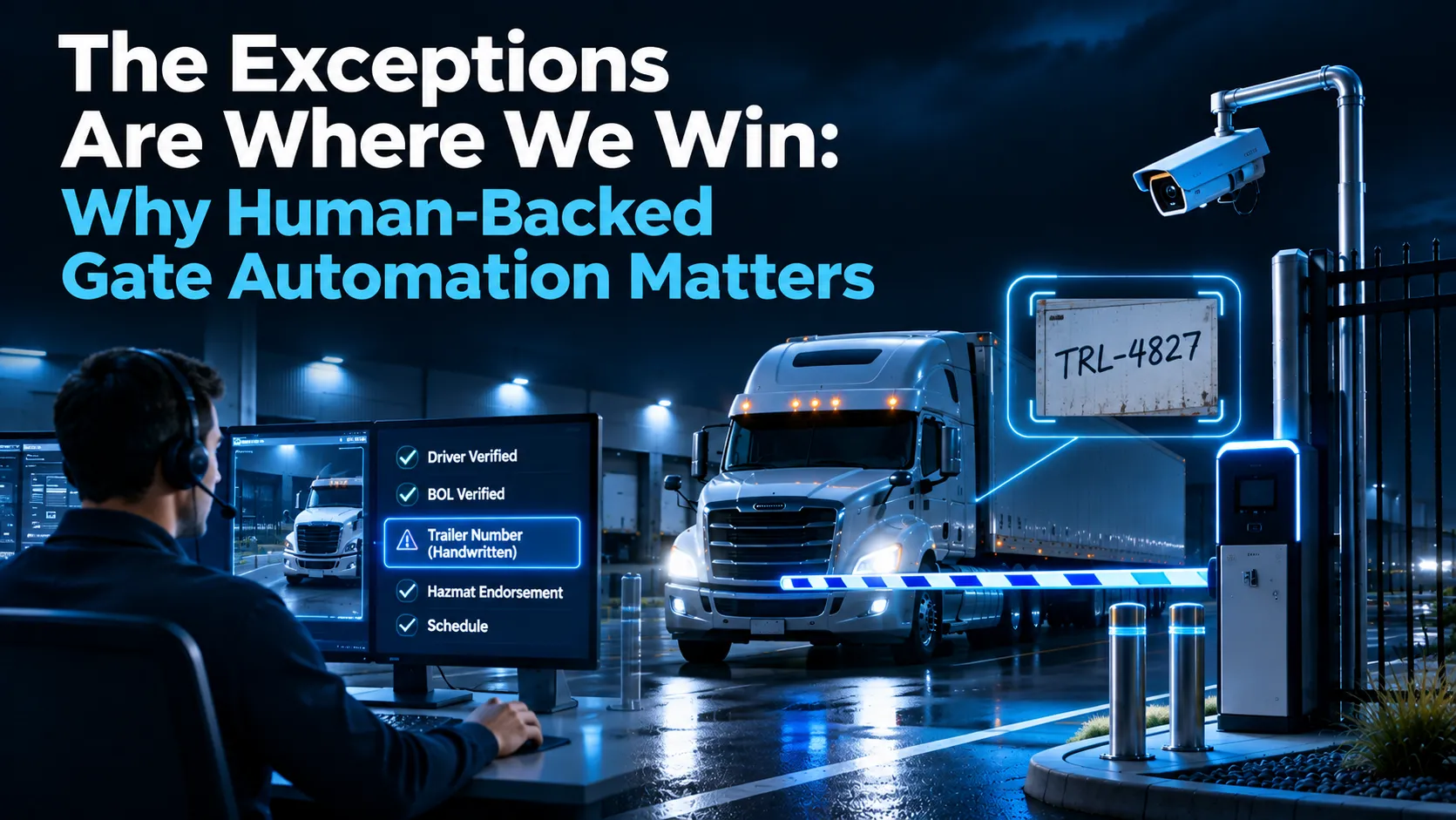
The real test begins when something does not match. A trailer number is handwritten. The BOL is off by one digit. A different driver arrives than the one expected. A hazardous-material shipment reaches the gate, but the required endorsement cannot be confirmed. A seal number is almost right – but not quite.
These are not theoretical edge cases. They are normal operating conditions at busy logistics facilities. And this is where Birdseye takes a different approach to gate automation. Automation handles the routine. Trained remote agents resolve the exceptions.
What Is a Gate Automation Exception?
A gate exception is any transaction that cannot safely or confidently continue through the normal automated workflow. The system has enough information to know that something is wrong – or at least uncertain – but not enough context to decide what that difference means.
| Gate Exception | Why It Matters | What Needs to Happen |
| Handwritten trailer number | OCR or camera identification may not confidently match the expected trailer | Review the identifier and transaction context |
| BOL off by one digit | Could be a typo, wrong shipment, or fraudulent pickup attempt | Verify before releasing or admitting the load |
| Unscheduled driver | The shipment may be legitimate, but the person collecting it is different | Confirm identity and authorization |
| Missing hazmat endorsement | The driver’s credentials may not satisfy the site’s protocol for the shipment | Stop the workflow and verify before proceeding |
| Seal mismatch | The physical trailer condition does not match the expected record | Resolve the discrepancy before continuing |
The important distinction is simple: An exception does not always mean something is wrong. But it does mean the system should not guess.
The Happy Path Is Becoming a Commodity
Modern gate systems can automate a great deal of repetitive work. Computer vision can identify vehicles. OCR can read truck and trailer numbers. License plates can be captured automatically.
Appointment data can be compared against incoming vehicles. Drivers can pre-register. Systems can validate information against TMS, WMS, YMS, ERP, or other operational platforms.
When everything lines up, the gate transaction can happen extremely quickly. That is exactly where automation should be used.
There is little value in paying a person to manually repeat a perfectly predictable process hundreds of times per day. But the happy path is not where logistics gets difficult.
Operations get difficult when reality stops looking like the database.
Exception #1: The Trailer Number Is Handwritten
Trailer identification sounds simple on a sales demo. Real yards are different. Trailer numbers can be:
- faded;
- dirty;
- partially damaged;
- covered by grime or snow;
- positioned at an awkward angle;
- temporarily relabeled; or
- handwritten.
Modern OCR can solve a large percentage of those cases. But eventually the system encounters an identifier it cannot read with enough confidence. At that moment, forcing the automation to make a decision creates unnecessary risk. Rejecting every low-confidence result creates a different problem: operational friction.
Now a perfectly legitimate truck is sitting at the gate because one number is difficult to read.
Birdseye’s model gives the transaction somewhere to go.
A trained remote agent can review the available information, compare the visible identifier with the expected transaction, and apply the facility’s defined procedure. The automation does not need to pretend it knows something it does not. And the operations team does not need to abandon its normal work every time the camera encounters imperfect lettering.
Exception #2: The BOL Is Off by One Digit
A Bill of Lading mismatch is exactly the kind of problem where pure automation can struggle.
Imagine the system expects:
487361
The document presented at the gate says:
487316
Everything else looks legitimate. Same carrier. Same customer. Same approximate arrival time. Same type of freight. What happened?
- Maybe somebody transposed two digits.
- Maybe dispatch entered the reference incorrectly.
- Maybe the driver brought the wrong document.
- Maybe it is the wrong shipment.
Or maybe somebody is using legitimate-looking shipment information to collect freight they are not authorized to take.
The FBI identifies fictitious pickups, identity theft, fraudulent carriers, account takeovers, double brokering, and other deceptive methods as forms of strategic cargo theft. That is why a mismatch cannot simply be waved through because the transaction looks mostly correct. FBI cargo theft guidance
The correct response is not automatic approval or automatic denial. It is controlled verification.
A trained remote agent can review the exception according to the customer’s protocol and determine what additional verification is required before the transaction moves forward.
Exception #3: The Driver Is Not on the Schedule
This is one of the most important examples because legitimate logistics operations change constantly.
- Drivers call in sick.
- Dispatch replaces them.
- A route changes.
- A carrier sends someone else.
- A truck breaks down.
- A pickup gets reassigned.
- An unscheduled driver does not automatically mean fraud.
But an unscheduled driver should also not automatically receive access because they know the right company name and shipment number.
The FBI specifically recommends confirming the positive identity of drivers at pickup, including driver, truck, and trailer information. FBI cargo theft guidance That creates exactly the kind of scenario where exception handling matters. The system identifies the mismatch:
Expected driver != arriving driver.
Then a trained agent can follow the required verification process instead of forcing an automated yes/no decision.
The driver may be completely legitimate. The point is to prove it before the gate opens or freight is released.
Exception #4: The Required Hazmat Endorsement Is Missing
Some gate exceptions are more than operational inconveniences. They can involve safety or compliance requirements. FMCSA identifies the H endorsement for hazardous materials and the X endorsement for the combination of tank vehicles and hazardous materials. FMCSA CDL endorsement guidance
If the site’s workflow requires verification of the appropriate endorsement and the expected credential cannot be confirmed, the system should not simply continue because everything else matches.
This is another moment where good automation should know its limit.
Automation should identify the exception. It should not improvise the compliance decision.
The transaction can be held while a trained agent applies the customer’s defined procedure. The objective is not for Birdseye to replace the facility’s compliance function. The objective is to make sure an unresolved credential issue does not quietly become an approved gate transaction.
Exception #5: The Seal Is Almost Right
Consider another small discrepancy.
Expected seal:
829461
Observed seal:
829416
- One swapped pair of digits.
- It could be a data-entry error.
- It could be the wrong trailer.
- It could indicate the shipment documentation changed.
- It could mean the seal was replaced.
The important point is that the system caught the difference.
Detecting the mismatch is automation’s job. Understanding the mismatch is the exception workflow.
This Is Where Different Gate Automation Philosophies Separate
There are different approaches to gate automation in the market.
Some solutions are designed around the idea of removing human involvement from the gate transaction as completely as possible. When the expected data matches, the system validates the vehicle, processes the transaction, and opens the gate automatically. That approach works well for routine, predictable transactions.
Birdseye agrees with the core principle: People should not spend their time performing repetitive work that technology can handle consistently.
Where Birdseye takes a different approach is what happens when the transaction stops being predictable. We do not believe the goal should be to eliminate human judgment from every gate decision.
We believe the goal should be to automate the routine and reserve human attention for the moments where context, verification, and judgment actually matter.
Automation should handle what is predictable. Trained people should handle what is not.
An Indoor Guard Is Still a Guard Model
Moving a guard from the gate booth to an indoor operations center changes the environment. It can centralize operations. It can remove people from weather exposure. It can allow one location to support more infrastructure. But it can still leave the organization thinking primarily in terms of:
Where should the guard sit?
Birdseye starts with a different question:
Which transactions actually need a person?
- Routine transaction? Automate it.
- Clear match? Automate it.
- Standard driver? Automate it.
- Known truck and trailer? Automate it.
- Expected document? Automate it.
But when the transaction becomes ambiguous, someone trained to resolve that ambiguity becomes valuable. This is not automation with a guard watching every truck.
It is automation with human redundancy when automation reaches an exception.
The Goal Is Not More Human Intervention
This distinction matters. A human-backed model should not mean a remote agent manually processes every truck. That would simply move the same inefficient workflow from a physical booth to a screen somewhere else.
The goal is exactly the opposite. Make the routine invisible. Let the software handle predictable work. Reserve human attention for the small number of situations where context matters.
The agent is not the workflow. The agent is the backup layer when the workflow encounters reality.
Why Exception Handling Protects Throughput
Security is only half the problem. Poor exception handling can also destroy gate throughput. Imagine five trucks waiting behind one driver whose BOL has a typo. If the automation has no defined resolution path, somebody inside the facility has to get involved.
The driver starts calling dispatch. Dispatch calls receiving. Receiving calls security. Security calls operations. Meanwhile, the queue grows. This is how a ten-second data problem becomes a twenty-minute operational problem.
Exception management protects both security and flow.
The facility does not need to choose between: “Let them through.” and “Stop everything.”
There is a third option: Resolve it.
The Exceptions Reveal Whether the System Understands the Operation
Anybody can design automation around a perfect workflow. Real operational maturity shows up in questions like:
- What happens when OCR confidence drops?
- What happens when the driver changes?
- What happens when two legitimate systems disagree?
- What happens when the BOL contains a typo?
- What happens when the seal number does not match?
- What happens when a required credential is missing?
- What happens when the appointment system has stale data?
- What happens when the network integration temporarily fails?
- What happens when the driver cannot explain the discrepancy?
Those questions matter more than how fast the demo truck gets through the gate.
Two Bad Ways to Handle Exceptions
1. Be Too Permissive
If mismatches happen often and operators routinely override them, verification eventually becomes meaningless.
The culture becomes: “It’s probably fine.”
That is exactly the kind of environment strategic cargo theft can exploit.
2. Be Too Restrictive
If every mismatch results in automatic rejection, legitimate operations suffer. Drivers wait. Queues build. Operations teams get interrupted. Dispatch starts calling.
People begin looking for ways around the automation because the system creates too much friction.
A mature gate operation needs controlled flexibility.
Human-Backed Does Not Mean Human-Dependent
This may be the most important distinction. Birdseye’s model is not designed around making people necessary for every transaction. It is designed so that people are available when they are necessary.
That is very different. Routine automation still creates the primary efficiency.
The trained remote agent provides resilience when an unusual situation would otherwise:
- stop the gate;
- create an unsafe assumption;
- require facility staff intervention;
- cause an unnecessary rejection; or
- turn a suspicious mismatch into an automatic approval.
We Don’t Publish the Playbook
There are parts of a professional remote security operation that should not be described publicly in detail. That includes internal staffing ratios. It includes detailed escalation trees. It includes security-sensitive internal operating procedures. Those details belong inside the operation and the customer relationship – not on a public website.
What matters publicly is the capability: when the automated workflow encounters something it cannot safely resolve, trained remote support is available to handle the exception.
What Should You Ask a Gate Automation Vendor?
When evaluating gate automation, do not spend the entire demo watching perfect transactions. Ask the vendor to explain the imperfect ones.
Ask:
- What happens when the trailer number is unreadable?
- What happens if the BOL is one digit off?
- What happens if a different driver arrives?
- What happens when a required endorsement cannot be verified?
- What happens when the seal does not match?
- What happens when your TMS and driver information conflict?
- What happens when an integration goes offline?
- Who resolves the exception?
- Does your own operations team need to get involved?
- Is the final decision documented?
The answers tell you whether you are looking at a gate demo or a real gate operating system.
How GATECORE Approaches the Problem
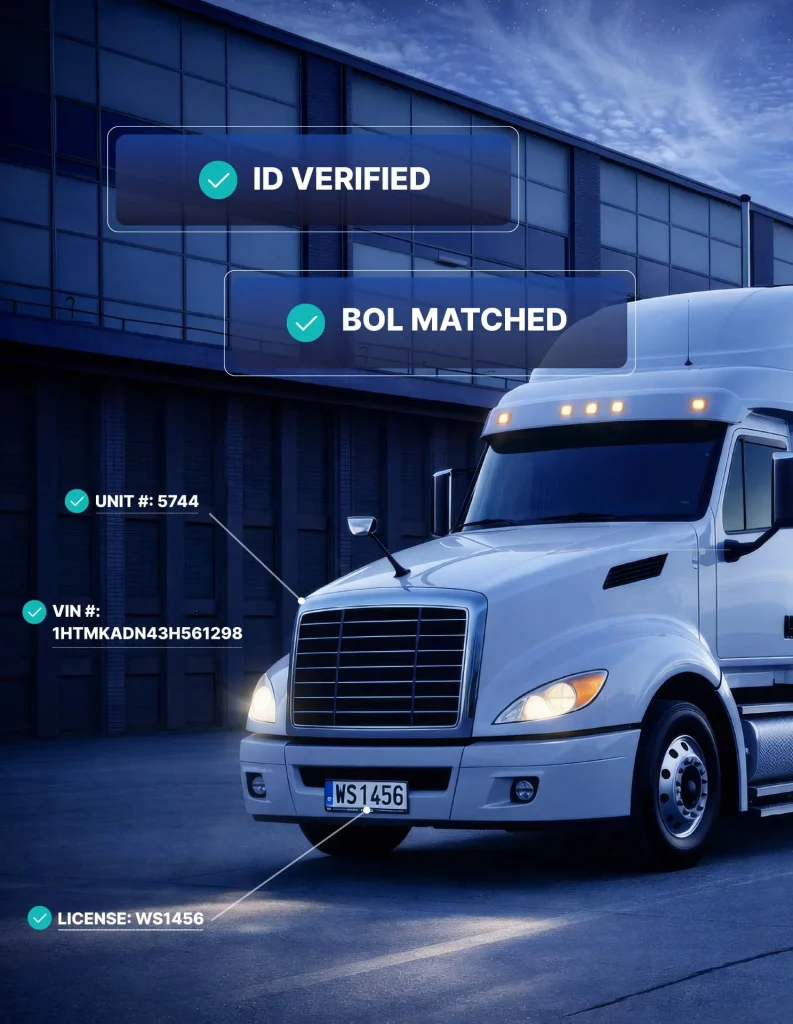
GATECORE is designed around both sides of the gate transaction.
The routine side:
- driver verification;
- truck and trailer identification;
- document capture;
- seal checks;
- access workflows; and
- digital transaction records.
And the exception side:
What happens when the real-world transaction does not cleanly match the expected workflow?
Birdseye combines automation with trained remote support so the system does not have to pretend every transaction is perfect.
The Exceptions Are Where We Win
The easy transaction is becoming easier for everyone.
- Recognize the truck.
- Read the plate.
- Match the appointment.
- Open the gate.
- That is useful technology.
- But it is not where the hardest operational value lives.
The hard part is:
- TRL-4827 written by hand.
- A BOL with two digits swapped.
- A driver nobody expected.
- A credential that should be there but is not.
- A seal that almost matches.
Because the moment something does not line up, the system has to choose between guessing, stopping, or resolving.Birdseye is built for the third option. The exceptions are where we win.
Frequently Asked Questions
What is a gate automation exception?
A gate automation exception is a transaction that does not match the expected gate workflow closely enough to continue automatically. Examples include driver mismatches, unreadable trailer numbers, document errors, seal discrepancies, or missing credentials.
Why not automatically reject every gate exception?
Because legitimate logistics operations frequently change. A substituted driver or typo may be valid, while the same discrepancy could also indicate a security problem. The exception should be verified rather than automatically ignored or rejected.
What is human-backed gate automation?
Human-backed gate automation uses software and AI for routine transactions while trained personnel remain available for situations requiring context, additional verification, or judgment.
Does human-backed automation require someone to watch every transaction?
No. The purpose is to automate repetitive transactions and involve trained personnel only when an exception requires additional attention.
What are common truck gate exceptions?
Common examples include unscheduled drivers, trailer substitutions, handwritten or unreadable trailer numbers, BOL mismatches, seal discrepancies, appointment errors, missing credentials, and temporary data or integration problems.
What should happen when automation cannot make a decision?
The transaction should enter a defined exception process rather than forcing the software to guess or requiring the facility’s operations team to improvise a solution.
Automate the Routine. Resolve the Exception.
The best gate automation should make normal transactions almost invisible. And when the transaction stops being normal, it should have somewhere intelligent to go.