Direct Answer: Why Is Driver Verification Important at Warehouse Gates?
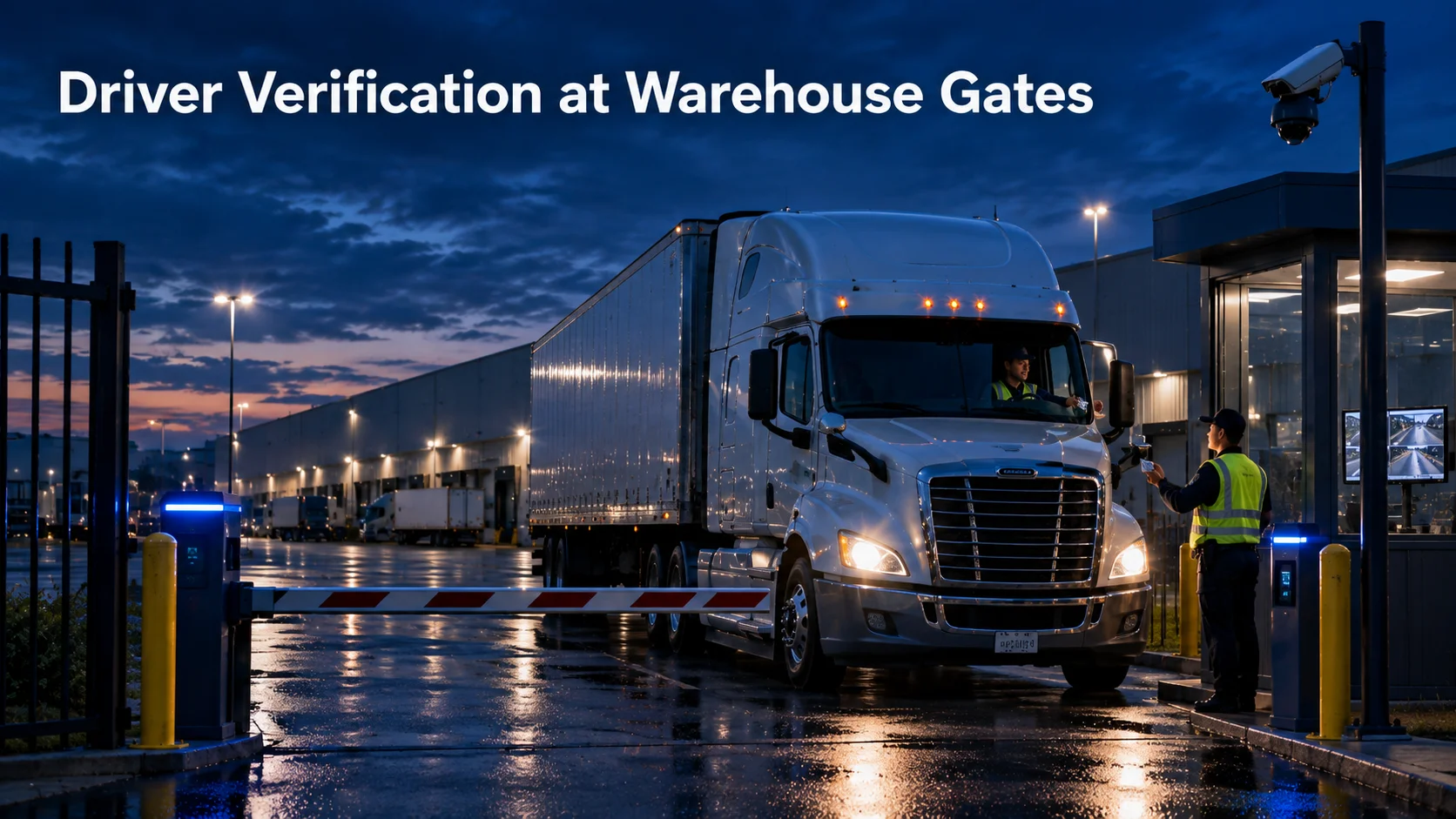
Driver verification at warehouse gates is important because the gate is where cargo security, access control, documentation, and facility operations meet. If a facility cannot verify who the driver is, what carrier they represent, what truck and trailer are involved, and whether the pickup or delivery is legitimate, the facility creates risk before the freight ever moves.
For warehouses, distribution centers, logistics yards, manufacturing sites, truck terminals, and industrial facilities, driver verification is not just a security step. It is a supply chain control.
A strong driver verification process helps facilities reduce unauthorized access, fraudulent pickups, cargo theft exposure, documentation gaps, trailer mismatches, seal issues, and customer disputes.
Birdseye helps facilities strengthen driver verification through GATECORE, supported by YARDCORE, SAFECORE, The Portal, AI-powered monitoring, and trained human verification.
For a broader breakdown of how gate workflows should work, read our complete guide to truck yard gate automation.
Quick Summary: What Driver Verification Should Confirm
| Verification point | What it confirms | Why it matters |
|---|---|---|
| Driver identity | Confirms who is requesting access | Reduces unauthorized access and fraudulent pickup risk |
| Carrier information | Confirms the company connected to the load | Helps detect wrong carrier or carrier impersonation issues |
| Truck details | Confirms the vehicle involved in the gate event | Creates a stronger access record |
| Trailer details | Confirms the trailer or container connected to the visit | Reduces trailer mismatch and shipment dispute risk |
| Appointment or pickup number | Confirms the driver is tied to an expected transaction | Helps prevent false or unscheduled pickups |
| Bill of Lading | Confirms shipment documentation | Supports cargo security, claims, and customer review |
| Seal status | Confirms shipment integrity when required | Helps identify missing, damaged, or mismatched seals |
| Access decision | Confirms whether entry or exit was approved, denied, held, or escalated | Creates accountability and reviewable gate records |
What Is Driver Verification at a Warehouse Gate?
Driver verification is the process of confirming that a driver requesting access to a facility is expected, authorized, and connected to the correct pickup, delivery, vendor visit, or operational reason.
At a warehouse gate, driver verification usually involves more than checking a name.
A strong verification process may include:
- Driver identity
- Carrier information
- Appointment details
- Pickup or delivery number
- Truck number
- License plate
- Trailer number
- Bill of Lading
- Seal number
- Access instructions
- Entry or exit status
- Exception notes
- Video-backed confirmation
The goal is simple:
Before a truck enters or exits, the facility should know who is involved, what equipment is involved, what shipment is involved, and what decision was made.
Without that clarity, the gate becomes a weak point.
Why Driver Verification Matters More Than Ever
Cargo theft has become more organized, more strategic, and more dependent on weak verification processes.
The FBI’s cargo theft guidance recommends that businesses confirm positive identities of drivers at pickup, including driver information, truck information, trailer identifiers, and secure pickup numbers.
That recommendation matters because many modern cargo theft schemes do not begin with someone breaking through a fence.
- They may begin with a driver who appears legitimate.
- A carrier that seems familiar.
- A pickup number that looks correct.
- A truck that arrives during a busy window.
- A trailer that is not checked closely.
- A document that is reviewed but not captured.
- A gate process that moves too quickly.
The FBI/IC3 has also warned that cyber-enabled strategic cargo theft can involve spoofed emails, fake URLs, compromised carrier accounts, fraudulent carrier activity, and shipment misdirection.
That makes driver verification a frontline defense.
If the gate does not verify the driver and transaction properly, the facility may not realize something is wrong until the load is already gone.
Driver Verification Is Not the Same as Guard Check-In
Many facilities believe they already verify drivers because they have a guard at the gate.
But guard check-in and structured driver verification are not the same thing.
- A guard may ask for a name.
- A guard may write down a trailer number.
- A guard may look at a BOL.
- A guard may call shipping or receiving.
- A guard may open the gate after a short conversation.
That can be helpful, but it can also be inconsistent.
Different guards may follow different habits. Busy shifts may lead to skipped steps. Paper logs may be incomplete. Trailer numbers may be written incorrectly. BOLs may be checked but not captured. Exceptions may be handled verbally without a record.
A staffed gate is not always a verified gate.
Driver verification should be a repeatable workflow, not a memory-based process.
That is where automated truck gate check-in and GATECORE become valuable.
For more on the full check-in workflow, read our guide to automated truck gate check-in.
The Main Risks of Weak Driver Verification
Weak driver verification can create several security and operational problems.
Unauthorized Access
If a driver is not properly verified, the facility may allow the wrong person, vehicle, or carrier onto the property.
This creates risk for employees, freight, equipment, trailers, outdoor storage, and restricted zones.
Unauthorized access does not always look dramatic. Sometimes it looks like a normal truck arriving at a busy gate.
That is why verification matters.
Fraudulent Pickup Risk
Fraudulent pickups are one of the most serious risks at warehouse gates.
A fraudulent pickup may involve a driver, carrier, or shipment request that appears legitimate but is not.
The facility may release freight because the paperwork looks close enough, the driver has a pickup number, or the gate team is under pressure to keep trucks moving.
Driver verification helps reduce fraudulent pickup risk by forcing the gate event through a structured confirmation process.
Trailer Mismatch Problems
A driver may be legitimate, but the trailer may still be wrong.
Trailer numbers, container numbers, chassis details, and equipment identifiers matter because they connect the physical asset to the shipment record.
If trailer details are not captured accurately, the facility may struggle to answer basic questions later:
- Which trailer entered?
- Which trailer exited?
- Was the trailer connected to the right shipment?
- Was the trailer switched?
- Was the trailer dropped in the correct yard location?
- Can the transaction be reviewed later?
Driver verification should always connect driver identity to truck and trailer documentation.
BOL and Documentation Gaps
A Bill of Lading is one of the most important shipment documents in freight movement.
But many manual gate processes treat BOL review too casually.
A guard may look at the document but not capture it. A driver may show incomplete paperwork. A photo may be blurry. The document may not be connected to the gate transaction. Later, the team may not know exactly what was reviewed.
A gate event is stronger when the BOL is captured, connected, and searchable.
That matters for cargo theft prevention, claims, customer disputes, and internal review.
Seal Check Issues
Seal checks are another important part of supply chain security.
A seal may be missing, damaged, mismatched, or not documented. If the facility does not capture the seal status at the gate, it may be harder to prove when the issue happened.
CBP’s CTPAT supply chain security program is built around protecting the supply chain, identifying security gaps, and implementing security measures and best practices.
For warehouse and logistics operations, the principle is clear:
Verification and documentation are part of supply chain security.
Driver verification should connect to BOL capture, seal checks, and access decisions whenever those details matter.
Poor Incident Review
The value of driver verification becomes obvious when something goes wrong.
- A shipment is missing.
- A carrier disputes a pickup.
- A customer asks for proof.
- A trailer leaves with the wrong load.
- A seal issue is discovered.
- A gate event is questioned.
- A security incident needs investigation.
If the facility has to search through paper logs, disconnected cameras, emails, phone calls, and memory, the investigation becomes slower and weaker.
A strong driver verification process creates searchable records.
That is where The Portal helps. The Portal centralizes gate transactions, yard events, perimeter alerts, incident records, and operational activity so teams can review what happened faster.
What a Strong Driver Verification Workflow Should Include
A strong driver verification workflow should be clear, repeatable, and documented.
Step 1: Confirm the Driver
The first step is confirming who the driver is.
The facility should verify driver identity against the expected pickup, delivery, appointment, vendor visit, or access request.
This may include driver name, carrier, ID information, appointment details, pickup number, delivery number, or other site-specific requirements.
The key is consistency.
Every driver should move through the same required verification process, not a different process depending on who is working the gate.
Step 2: Confirm the Carrier
Driver verification should also confirm the carrier connected to the transaction.
This matters because cargo theft schemes can involve carrier impersonation, fraudulent carrier activity, account takeover, double brokering, or shipment misdirection.
The FBI Philadelphia office has warned the transportation and logistics industry about rising cargo theft threats, including strategic theft schemes involving fraud and deception.
For facilities, this means carrier verification should not be casual.
- A logo on the truck is not enough.
- A familiar company name is not enough.
- A pickup number alone is not enough.
- A verbal explanation is not enough.
The gate needs a trusted workflow.
Step 3: Confirm the Truck
The truck should be documented as part of the access event.
This can include truck number, license plate, carrier markings, vehicle type, gate lane, timestamp, and video-backed evidence.
Truck details help connect the physical event to the digital record.
This is useful for access control, investigation, claims, customer disputes, and operational review.
Step 4: Confirm the Trailer
The trailer is often the most important asset in the transaction.
A driver may arrive with the wrong trailer. A trailer number may be misread. A trailer may be swapped. A trailer may be dropped in the wrong area. A trailer may leave without a clean exit record.
Driver verification should include trailer verification.
This may include trailer number, container number, chassis information, trailer status, loaded/empty status, and entry or exit direction.
The driver, truck, trailer, and shipment should be connected in one gate transaction record.
Step 5: Capture the BOL
When required, the Bill of Lading should be captured and tied to the gate event.
This creates a stronger record than simply “checking” the document.
A captured BOL helps the facility prove what was presented, when it was presented, and how it connected to the access decision.
For facilities handling high-value freight, frequent pickups, multiple carriers, or customer disputes, this is especially important.
Step 6: Document the Seal
If the workflow requires a seal check, the seal should be documented.
This may include seal number, seal condition, missing seal, damaged seal, mismatched seal, or hold-for-review status.
Seal issues should not live only in a guard’s memory or a handwritten note. They should be part of the transaction record.
Step 7: Approve, Deny, Hold, or Escalate
After the verification steps, the facility needs a clear access decision.
The outcome may be:
- Approved entry
- Approved exit
- Denied access
- Hold for review
- Send to staging
- Contact site manager
- Escalate exception
- Request additional documentation
- Document unusual activity
This is where human verification matters.
Not every gate event should be handled the same way. A routine delivery may be approved quickly. A mismatched trailer may need escalation. A missing BOL may require review. A damaged seal may need site approval.
The strongest gate workflows combine automation with trained human judgment.
Step 8: Store the Transaction Record
The final step is storing the gate transaction.
This is where driver verification becomes useful beyond the moment of entry or exit.
A complete gate transaction record may include driver details, carrier details, truck information, trailer information, BOL capture, seal status, timestamp, access decision, exception notes, video-backed evidence, and remote agent actions.
The Portal helps make those records easier to find and review later.
Why Human Verification Still Matters
AI and automation can make driver verification faster and more consistent, but human verification remains critical.
Warehouse gates are full of exceptions.
- A driver may arrive early.
- A pickup number may not match.
- A BOL may be unclear.
- A trailer number may be wrong.
- A seal may be damaged.
- A carrier may substitute equipment.
- A vendor may arrive unexpectedly.
- After-hours access may require special approval.
A fully automated system may struggle with those real-world situations.
The Monitoring Association’s AVS-01 Alarm Validation Scoring Standard reflects the broader security industry shift toward validated events and better response prioritization.
The same idea applies at the gate.
The facility needs better information before it makes an access decision.
- AI can help detect.
- Automation can guide the workflow.
- Human verification can interpret the context.
- The Portal can document the result.
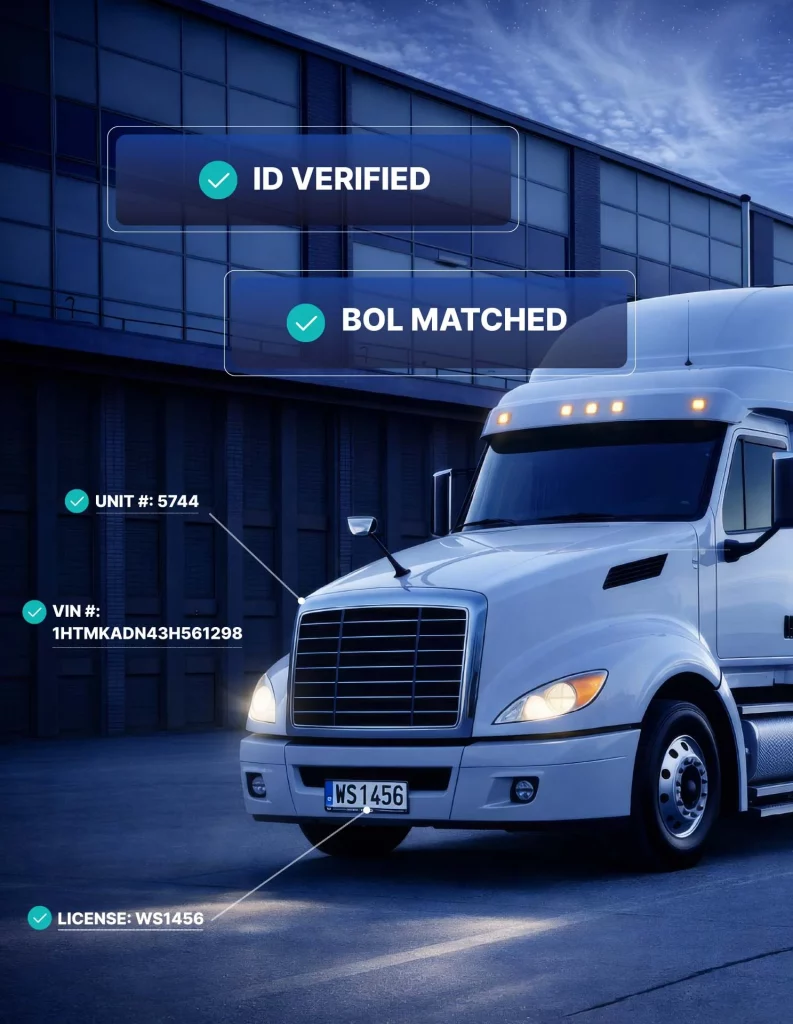
How GATECORE Supports Driver Verification
GATECORE helps facilities turn driver verification into a structured gate workflow.
Instead of relying only on a guard, clipboard, camera, and phone call, GATECORE supports a more complete process:
- Driver verification
- Carrier confirmation
- Vehicle and trailer logging
- License plate capture
- BOL documentation
- Seal checks
- Access workflows
- Gate transaction records
- Remote supervision
- Exception handling
- Video-backed review
The goal is not just to open the gate faster.
The goal is to create a gate transaction that is verified, documented, and reviewable.
That matters for cargo theft prevention, guard workload reduction, customer service, claims, audits, compliance support, and operational control.
How YARDCORE Extends Verification After Entry
Driver verification does not end every risk.
Once a truck enters the property, the yard becomes the next visibility layer.
- A driver may go to the wrong dock.
- A trailer may be dropped in the wrong row.
- A vehicle may enter a restricted zone.
- A vendor may move through an operational area.
- A safety issue may develop away from the gate.
YARDCORE helps facilities supervise yard activity after access is granted.
This matters because a verified gate event is only the beginning of the facility timeline.
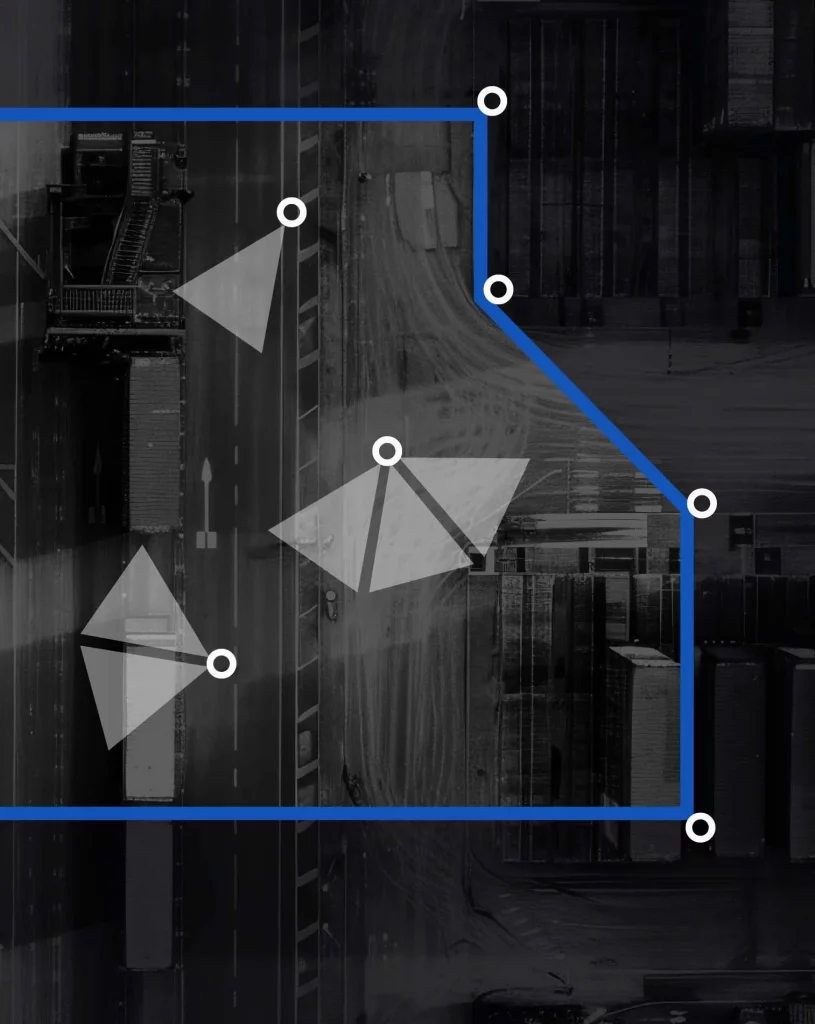
The stronger model is connected visibility:
GATECORE verifies the access event.
YARDCORE monitors what happens after entry.
The Portal helps centralize the record.
How SAFECORE Protects Against Unexpected Access
Driver verification controls expected access.
Perimeter monitoring helps detect unexpected access.
Facilities still need to protect fence lines, side gates, outdoor storage zones, trailer rows, employee lots, and restricted areas.
CISA provides physical security resources for facility-level security planning, preparedness, and resilience.
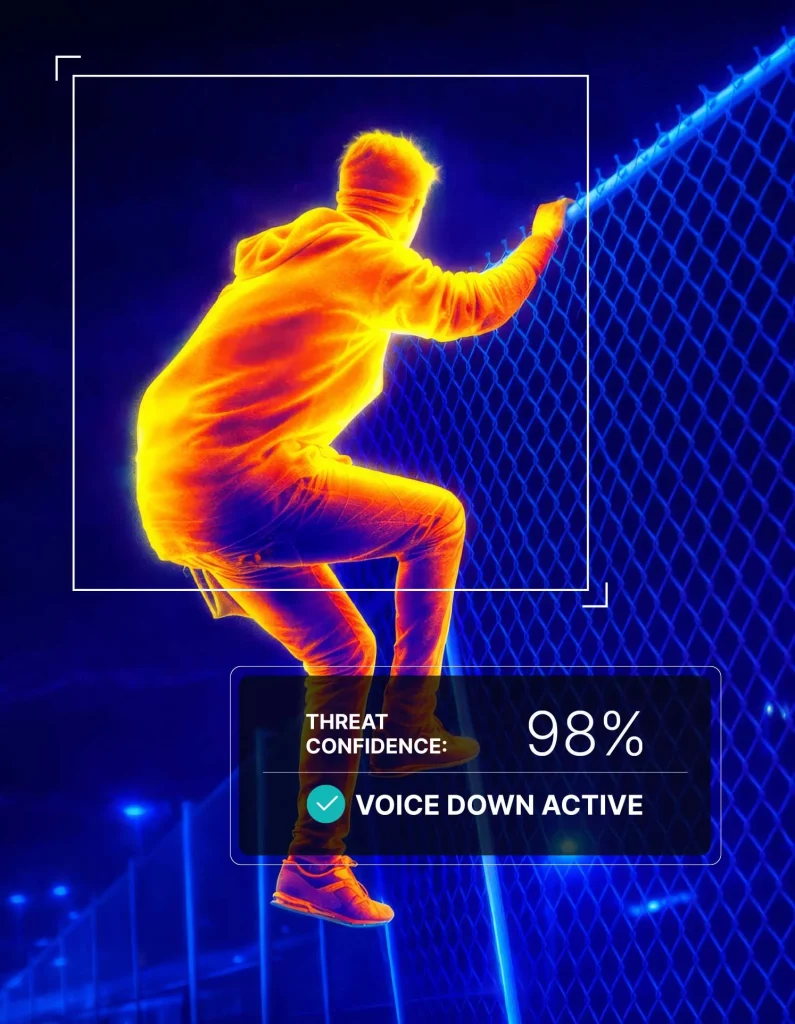
SAFECORE helps facilities protect perimeter areas with AI-powered detection, human verification, live intervention, escalation procedures, and incident documentation.
This matters because not every access risk happens at the main gate.
A facility needs both verified gate access and perimeter visibility.
How The Portal Turns Driver Verification Into a Record
Driver verification is most valuable when it becomes a usable record.
A facility may verify a driver correctly in the moment, but if that information is not stored clearly, it becomes harder to use later.
The Portal helps centralize gate transactions, yard events, perimeter alerts, incident records, and operational activity.
That gives teams a better way to review:
- Who entered
- When they entered
- What carrier was involved
- What truck was used
- What trailer was connected
- What documents were captured
- What seal was checked
- What decision was made
- What exception occurred
- What happened after entry
- What perimeter activity may be related
The Portal turns driver verification from a one-time gate decision into long-term operational intelligence.
Driver Verification and Cargo Theft Prevention
Driver verification is one of the most important facility-level controls for cargo theft prevention.
Cargo theft often takes advantage of gaps between transportation systems, brokers, carriers, drivers, and facility operations.
A facility may believe a pickup is legitimate because it appears in the schedule. A driver may have enough information to sound credible. A carrier name may appear familiar. A document may look close enough during a busy shift.
That is exactly why verification needs structure.
Strong driver verification helps reduce risk by confirming the person, vehicle, trailer, documents, seal, and access decision before freight is released or moved. It also creates a record if the transaction is questioned later. Cargo theft prevention starts before the load leaves the gate.
Driver Verification and Guard Workload
Driver verification is one of the tasks that often overwhelms gate guards.
A guard may be expected to check identity, review paperwork, log vehicle details, check trailers, contact managers, manage exceptions, and keep traffic moving.
That workload creates pressure.
When the gate backs up, shortcuts become tempting.
Automated driver verification helps reduce repetitive manual work while keeping human oversight where context matters.
For facilities exploring guard alternatives, read our guide to alternatives to security guards at truck gates.
The goal is not to remove accountability. The goal is to make the verification process more consistent and scalable.
Driver Verification and Customer Disputes
Driver verification also matters after the shipment moves.
When a customer asks for proof, the facility should be able to provide a clear answer.
- Who picked up the load?
- What truck and trailer were used?
- Was the BOL captured?
- Was the seal checked?
- When did the truck enter?
- When did it leave?
- Was there an exception?
- Who approved the access decision?
If that information is scattered, the customer experience suffers.
A clean gate transaction record helps facilities respond faster and with more confidence.
This is not only security. It is service quality.
Common Mistakes in Driver Verification
Mistake 1: Trusting the Driver’s Explanation
A driver’s explanation may be true, but it should not be the only source of verification.
The gate should confirm driver, carrier, vehicle, trailer, and shipment information through a structured process.
Mistake 2: Checking Documents Without Capturing Them
Looking at a BOL is not the same as documenting it.
If the facility cannot review the document later, the record is incomplete.
Mistake 3: Ignoring Trailer Details
Many facilities focus on the driver but fail to document the trailer properly.
Trailer verification is essential because the trailer is often the asset tied directly to the shipment.
Mistake 4: Skipping Seal Documentation
Seal checks should not be casual.
If a seal is missing, damaged, mismatched, or not documented, the facility may have a weak record if a dispute occurs.
Mistake 5: Treating Every Exception the Same
Not every issue requires the same response.
A missing appointment, mismatched trailer, damaged seal, unclear BOL, or after-hours pickup should follow the correct escalation path.
Mistake 6: Keeping Records in Separate Systems
Driver verification loses value when records are scattered across paper logs, camera systems, emails, phone calls, and spreadsheets.
Centralized reporting makes the process stronger.
What Should Facilities Track During Driver Verification?
A strong driver verification workflow should track:
- Driver name
- Carrier name
- Appointment details
- Pickup or delivery number
- Truck number
- Trailer number
- License plate
- BOL capture
- Seal number
- Seal condition
- Entry time
- Exit time
- Access decision
- Exception reason
- Remote agent notes
- Video evidence
- Yard destination
- Related yard activity
- Related perimeter activity
- Escalation record
The exact details depend on the facility.
The principle is simple:
If the information would matter during a cargo theft investigation, customer dispute, claim, audit, or security review, it should be captured at the gate.
Signs Your Facility Needs Better Driver Verification
Your facility may need a stronger driver verification process if:
- Drivers are waved through during busy periods.
- Gate logs are handwritten or inconsistent.
- BOLs are reviewed but not captured.
- Trailer numbers are hard to verify later.
- Seal checks are not documented.
- Carrier verification depends on guard judgment.
- Pickup numbers are not checked through a trusted process.
- Managers get frequent calls from the gate.
- Customers ask for proof that takes too long to find.
- Gate events are not connected to yard activity.
- After-hours pickups are difficult to control.
- Cargo theft risk is increasing.
- Incident investigations take too long.
These are signs that driver verification is not structured enough. Read our complete Guide to Truck Yard Gate Automation
Questions to Ask Before Improving Driver Verification
Before changing your gate process, ask:
- How do we verify drivers today?
- How do we confirm carriers?
- How do we document trucks and trailers?
- Do we capture license plates?
- Do we capture BOLs?
- Do we document seal checks?
- How do we handle mismatches?
- Who approves exceptions?
- Are access decisions documented?
- Can we review video tied to the transaction?
- Can we search gate records quickly?
- Is gate activity connected to yard visibility?
- Is perimeter activity connected to the same record?
- Can our process scale across multiple sites?
These questions help turn driver verification from a loose task into a real workflow.
Final Takeaway: Driver Verification Is the Foundation of Gate Security
Driver verification is one of the most important parts of warehouse gate security.
A gate cannot be secure if the facility does not know who is entering, what truck and trailer are involved, what documents were reviewed, what seal was checked, and what decision was made.
For logistics and industrial facilities, driver verification should be structured, consistent, human-verified, and documented.
Birdseye helps facilities build that model through GATECORE, YARDCORE, SAFECORE, The Portal, AI-powered monitoring, and trained human verification.
A stronger gate starts with a simple question:
Do we actually know who is at the gate?
If the answer is unclear, it is time to improve driver verification.
FAQs About Driver Verification at Warehouse Gates
What is driver verification at a warehouse gate?
Driver verification is the process of confirming that a driver requesting access to a warehouse, distribution center, truck yard, or industrial facility is expected, authorized, and connected to the correct pickup, delivery, vendor visit, or access request.
Why is driver verification important?
Driver verification is important because it helps reduce unauthorized access, fraudulent pickup risk, cargo theft exposure, documentation gaps, trailer mismatches, seal issues, and customer disputes.
What should be verified at the gate?
Facilities should verify driver identity, carrier information, appointment or pickup details, truck number, trailer number, license plate, Bill of Lading, seal status, access decision, and exception notes when applicable.
Can driver verification help prevent cargo theft?
Yes. Driver verification can help reduce cargo theft risk by confirming that the driver, carrier, truck, trailer, documents, and access request match the expected transaction before freight is released or moved.
Is a security guard enough for driver verification?
A security guard can help, but guard-only verification can be inconsistent. A stronger process uses structured workflows, AI-powered monitoring, human verification, digital records, and centralized reporting.
How does GATECORE support driver verification?
GATECORE supports driver verification by helping facilities document drivers, vehicles, trailers, license plates, BOLs, seal checks, access workflows, gate decisions, exceptions, and video-backed transaction records.
How does The Portal help with driver verification?
The Portal centralizes gate transactions, yard events, perimeter alerts, incident records, and operational activity so teams can review driver verification events and related facility activity from one place.