Most gate security conversations begin with entry.
Who is allowed onto the property? Is the driver expected? Does the truck have an appointment?
Those questions matter, but for cargo theft prevention the outbound gate can be even more important.
Once a loaded trailer leaves the property, the facility may lose its final physical opportunity to stop an unauthorized release.
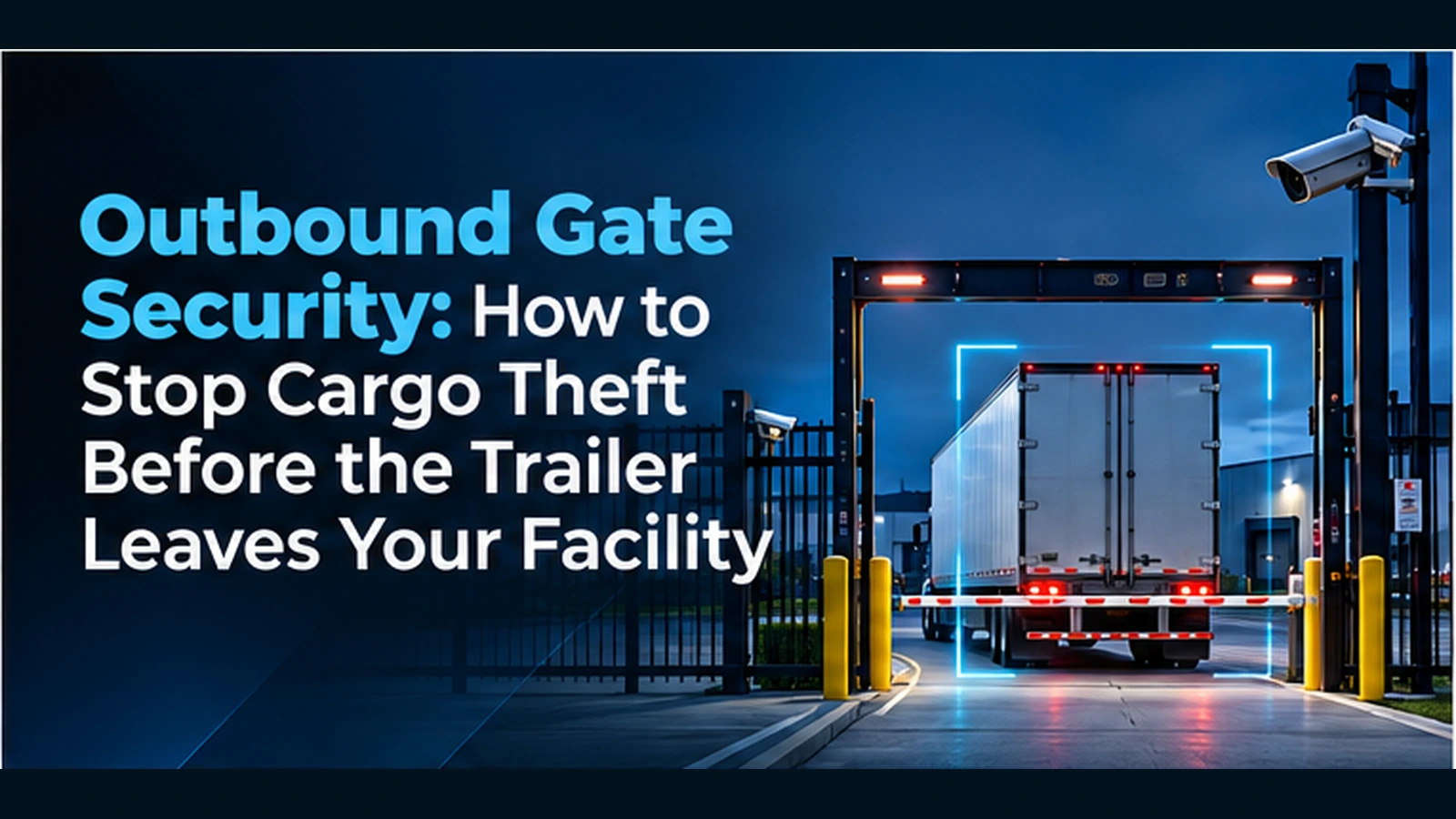
Outbound gate security is the process of verifying that the correct driver, carrier, tractor, trailer, shipment, documentation, and authorization all match before cargo is allowed to leave.
This is especially important as fraudulent pickups and strategic cargo theft become more sophisticated. The FBI says current strategic theft methods include fictitious pickups, identity theft, account takeovers, double brokering, and fraudulent carriers. See the FBI cargo theft overview.
Quick Answer: What Should an Outbound Gate Verify?
| Control | Question to Answer Before Exit |
|---|---|
| Driver | Is this the authorized person taking the load? |
| Carrier | Does the carrier match the approved shipment record? |
| Tractor | Is the tractor associated with the expected transaction? |
| Trailer | Is this the correct trailer or container? |
| Shipment | Does the load match the pickup or delivery authorization? |
| BOL / documents | Are the documents valid and consistent? |
| Seal | Is the seal number and condition correct where required? |
| Exception approval | If something changed, who approved the change? |
| Transaction record | Can the facility prove what left, when, and with whom? |
Why Outbound Security Deserves More Attention
Inbound security protects the facility from unauthorized access.
Outbound security protects the freight from unauthorized release.
Those are related but different risks.
A facility can correctly admit a legitimate carrier and still experience a problem later if the wrong trailer leaves, the driver changes, shipment instructions are altered, or a manual override bypasses the expected process.
The FBI’s June 2026 warning told logistics organizations to independently verify shipment requests, carrier information, and pickup details through trusted channels and to maintain detailed shipment, driver, vehicle, and delivery records. Read the FBI’s 2026 logistics warning.
The outbound gate is where those verification controls become a physical decision.
1. Verify the Driver Again at Release
A driver who entered earlier in the day may not be the same person who later arrives to remove a trailer.
Facilities with drop-and-hook operations, yard tractors, multiple shifts, or third-party pickup arrangements should not assume that initial entry verification automatically proves outbound authorization.
The exit workflow should identify the driver associated with the release.
Depending on the operation, this may include:
- Driver name
- Carrier
- Credential or identity status
- Pickup number
- Customer reference
- Appointment
- Exception approval if the driver changed
For more detail, see Driver Verification at Warehouse Gates.
2. Match the Tractor and Trailer to the Shipment
A common mistake is focusing on the driver while treating the equipment as secondary.
But the shipment leaves inside a trailer or container.
Outbound control should connect:
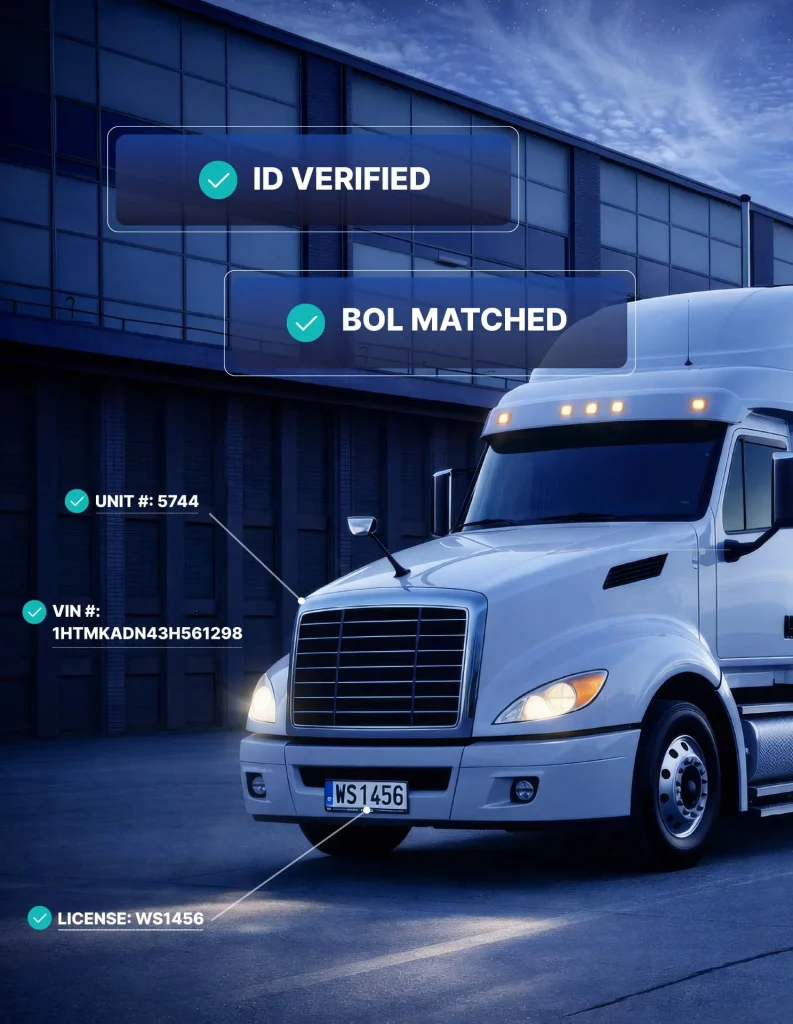
Driver → tractor → trailer → shipment.
If the expected trailer is 48192 and the driver presents 48129, the difference may be a simple operational change or a serious problem. Either way, it should be resolved before the barrier opens.
Automated identification can reduce manual transcription errors, but exception handling still matters when the equipment does not match.
3. Validate Shipment Documentation Before Release
A Bill of Lading, pickup order, customer reference, dispatch number, or release code may be part of the outbound transaction.
The key is not simply whether the driver possesses a document.
The key question is whether the document aligns with the expected transaction.
That means checking relevant information against the shipment record and documenting the result.
For high-risk freight, changed instructions should be confirmed through trusted channels rather than relying only on email, text, or caller ID.
CargoNet’s 2026 holiday guidance repeatedly emphasizes verifying changes through known contacts because organized theft groups can compromise accounts, phone systems, and communication channels. Review CargoNet’s 2026 theft guidance.
4. Treat Seal Verification as an Exit Control
Where trailer seals are used, the outbound gate can help confirm that the trailer leaving the facility is in the expected condition.
A useful record may include:
- Seal number
- Seal present or missing
- Seal intact or damaged
- Mismatch status
- Trailer number
- Timestamp
- Exception disposition
This becomes especially useful in customer disputes because it connects the seal condition with the exact equipment and release event.
Read BOL Capture and Seal Checks for a deeper explanation.
5. Do Not Let Changed Instructions Bypass the Gate
Strategic cargo theft often succeeds by changing information rather than physically defeating a security barrier.
The destination changes.
The pickup contact changes.
The driver is substituted.
A carrier relationship appears legitimate because a real account has been compromised.
NMFTA’s move to require identity verification in parts of the SCAC process shows how seriously the industry is treating carrier identity and impersonation. See NMFTA’s identity verification program.
The outbound gate needs a procedure for changed information, not just a procedure for normal traffic.
6. Make Manual Overrides Visible
Some transactions will require manual approval.
That is normal.
The problem is when the manual override becomes invisible.
A strong record should show:
- What did not match
- Who reviewed it
- What verification was performed
- Who authorized release
- When the gate opened
This protects both the facility and the employee or remote agent who made the decision.
It also allows management to identify recurring exception patterns.
7. Separate Routine Traffic From High-Risk Releases
Not every outbound transaction requires the same level of scrutiny.
A facility may choose stronger controls based on:
- High-value commodities
- After-hours departures
- New carriers
- Unscheduled pickups
- Changed instructions
- Customer-specific protocols
- Seal exceptions
- Known theft trends
This allows routine verified traffic to continue moving while higher-risk releases receive additional attention.
8. Connect Exit Security With Yard Visibility
Outbound security begins before the vehicle reaches the gate.
If the wrong trailer is moved from staging, the exit lane may be the final place to detect the error.
Yard visibility provides additional context:
- Where was the trailer staged?
- When did it move?
- Was it moved by the expected yard tractor?
- Was there unusual activity around it?
- Did it approach the exit at an expected time?
The more connected the yard and gate records are, the easier it is to investigate discrepancies.
9. Build a Searchable Outbound Transaction Record
A strong exit record should be easy to search later.
It may include:
- Driver
- Carrier
- Tractor
- Trailer
- License plate
- Customer
- Shipment reference
- BOL
- Seal data
- Exit time
- Gate lane
- Exception type
- Approval history
- Relevant video
The purpose is not paperwork. It is proof.
When someone asks what left at 2:14 a.m. three weeks ago, the answer should not depend on finding the right clipboard.
Read more about digital gate transaction records.
10. Measure Outbound Security Performance
Useful metrics include:
- Outbound transaction volume
- Average exit processing time
- Driver mismatch rate
- Trailer mismatch rate
- Document exception rate
- Seal exception rate
- Manual override rate
- After-hours release volume
- Exception resolution time
- Percentage of releases with complete records
This helps leadership determine whether tighter control is improving security without creating unnecessary gate friction.
Common Outbound Gate Security Mistakes
Assuming Entry Verification Covers Exit
Operations may change during the driver’s time on site. Release should be tied to the actual outbound transaction.
Checking the Driver but Not the Trailer
Identity is only one part of the release. The correct equipment needs to match the correct shipment.
Trusting Changed Instructions Without Independent Verification
Compromised accounts can make fraudulent instructions look legitimate.
Keeping Outbound Records on Paper
Paper makes high-volume review and investigation much harder.
Making Manual Overrides Untraceable
Every exception should show why it occurred and how it was resolved.
How Birdseye Supports Outbound Gate Security
GATECORE supports driver, vehicle, trailer, document, seal, and release workflows at the gate.
YARDCORE adds operational context when trailers move through the property.
The Portal helps centralize transactions and exception records for review.
When automation reaches an unusual transaction, trained Birdseye agents can step in and follow the facility’s defined protocol rather than allowing software to guess.
Outbound Gate Security Checklist
- Do we verify the actual outbound driver?
- Does the tractor match the transaction?
- Does the trailer match the shipment?
- Are documents validated against expected information?
- Are seals checked where required?
- Are changed instructions independently confirmed?
- Are high-risk releases treated differently?
- Are manual overrides documented?
- Can we search every outbound transaction later?
- Can we connect exit events to relevant yard and video records?
11. Build Different Release Protocols for Different Risk Levels
Not every shipment needs an identical outbound process.
A routine low-risk transfer involving a known carrier may move through an automated workflow. A high-value electronics load collected after hours by a substituted driver may deserve additional verification.
Facilities can create risk tiers based on customer, commodity, time of day, carrier history, shipment value, exception status, or other operational factors.
This allows security controls to become stronger where risk is higher without turning every exit into a slow manual process.
12. Test the Outbound Process With Real Scenarios
Policies often look stronger on paper than they perform in real operations.
Test scenarios such as:
- A driver arrives with the correct pickup number but the wrong trailer.
- A customer emails a last-minute change to the destination.
- A carrier substitutes a driver after hours.
- The seal number does not match the record.
- A trailer approaches the exit without a completed transaction.
Ask the team exactly what happens next.
If different shifts give different answers, the facility has an outbound-control gap even if the written policy looks complete.
Questions Logistics Leaders Should Ask About Outbound Release
- Which outbound decisions can be automated safely?
- Which exceptions always require a person?
- How are changed instructions independently verified?
- Can a supervisor see every manual override?
- How quickly can we locate the full record for a disputed release?
- Do we measure outbound processing time as well as security exceptions?
Implementation Tip: Start With the Highest-Risk Outbound Lane
Facilities do not always need to redesign every gate at once. A practical first step is to identify the lane, shift, customer group, or freight type with the greatest outbound risk and standardize that workflow first.
Document the current process, measure processing time, list the most common exceptions, and define which decisions can be automated. Then define the exact conditions that require human review.
This creates a controlled pilot that can be measured before the process is expanded to additional lanes or sites.
A good outbound-security project should improve verification without creating a permanent truck queue.
One final principle: an outbound control should be fast enough that teams do not feel pressure to bypass it. Security procedures that routinely create unnecessary delay are more likely to be overridden. Strong outbound design combines verification with a workflow that keeps legitimate freight moving.
Frequently Asked Questions About Outbound Gate Security
What is outbound gate security?
Outbound gate security is the process of verifying that the correct driver, carrier, tractor, trailer, shipment, documentation, and authorization are present before freight leaves a facility.
Why is outbound security important for cargo theft?
It may be the final physical checkpoint where a facility can stop an unauthorized trailer or fraudulent pickup before the cargo leaves the property.
Should warehouses verify drivers at both entry and exit?
For many operations, yes. Entry authorization and freight release are different decisions, and equipment or shipment details may change while a driver is on site.
Can outbound gate security be automated?
Routine matching and documentation can be automated, while exceptions such as mismatched trailers, changed drivers, or unusual release instructions can be escalated to a trained person.
What should an outbound gate record contain?
It should contain the driver, carrier, tractor, trailer, shipment reference, relevant documents, seal information where required, exit timestamp, access decision, and any exception approval.
Verify the Release Before the Freight Disappears Down the Road
Outbound gate security should be treated as a shipment release control, not just a traffic-control step.
The right question is not “Can this truck leave?” It is “Can we prove this is the correct driver, equipment, shipment, and authorization?”