Direct Answer: What Should Businesses Look for in AI Video Monitoring?
Businesses should look for AI video monitoring that combines fast detection, human verification, clear accountability, responsible data controls, and facility-specific workflows.
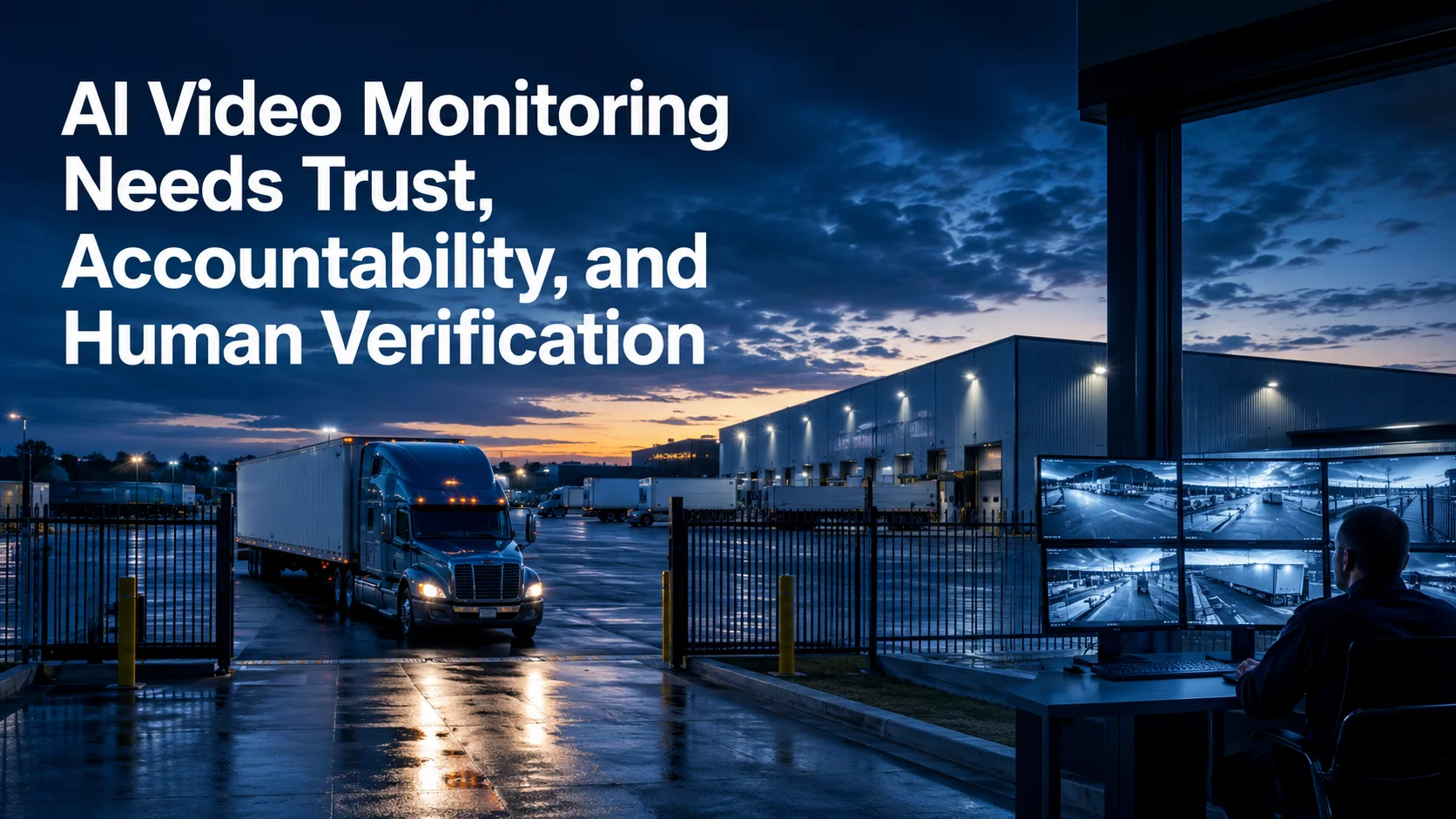
AI can help detect people, vehicles, unusual activity, perimeter movement, safety concerns, and operational exceptions. But AI alone is not a complete security strategy. For logistics facilities, warehouses, distribution centers, truck yards, manufacturing sites, and industrial operations, video monitoring needs to answer a bigger question:
Can the system detect what matters, verify the context, respond in real time, document the event, and protect sensitive data responsibly?
That is where the difference between generic AI surveillance and private facility security becomes important.
Birdseye helps industrial facilities improve visibility across gates, yards, perimeters, and facility records with GATECORE, SAFECORE, YARDCORE, The Portal, AI-powered monitoring, and trained human verification.
Quick Summary: Why Trust Matters in AI Video Monitoring
| Buyer concern | Why it matters | What facilities should look for |
|---|---|---|
| AI detection | AI can identify activity faster than manual monitoring alone | Use AI to surface important events, not flood teams with noise |
| Human verification | Industrial environments require context | Trained agents should verify whether an event is normal, suspicious, unsafe, or urgent |
| Data controls | Video systems may capture people, vehicles, license plates, documents, and operations | Providers should explain access, retention, audit trails, and data handling |
| Private facility focus | Securing a private yard is different from public surveillance | Monitoring should protect the facility, not create unnecessary surveillance concerns |
| Event documentation | Security is only useful if teams can review what happened | Records should connect gate, yard, perimeter, and incident activity |
| Operational workflow | Logistics sites are moving environments | Security should support how drivers, trailers, vendors, employees, and freight actually move |
Why This Topic Matters Now
AI physical security is moving quickly.
A recent ISCPO announcement about perimeter protection across logistics and distribution hubs shows that supply chain facilities are looking for stronger protection at fence lines, yards, and vulnerable outdoor areas.
Spot AI’s announcement around Video AI Agents for the Physical World shows that the market is moving beyond passive cameras toward systems that detect, reason, and trigger action.
At the same time, the public conversation around AI surveillance is becoming more serious. ASIS Security Management reported on Flock Safety’s accountability features following public backlash over ALPR technology. Flock also announced updates around privacy, accountability, security, and transparency safeguards, including a recommended seven-day ALPR data retention period, required misuse detection, case codes, and mandatory multi-factor authentication.
These are different companies with different products and audiences, but the signal is the same:
AI video monitoring is becoming more powerful, and buyers are going to ask harder questions about trust, accountability, and real-world use.
Private Facility Security Is Not Public Surveillance
There is an important distinction that businesses should understand.
Private facility security is not the same as public surveillance.
A logistics yard, warehouse, manufacturing site, distribution center, or transportation facility uses video monitoring to protect private property, employees, drivers, freight, equipment, access points, and operational workflows.
That is very different from public-facing surveillance networks that monitor roads, neighborhoods, or broad public spaces.
This distinction matters because many of the strongest objections to surveillance technology come from public use cases: who can search the data, how long information is retained, how broadly it is shared, whether oversight is strong enough, and whether the system can be misused.
Private facility security still needs responsible controls, but the purpose is more specific.
The goal is to answer operational security questions:
- Who entered the gate?
- Was the driver verified?
- What vehicle and trailer were involved?
- Was the Bill of Lading captured?
- Was the seal checked?
- What happened in the yard?
- Was there perimeter activity?
- Was the event documented?
- Who reviewed the event?
That is not mass public surveillance. That is facility supervision.
Why AI Alone Is Not Enough
AI can make video monitoring faster, smarter, and more scalable.
It can help detect people, vehicles, motion, loitering, after-hours activity, restricted-zone activity, perimeter movement, and unusual behavior. It can help security teams avoid staring at dozens of camera feeds and focus on events that deserve attention.
But AI detection is not the same as verified security. Industrial environments are full of context.
A person near a gate may be a driver, employee, vendor, contractor, visitor, or trespasser. A truck entering the facility may be expected, early, late, or unauthorized. A trailer movement may be normal yard activity or a sign that something is wrong. A perimeter alert may be harmless or urgent.
AI can identify the event.
Human verification helps determine what the event means.
That is why Birdseye uses AI-powered monitoring with trained human verification. AI helps find the signal. Human agents review the context, follow site-specific procedures, and support the right response.
More Alerts Are Not Better Security
One mistake businesses make with AI security is assuming that more alerts means better protection.
It does not.
More alerts can create more noise. More noise can create alert fatigue. Alert fatigue can cause teams to ignore events or respond too slowly.
The better goal is not more alerts. The better goal is better verified events.
The Monitoring Association’s AVS-01 Alarm Validation Scoring Standard reflects a broader industry shift toward stronger alarm validation and better response prioritization.
For logistics and industrial facilities, that principle matters.
- A motion event is not enough.
- A person detection is not enough.
- A vehicle alert is not enough.
- A gate event is not enough.
The facility needs to know whether the event is normal, suspicious, unsafe, urgent, or worth documenting.
That is where human verification becomes critical.
Responsible Data Controls Are Becoming a Buying Requirement
As AI video monitoring becomes more advanced, buyers need to ask better data questions.
Security systems may capture employees, drivers, vendors, visitors, vehicles, license plates, shipment documents, gate activity, yard movement, and facility operations.
That does not mean businesses should avoid video monitoring. It means they should use systems with clear controls.
The Security Industry Association’s Data Privacy Code of Practice for Video Surveillance outlines the importance of privacy-aware policies and responsible video practices. The FTC’s Protecting Personal Information guide also recommends that businesses know what information they collect, keep only what they need, protect what they keep, dispose of what they no longer need, and plan for security incidents.
For facility leaders, the practical questions are simple:
- Who can access video?
- Who can search event records?
- Are actions logged?
- How long is data retained?
- Can access be restricted by role?
- Can records be reviewed later?
- Is multi-factor authentication supported?
- Are incidents documented clearly?
- Can the provider explain how data is handled?
Trust is no longer a nice-to-have feature. It is part of the security product.
Why Accountability Matters Even for Private Facilities
Private facility security may be different from public surveillance, but accountability still matters.
A warehouse, logistics yard, or manufacturing site may not face the same public policy debate as a citywide camera network, but it still has employees, drivers, vendors, customers, insurers, auditors, and executives who need confidence in the system.
Accountability helps answer:
- Was the event reviewed?
- Who reviewed it?
- What action was taken?
- Was the response consistent with the facility’s procedure?
- Was the incident documented?
- Can managers review the timeline later?
- Can leadership prove that security protocols were followed?
Without accountability, video monitoring can become another black box. With accountability, video monitoring becomes a usable operational record. That is why The Portal matters in the Birdseye model.
GATECORE: Trust Starts at the Gate
The gate is one of the most important trust points in any logistics or industrial facility.
Every gate transaction creates a security decision. A driver arrives. A vehicle approaches. A trailer enters or exits. A document is presented. A seal may need to be checked. A shipment may be released or staged.
If this process is manual, inconsistent, or poorly documented, the facility creates risk.
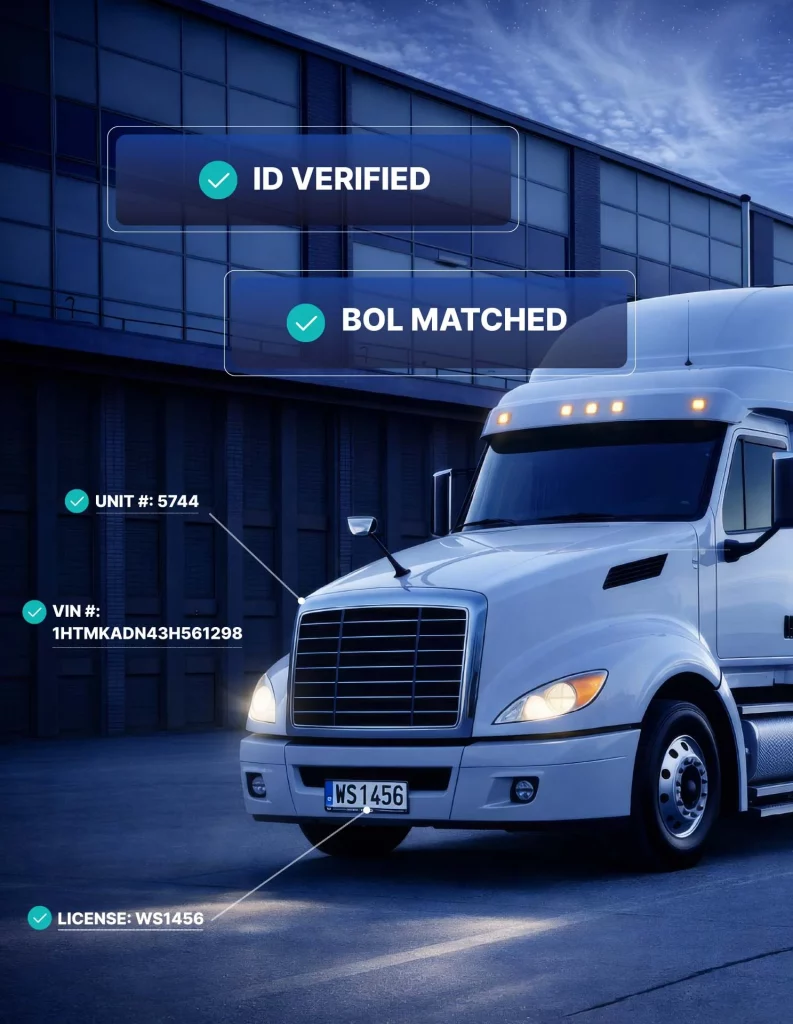
GATECORE helps facilities verify and document gate activity through driver verification, vehicle and trailer logging, license plate capture, Bill of Lading documentation, seal checks, access workflows, and gate transaction records.
This turns gate security into more than a camera view. It becomes a verified workflow.
For cargo theft prevention, compliance support, customer confidence, and incident review, this is essential. A facility does not only need to know that a truck arrived. It needs to know whether the right truck, driver, trailer, and documents were verified.
SAFECORE: Perimeter Protection With Human Context
Perimeter protection is getting more attention across logistics, distribution, and transportation facilities. That makes sense.
Fence lines, side gates, outdoor storage areas, trailer rows, employee lots, and restricted zones are all vulnerable points.
But perimeter protection needs context.
- A camera can detect motion.
- AI can detect a person or vehicle.
- A sensor can trigger an alert.
- A speaker can issue a warning.
But the facility still needs to verify what is happening.
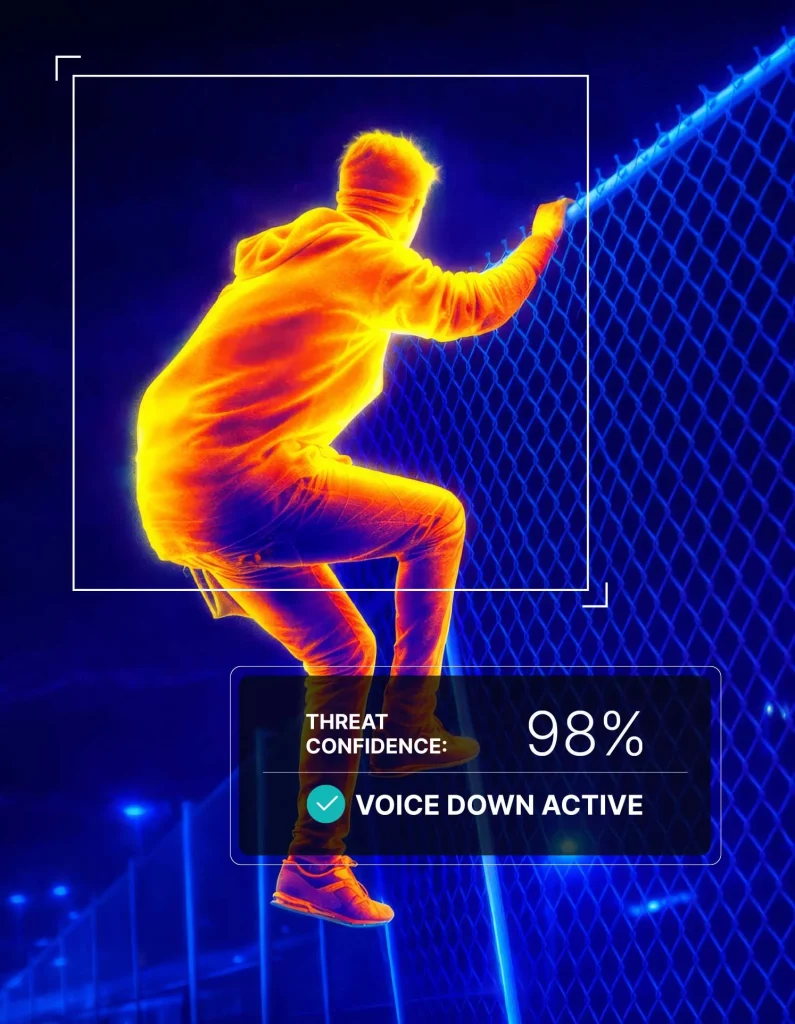
SAFECORE helps protect perimeter areas with AI-powered detection, trained human verification, live intervention, escalation procedures, and incident documentation.
That is the difference between simply detecting activity and managing a verified security event.
A perimeter-only system may tell you that something happened near the fence. SAFECORE helps determine whether it matters and what should happen next.
YARDCORE: Visibility After Access Is Granted
Risk does not end at the gate.
Once a vehicle enters the property, the yard becomes the next major layer of visibility.
Trailers move. Drivers wait. Employees cross traffic areas. Vendors enter operational zones. Equipment sits outside. High-value freight may be staged. Safety issues may happen away from the gate or guardhouse.
A facility can have strong perimeter cameras and still miss what happens inside the yard.
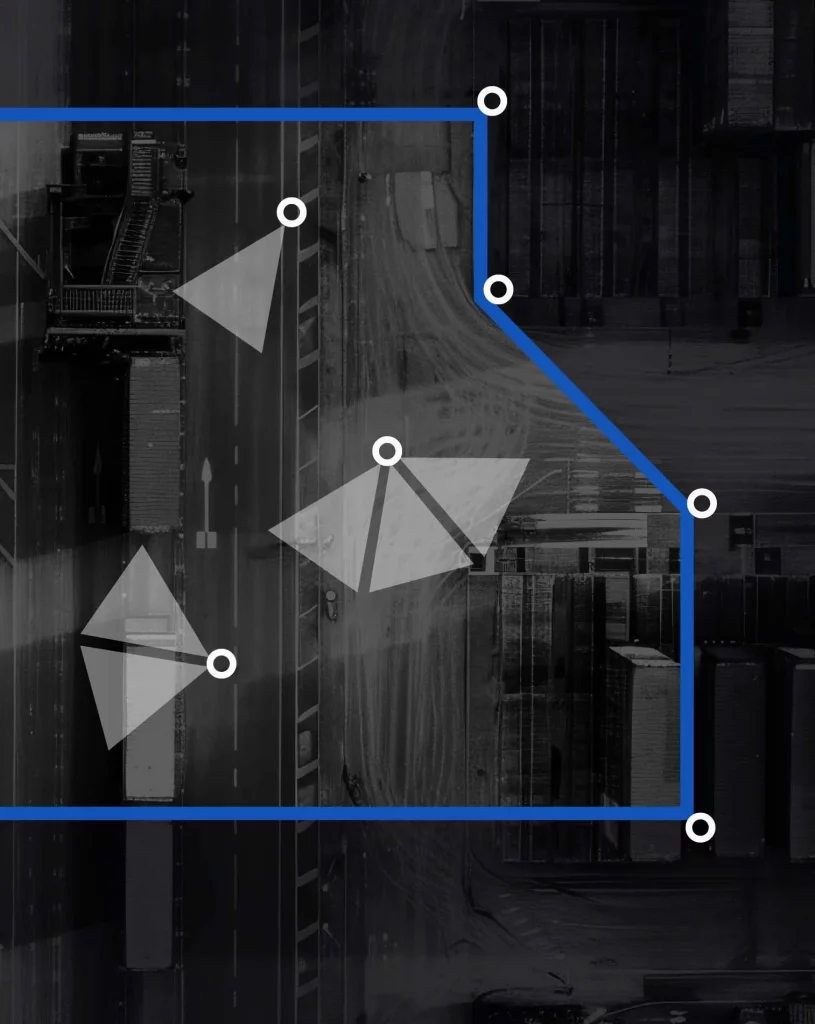
YARDCORE helps facilities supervise yard activity in real time. It supports visibility into movement, restricted areas, safety events, procedure issues, and operational exceptions.
This matters because many incidents look routine at first.
- A trailer moved to the wrong area.
- A driver entered the wrong zone.
- A vehicle waited too long.
- A vendor crossed into a restricted space.
- A yard process was skipped during a busy shift.
YARDCORE helps teams see those issues sooner.
The Portal: Turning Monitoring Into a Record
AI detection and human verification are most valuable when the information becomes usable later.
That is where The Portal fits.
The Portal helps centralize gate transactions, yard events, perimeter alerts, incident records, and operational activity. Instead of searching through disconnected camera systems, emails, guard notes, spreadsheets, and phone calls, teams can review important facility activity in one place.
This is especially important when something goes wrong.
- A shipment is missing.
- A trailer movement is disputed.
- A gate process is questioned.
- A perimeter event needs review.
- A safety procedure was not followed.
- A customer wants answers.
- An internal team needs a timeline.
The Portal helps turn video monitoring from a live service into a long-term operational record.
Why Industry Association Credibility Matters
In supply chain security, credibility matters.
ISCPO’s recent logistics-focused announcements show that trade associations are becoming important channels for physical security companies. These associations give buyers a way to evaluate providers through a supply chain security lens, not just a generic camera or guard lens.
Birdseye already has this credibility.
The International Supply Chain Protection Organization announced Birdseye as a Preferred Partner, highlighting Birdseye’s use of AI-powered cameras, trained live agents, and intelligent software to support real-time visibility and validated workflows for logistics, warehouse, and industrial facilities.
That matters because logistics security is different from ordinary property security.
Supply chain facilities need visibility into gates, yards, drivers, trailers, perimeters, documents, procedures, and incidents. A generic video system may not be enough.
AI Video Monitoring Should Support Business Outcomes
The strongest AI video monitoring systems should not only detect events. They should improve measurable business outcomes.
For logistics and industrial facilities, those outcomes may include:
- Fewer blind spots.
- Faster gate processing.
- Stronger driver verification.
- Better cargo theft prevention.
- Reduced guard dependency.
- Faster incident review.
- More consistent procedure enforcement.
- Better documentation.
- Cleaner customer communication.
- Improved operational visibility.
This is where many AI security claims need to become more practical.
A business does not need AI for the sake of AI. It needs AI that helps the team make better decisions.
The value of AI video monitoring is not just detection. The value is verified action.
What Buyers Should Ask Before Choosing an AI Video Monitoring Provider
Before choosing an AI video monitoring provider, facility leaders should ask:
- Does the system combine AI detection with human verification?
- Can it support gate verification, not just video recording?
- Can it monitor yard activity after access is granted?
- Can it protect perimeter areas in real time?
- Can agents intervene when needed?
- Can events be documented clearly?
- Can managers review gate, yard, perimeter, and incident activity from one place?
- Does the provider explain data retention and access controls?
- Does the system support accountability and auditability?
- Does the provider understand logistics, warehousing, manufacturing, transportation, and industrial operations?
These questions help separate a generic AI camera tool from a real facility supervision partner.
How Birdseye Is Different
Birdseye is built for private industrial facilities where security and operations overlap.
- It is not only a camera system.
- It is not only an AI alert platform.
- It is not only a perimeter solution.
- It is not only a gate tool.
- It is not only a dashboard.
Birdseye connects the layers that matter.
- GATECORE helps verify and document access events.
- SAFECORE helps protect perimeter areas and restricted zones.
- YARDCORE helps supervise yard activity after access is granted.
- The Portal helps centralize event review and reporting.
- AI-powered monitoring helps detect important activity faster.
- Human verification helps determine what the activity means.
That connected model is what private facility security needs now.
Final Takeaway: AI Security Needs Trust, Not Just Technology
The AI physical security market is moving fast. Perimeter systems are gaining attention. Video AI agents are becoming a category. Cloud and automation are changing how teams monitor facilities. Privacy and accountability are becoming part of the buying conversation.
But logistics and industrial facilities should not get distracted by buzzwords.
The real question is:
Does the system help us protect the facility responsibly, verify what matters, respond in real time, and document the event clearly?
- AI can help detect.
- Humans need to verify.
- Procedures need to guide the response.
- Data controls need to protect sensitive information.
- Records need to be useful later.
- Facility workflows need to connect gate, yard, and perimeter activity.
That is the future of private facility security.
Birdseye helps facilities move toward that future with GATECORE, SAFECORE, YARDCORE, The Portal, AI-powered monitoring, and trained human verification.
FAQs About AI Video Monitoring, Trust, and Facility Security
What is AI video monitoring?
AI video monitoring uses artificial intelligence to help identify activity in camera footage, such as people, vehicles, motion, restricted-zone activity, perimeter movement, or safety concerns. It is most effective when paired with human verification and clear response procedures.
Why is human verification important in AI video monitoring?
Human verification is important because industrial environments require context. AI may detect a person, vehicle, or movement, but a trained human agent helps determine whether the event is normal, suspicious, unsafe, or urgent.
Is private facility security the same as public surveillance?
No. Private facility security is focused on protecting a specific property, operation, workforce, and supply chain environment. Public surveillance often involves broader monitoring of roads, neighborhoods, or public spaces. Private facility systems still need responsible data controls and accountability.
What data controls should AI video monitoring include?
AI video monitoring should include clear rules for access, retention, user permissions, auditability, incident documentation, and data protection. Businesses should understand what information is collected, who can access it, how long it is retained, and how it is protected.
Why does gate verification matter for AI video monitoring?
Gate verification matters because the gate is where drivers, vehicles, trailers, documents, and access decisions come together. A camera may show that a truck arrived, but facilities also need to verify and document who entered, what was involved, and whether the access event was legitimate.
Why does yard visibility matter after a truck enters?
Yard visibility matters because many risks happen after access is granted. Trailers may move, drivers may enter the wrong areas, vendors may cross restricted zones, and freight may sit exposed. YARDCORE helps facilities monitor activity and exceptions inside the yard.
How does Birdseye support trust in AI video monitoring?
Birdseye supports trust by combining AI-powered monitoring with trained human verification, site-specific procedures, GATECORE for gate verification, SAFECORE for perimeter protection, YARDCORE for yard visibility, and The Portal for centralized reporting and event review.