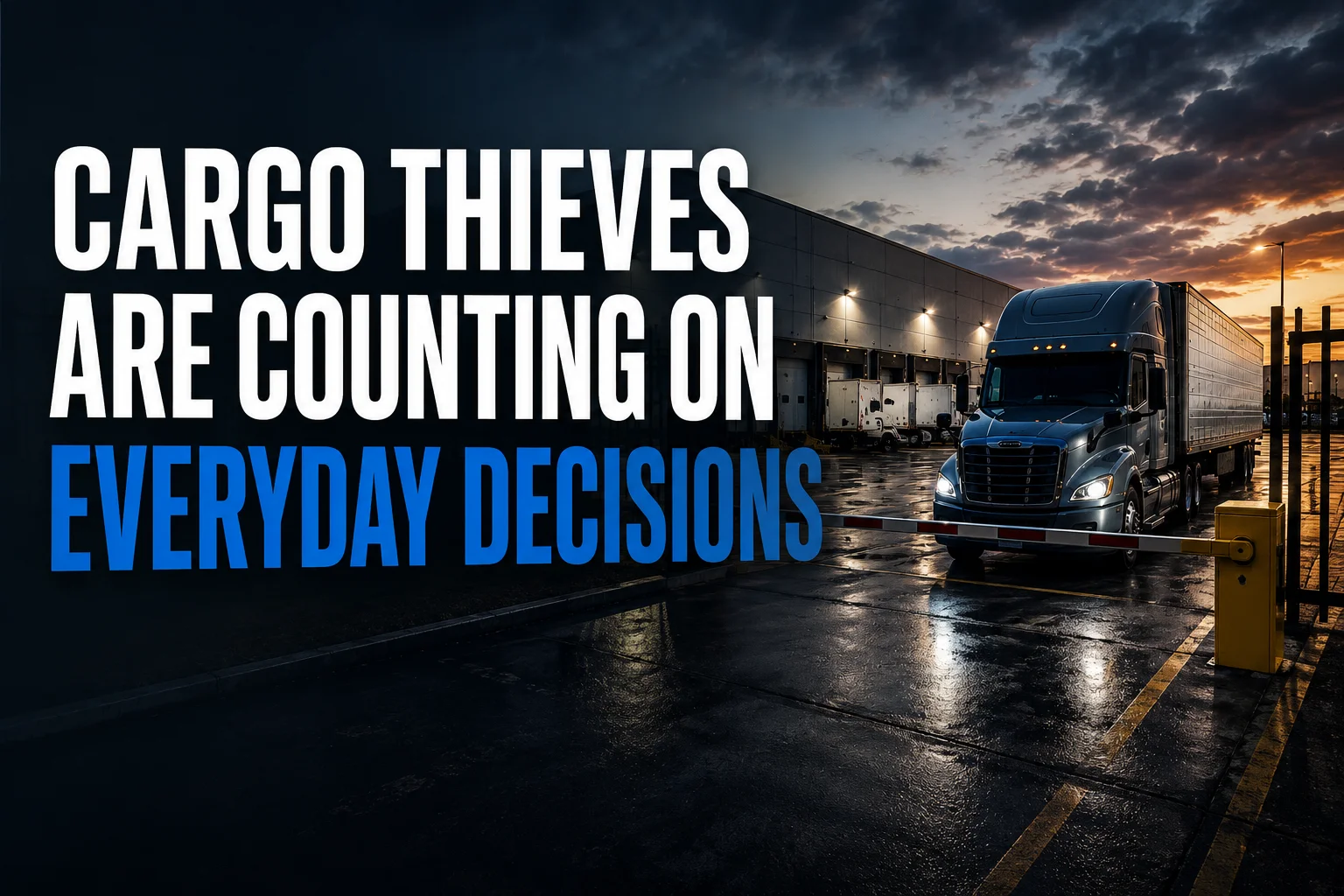
Direct Answer: What Everyday Decisions Create Cargo Theft Risk?
Cargo thieves often count on everyday operational decisions that seem small in the moment: where a driver stops, whether a pickup is verified, how a gate event is documented, whether a trailer sits unattended, whether a seal is checked, and whether yard or perimeter activity is monitored in real time.
A recent Supply Chain Dive sponsored article, “The everyday decisions cargo thieves are counting on”, focused on how driver alerts, high-risk zones, unplanned stops, and safety policies can help reduce theft exposure while freight is on the road.
That is an important part of the cargo theft problem.
But it is not the whole problem.
For warehouses, logistics yards, distribution centers, manufacturing facilities, truck terminals, and industrial sites, cargo theft risk also begins at the facility level. The strongest security programs do not only guide drivers on the road. They also strengthen gate verification, yard visibility, perimeter protection, human-verified monitoring, and centralized event documentation.
Birdseye helps facilities close those gaps with GATECORE, SAFECORE, YARDCORE, The Portal, AI-powered monitoring, and trained human verification.
Quick Summary: The Decisions Cargo Thieves Count On
| Everyday decision | Why it creates risk | How facilities can reduce the gap |
|---|---|---|
| A driver stops in a high-risk area | Cargo may become vulnerable while unattended | Use better route, stop, and risk-awareness policies |
| A pickup is treated as routine | False carrier or fraudulent pickup risk may be missed | Verify driver, vehicle, carrier, trailer, BOL, and seal |
| A gate event is logged manually | Records may be incomplete or hard to review | Use structured gate documentation and transaction records |
| A trailer sits in the yard without visibility | Movement or tampering may not be noticed in time | Monitor yard activity and exceptions in real time |
| A perimeter alert is not verified | Suspicious activity may become noise or get missed | Combine AI detection with human verification |
| Incident records are scattered | Investigations take longer and accountability is weaker | Centralize gate, yard, perimeter, and incident records |
Why Cargo Theft Is No Longer Just an “On the Road” Problem
Cargo theft can happen on the road, at truck stops, in parking lots, at drop lots, in rail yards, at warehouses, at freight distribution facilities, and in other locations where cargo is stored, staged, or left unattended. The FBI’s cargo theft overview makes that clear.
That means logistics leaders should not think about cargo theft as a single moment.
Cargo theft risk can appear:
- Before pickup
- At the gate
- During driver verification
- Inside the yard
- At the dock
- Near trailer rows
- Around the perimeter
- During stop decisions
- During shipment rerouting
- During documentation review
- During incident investigation
The Supply Chain Dive article correctly highlights that driver decisions can matter in real time. But facility decisions matter too.
- A safer stop helps protect freight in motion.
- A verified gate helps protect freight during access.
- A visible yard helps protect freight while staged.
- A monitored perimeter helps protect freight after hours.
- A centralized record helps protect the business when something is questioned later.
Why “Small” Decisions Become Big Security Problems
Cargo theft often benefits from ordinary gaps.
- A team gets busy.
- A driver is waved through.
- A BOL is not captured clearly.
- A seal check is skipped.
- A trailer is dropped in the wrong area.
- A suspicious stop is treated as normal.
- A perimeter alert is ignored because too many alerts are false.
- A manager has to reconstruct an incident from disconnected systems.
None of these decisions may seem dramatic at the time.
But together, they create the kind of uncertainty cargo thieves can exploit.
CargoNet reported that Q2 2026 cargo theft losses more than doubled to $304 million despite fewer incidents. That trend shows why incident count alone is not enough. Even fewer thefts can create larger losses when criminal groups target higher-value freight.
The lesson is simple:
Modern cargo theft prevention depends on reducing small visibility gaps before they become major losses.
The Roadside Decision: Where Drivers Stop Still Matters
The Supply Chain Dive article focuses heavily on the driver’s moment of decision: whether to stop in a risky location, whether to continue to a safer stop, and whether the driver receives the right alert at the right time.
That matters because freight can become vulnerable when a truck is stopped, unattended, or parked in a location with known theft risk.
Driver guidance, high-risk-zone alerts, dispatch communication, and safe-stop policies can all reduce exposure. A driver cannot be expected to remember every emerging theft hotspot, every risky stop, or every changing pattern across North America.
Technology can help deliver guidance when it matters. But that same principle should also apply to the facility. Drivers need timely information on the road. Facilities need timely visibility at the gate, in the yard, and around the perimeter.
Both are part of the same security problem.
The Gate Decision: Who Gets Access?
At the facility level, the gate is one of the most important cargo theft control points.
Every gate event creates a decision:
- Is this driver expected?
- Is this carrier valid?
- Does the truck match the record?
- Does the trailer match the paperwork?
- Was the Bill of Lading captured?
- Was the seal checked?
- Was the access event documented?
- Can the team review the transaction later?
If those answers are unclear, the facility has a verification gap.
The FBI has warned that cyber-enabled strategic cargo theft is surging, with threat actors using tactics such as impersonation, fraudulent carrier activity, shipment misdirection, and compromised communications.
That makes gate verification more important than ever.
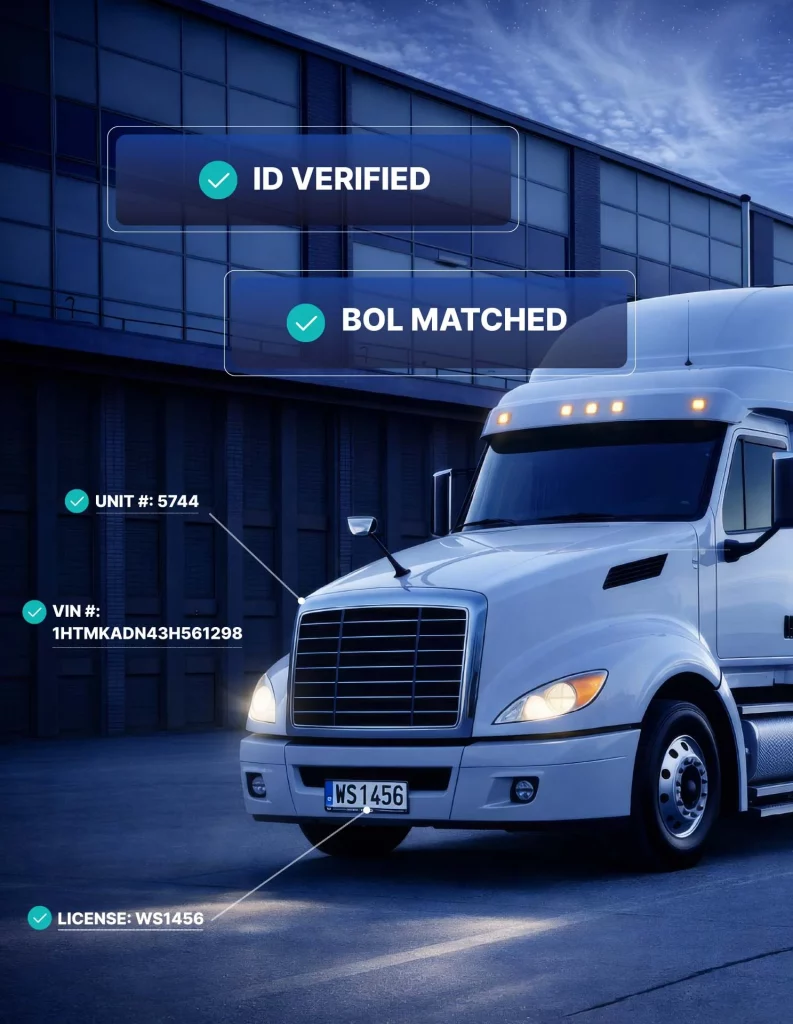
GATECORE helps facilities strengthen gate operations by supporting driver verification, vehicle and trailer logging, license plate capture, Bill of Lading documentation, seal checks, access workflows, and gate transaction records.
The goal is not just to open the gate faster. The goal is to create a verified access event that the facility can trust.
The Yard Decision: What Happens After Access Is Granted?
A verified gate event is important, but risk does not end after entry.
Once a vehicle enters the property, the yard becomes the next major visibility layer.
Trailers may be dropped. Drivers may wait. Vehicles may move between docks. Freight may be staged. Equipment may sit outside. Vendors and contractors may enter operational zones. High-value shipments may be parked longer than expected.
If a facility cannot see what happens after access is granted, it may only discover a problem after the load is missing, delayed, damaged, or disputed.
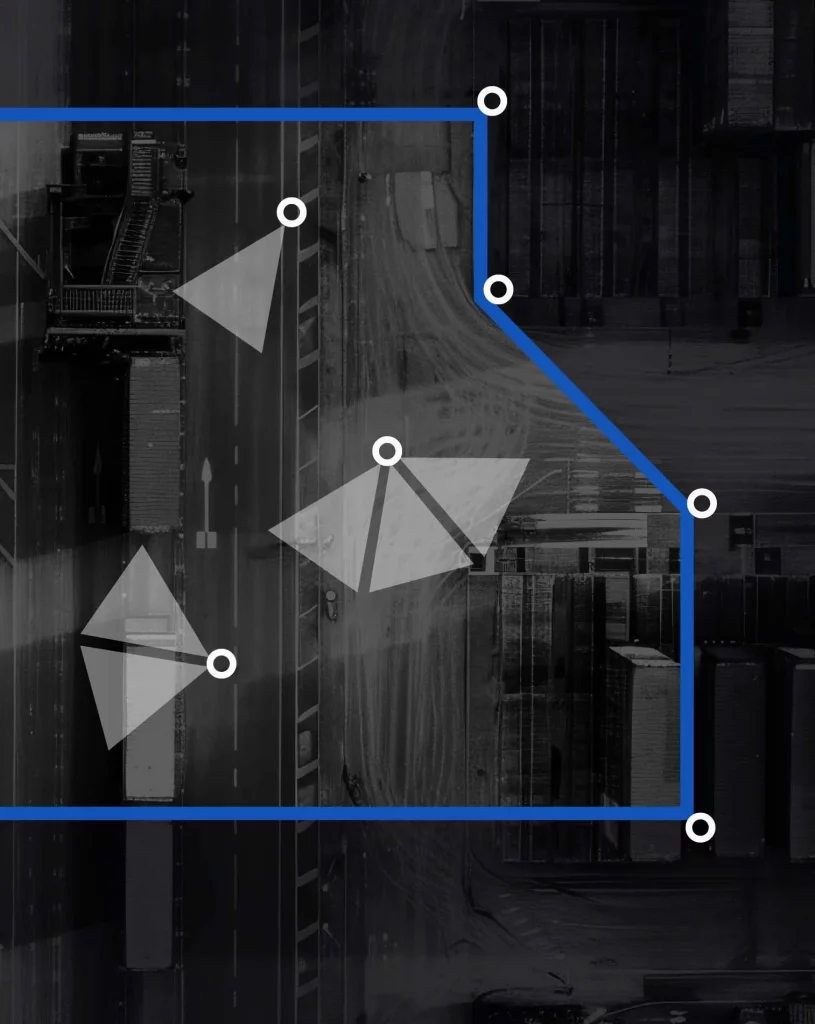
YARDCORE helps facilities improve visibility across yard activity. It supports monitoring of movement, exceptions, restricted areas, safety events, and procedure enforcement.
This matters because many cargo theft risks are not dramatic at first. They may look like ordinary movement.
- A trailer moved to the wrong row.
- A vehicle stopped in an unusual area.
- A driver ignored a procedure.
- A person entered a restricted zone.
- A high-value load sat exposed longer than planned.
YARDCORE helps teams see those events sooner.
The Perimeter Decision: Is Suspicious Activity Being Verified?
Perimeter protection is still a critical layer in cargo theft prevention.
Fence lines, side gates, outdoor storage areas, trailer rows, employee lots, dock areas, and restricted zones all create exposure. Suspicious activity around these areas should not simply be recorded for later review.
It should be detected, verified, and addressed while the event is active.
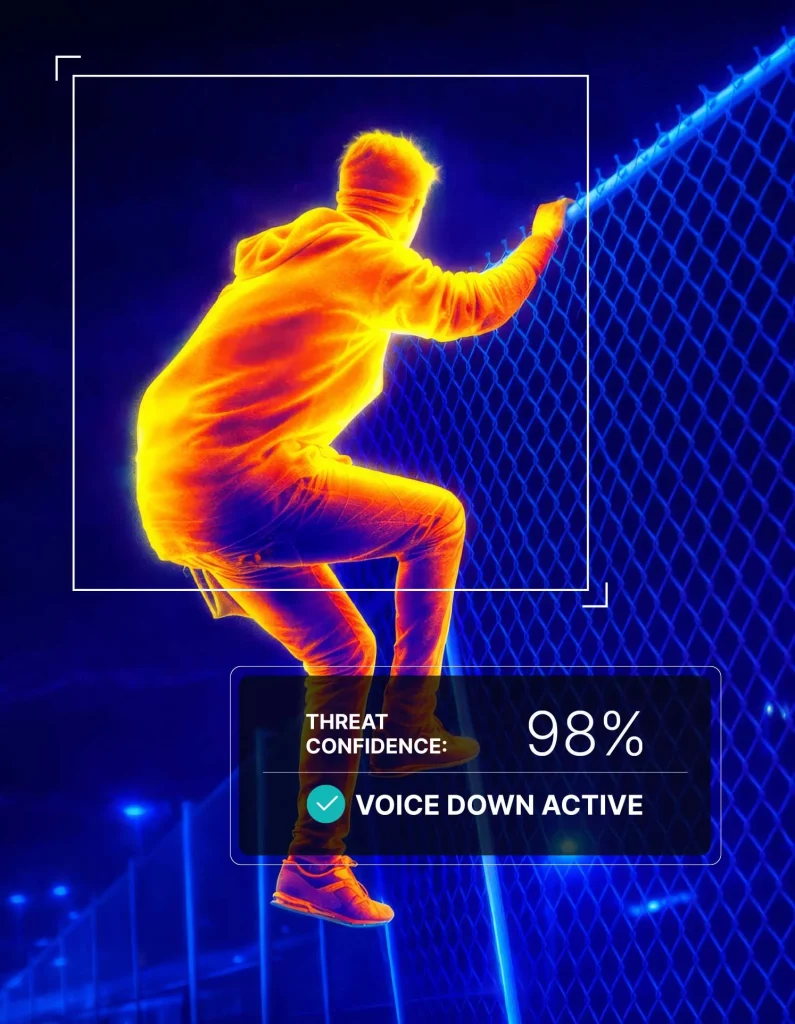
SAFECORE helps facilities protect perimeter areas with AI-powered detection, trained human verification, live intervention, escalation procedures, and incident documentation.
This is important because raw alerts are not enough. A motion event may be weather, wildlife, an employee, a driver, a contractor, or a real threat. AI can help detect activity quickly, but human verification helps determine what that activity means. That is the difference between more alerts and better security.
The Policy Decision: Technology Should Enforce the Procedure
The Supply Chain Dive article makes an important point: technology does not replace policy. It helps enforce it.
That same idea applies inside logistics facilities. A cargo theft prevention policy is only useful if it shows up in daily operations.
- Gate teams need verification steps.
- Yard teams need visibility into exceptions.
- Security teams need clear response procedures.
- Drivers need safe-stop guidance.
- Managers need records they can review.
- Leadership needs a system that makes compliance easier to follow.
CBP’s CTPAT supply chain security program is built around protecting the supply chain, identifying security gaps, and implementing security measures and best practices.
That principle matters beyond formal CTPAT participation. A strong facility security program should connect policy to action.
The Hours-of-Service Decision: Safe Stops Require Planning
One reason drivers may face difficult stop decisions is that time, fatigue, parking availability, and hours-of-service pressure can collide.
The Supply Chain Dive article discusses the challenge of reaching a safer stop when timing is tight. Fleets should handle those situations carefully and in line with their policies and applicable rules.
FMCSA’s personal conveyance FAQ addresses limited scenarios where drivers may move to a nearby safe location to obtain required rest after running out of hours at a shipper or receiver.
The key takeaway for logistics operators is not to improvise in the moment. The better approach is to plan ahead.
- Drivers need clear policy.
- Dispatch needs visibility.
- Facilities need predictable processes.
- Security teams need verified records.
- Operations leaders need to understand how safety, compliance, and cargo protection affect each other.
Cargo theft prevention is stronger when safety decisions are built into the workflow before the driver is under pressure.
The Documentation Decision: Can You Prove What Happened?
Cargo theft prevention is not only about stopping theft in the moment. It is also about proving what happened when a load is questioned.
If a shipment is missing, delayed, misdirected, damaged, or disputed, managers need a clear timeline.
- Who entered the gate?
- What vehicle was involved?
- What trailer was connected to the event?
- Was the driver verified?
- Was the Bill of Lading captured?
- Was the seal checked?
- Where did the vehicle go in the yard?
- Was there perimeter activity?
- What response occurred?
- Who reviewed the event?
If those answers are buried in handwritten logs, disconnected cameras, email threads, phone calls, and memory, the investigation becomes slower and weaker.
The Portal helps centralize gate transactions, yard events, perimeter alerts, incident records, and operational activity in one place.
That gives teams a stronger record for internal review, claims, compliance, customer communication, and continuous improvement.
Why AI and Human Verification Work Better Together
AI can help detect activity across large facilities faster than manual review alone.
It can identify people, vehicles, motion, unusual patterns, perimeter activity, and restricted-area events. This is especially useful for logistics yards and industrial sites where the amount of movement can overwhelm traditional monitoring.
But AI alone cannot fully understand facility context.
- A truck arriving early may be expected.
- A driver waiting near a gate may be normal.
- A person near a trailer row may be authorized.
- A vehicle stopping in the yard may be routine or suspicious.
- A perimeter alert may be harmless or urgent.
That is why Birdseye combines AI-powered monitoring with trained human verification.
- AI helps detect the signal.
- Human agents verify the context.
- The facility gets a better response.
This model reduces noise and helps teams focus on events that actually matter.
Responsible Monitoring and Data Handling Matter
As facilities add more cameras, AI detection, access records, and centralized reporting, responsible video and data practices become more important.
Security systems may capture employees, drivers, vendors, visitors, vehicles, license plates, documents, and facility operations.
The Security Industry Association’s Data Privacy Code of Practice for Video Surveillance provides guidance that can help organizations develop sound policies and best practices around video technology.
For logistics facilities, visibility should be practical and responsible. The goal is to protect freight, people, assets, and operations without creating unnecessary data risk.
What Facilities Should Review After Reading This Trend
The everyday decisions cargo thieves count on should push logistics leaders to review their own operation.
The most important questions are:
- Can drivers receive timely guidance before risky stop decisions?
- Can dispatch identify unexpected stops quickly?
- Can the gate verify drivers, carriers, trucks, trailers, BOLs, and seals?
- Can the yard team see what happens after access is granted?
- Can the perimeter team detect and verify suspicious activity in real time?
- Can security teams intervene before an incident escalates?
- Can managers review gate, yard, perimeter, and incident records from one place?
- Can leadership prove that policies are being followed?
If the answer is no, the business may have a visibility gap.
How Birdseye Helps Close the Facility-Level Gap
Birdseye helps logistics and industrial facilities strengthen the areas where cargo theft risk becomes physical and operational.
At the gate, GATECORE helps verify and document access events. In the yard, YARDCORE helps monitor activity, movement, exceptions, restricted areas, and procedure issues. Around the perimeter, SAFECORE helps detect suspicious activity, verify events, intervene when needed, and document incidents.
Through The Portal, teams can review important facility activity in one centralized view. This connected model helps facilities move beyond passive cameras, manual logs, and isolated alerts. The goal is simple: See what is happening. Verify what it means. Respond while it matters. Document it for later.
Final Takeaway: Cargo Theft Prevention Happens in the Small Decisions
Cargo theft prevention is not only about major security upgrades. It is also about the small decisions that happen every day.
- Where does the driver stop?
- Who gets through the gate?
- Was the pickup verified?
- Was the seal checked?
- Where did the trailer go?
- Was the perimeter alert real?
- Was the event documented?
- Can the team review what happened later?
Cargo thieves count on gaps in those decisions.
Birdseye helps facilities close those gaps with connected visibility across gates, yards, perimeters, and reporting.
- A safer driver decision matters.
- A verified gate decision matters.
- A visible yard decision matters.
- A verified perimeter decision matters.
- A documented event matters.
Cargo theft prevention starts before the load disappears.
FAQs About Everyday Cargo Theft Decisions
What everyday decisions increase cargo theft risk?
Cargo theft risk can increase when drivers stop in high-risk areas, pickups are not verified, gate events are logged manually, trailers sit without visibility, perimeter alerts are ignored, or incident records are scattered across disconnected systems.
Why are driver stop decisions important for cargo theft prevention?
Driver stop decisions matter because cargo can become vulnerable when a truck is parked, unattended, or stopped in a high-risk area. Timely alerts, dispatch communication, and safe-stop policies can help reduce exposure.
Why is gate verification important?
Gate verification helps confirm who is entering the facility, what vehicle and trailer are involved, whether shipment documents are captured, and whether the access event is documented. This reduces risk from fraudulent pickups, poor records, and unauthorized movement.
Why does yard visibility matter after a truck enters?
Yard visibility matters because cargo theft risk can continue after access is granted. Trailers may be moved, freight may be staged, drivers may enter the wrong area, or suspicious activity may happen inside the property.
Are AI alerts enough to prevent cargo theft?
AI alerts are useful, but they work best with human verification. AI can detect activity, while trained human agents determine whether the activity is normal, suspicious, unsafe, or urgent.
How does Birdseye help reduce cargo theft risk?
Birdseye helps reduce facility-level cargo theft risk through GATECORE for gate verification, YARDCORE for yard visibility, SAFECORE for perimeter protection, and The Portal for centralized event review and reporting.