Cargo theft is not an isolated crime anymore; it is a growing issue in the supply chain.
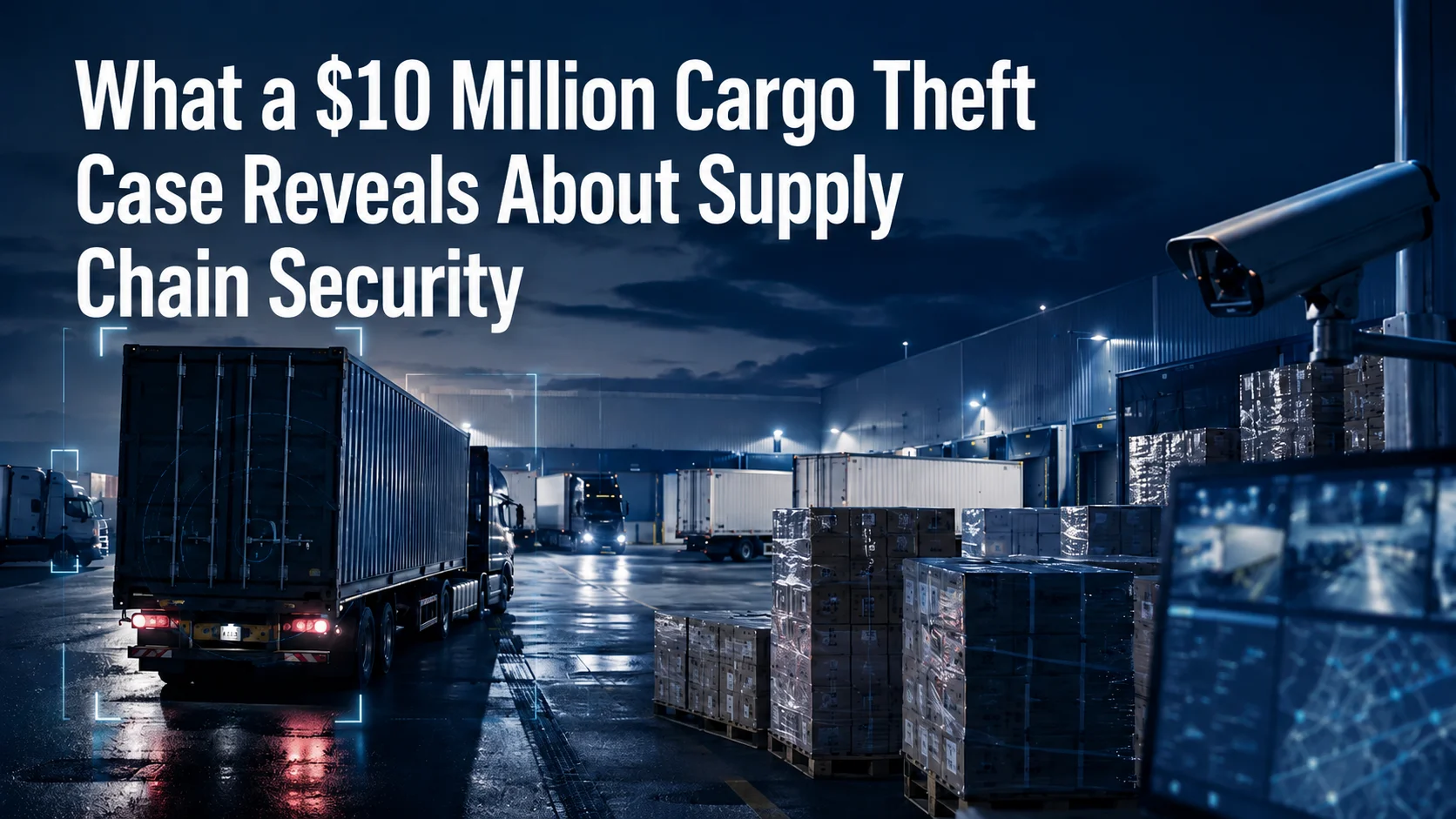
Federal prosecutors recently indicted eight individuals in a $10 million commercial cargo theft conspiracy in New York that spanned several states. According to the prosecutor, the alleged conspiracy was orchestrated with coordination between individuals inside the country and the person who served as the dispatching coordinator overseas.
Once again, it is worth reiterating that the above is an allegation and the individuals accused in it are presumed innocent until proven guilty. However, the logistics leaders and warehouse operators should definitely pay attention to this news.
The fact is that the problem of cargo theft is evolving in such a way that security is becoming a critical aspect of logistics management and supply chain operations.
Cargo theft is not anymore about someone getting inside the fenced lot and stealing whatever they find. It is more sophisticated today.
The theft can be planned months in advance and involve a wide variety of tactics.
From targeting the documentation to exploiting the lack of proper controls at the gate or yard level – modern cargo theft requires a smarter approach and a smarter solution. So, let us see what a recent multi-million cargo theft case taught us about the issue.
Cargo Theft Is Becoming More Organized and Systematic
As we mentioned above, the latest indictment involved commercial freight shipments of various cargo types across different states.
The fact is that the alleged theft included electronics, liquor, food, apparel, skincare products, and other goods.
This fact teaches us that cargo theft is no longer an issue related to specific cargo type and industries. Any goods that are valuable and have resale opportunities can become the target for theft.
What else can we learn from it? In this case, cargo theft did not require any physical entry into the facilities – the thieves were able to exploit the vulnerabilities of the facility security system.
This fact teaches us that it is not enough to simply watch over the fences, gates, and other physical boundaries to ensure freight security.
Today, the most important moments for freight security happen before the goods leave the facility.
- Who is accessing the facility?
- Is the carrier who requests the pick-up legitimate?
- Does the driver match the expected pickup?
- Is the trailer legitimate?
- Has the seal been checked?
- Did the Bill of Lading have been scanned?
- Did the vehicle exit the facility following the proper procedure?
These questions need to be asked to make sure that the facility has a secure system of managing the cargo pick-ups.
The Gate Needs to Be Considered as an Important Supply Chain Security Point
Typically, facilities consider the gate as their entrance. In fact, the gate is a decision point.
Every time a truck arrives at the gate and tries to enter/exit, it creates certain risks and raises important security questions.
- Does the driver have proper credentials?
- Can the facility be sure that the carrier is legitimate?
- Does the trailer number match the expected pick-up?
- Has the driver signed the Bill of Lading and passed the security check?
To make sure that the answer to these questions will be positive, the facility needs to consider its gate access control procedure.
Modern facility management and supply chain security require having an organized and structured gate procedure in place.
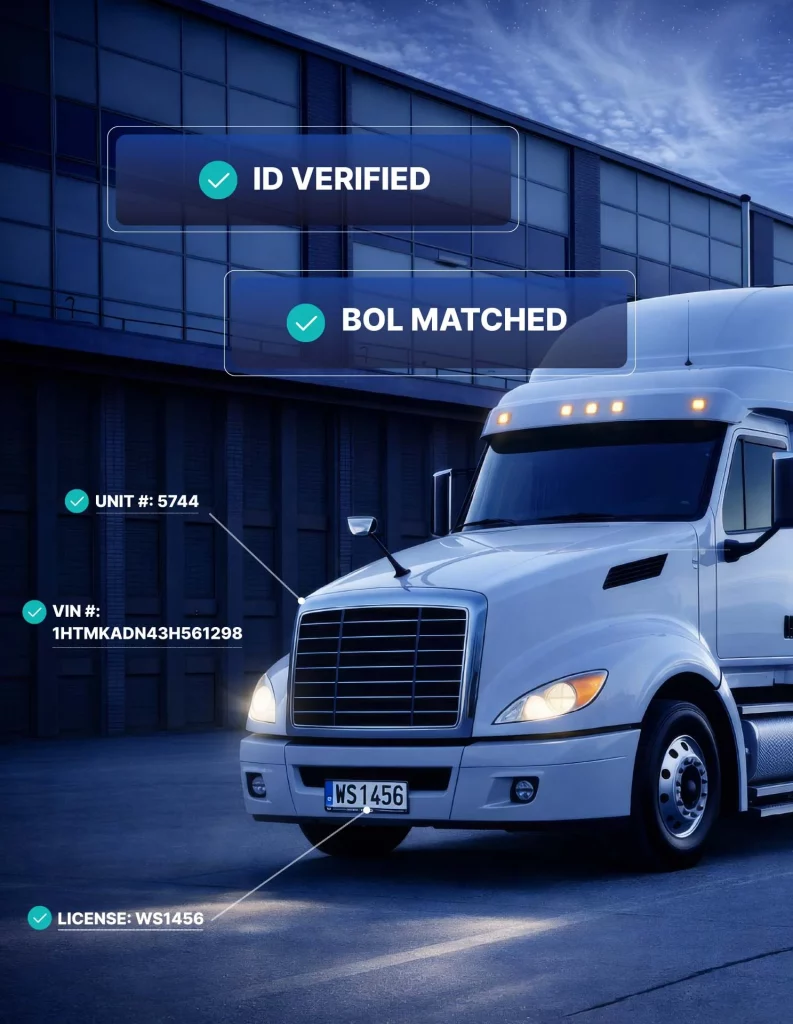
The facility security team needs a reliable tool for verification of carriers, drivers, trailers, seals, and other aspects of the pick-up. This is where gate security becomes more than just controlling who comes and goes.
Footage Recording Is No Longer Enough
Almost every industrial facility has camera surveillance system installed and recording all activity.
The fact is that footage alone is not enough to guarantee proper security.
Why?
A passive camera system may be able to capture the trucks’ entrances/exits and activity within the yard. However, if nothing is being monitored, verified, recorded in real-time, and correlated with other sources of information, it does not become a good way to prove anything if the incident has occurred.
In other words, a footage recording becomes more of a reactive measure rather than proactive.
Modern cargo security strategy requires a proactive security measure that is able to detect the suspicious activities in real-time.
This is where real-time visibility becomes a critical part of the cargo security.
The Importance of Human Verification
Surely, technology plays an important role in modern security management. However, even the best AI solutions cannot replace human expertise in all situations.
The arrival of the truck earlier than the pick-up is scheduled may seem completely innocent or suspicious depending on a situation.
- For some reason, a driver does not have all of his/her documents.
- The carrier name looks familiar, but still, the carrier itself needs to be verified.
- The trailer needs further review and checking.
- Accessing the facility is unusual for a given time period.
And so on.
AI can identify certain situations in a short period of time. It can help detect the suspicious activity and alert the security manager that certain situation needs attention. However, industrial environment still requires human analysis, decision making, and other elements that can be added into the security management strategy.
Cargo Theft Is Not Only the Security Issue; It is an Operations One as Well
When the cargo gets stolen, it brings certain costs to the company besides the cost of the stolen cargo itself.
- The customers get delayed.
- The operations team will spend days analyzing what went wrong and who is to blame for that.
- The insurance claims will appear.
- There will be disputes between the carrier and the shipper.
- Teams will have to review the footage, logs, communication channels, documentation, and other elements in order to reconstruct the whole situation.
All of this will take valuable time away from operations.
Thus, cargo theft prevention strategy is an important aspect of effective operations management as well.
The Points When Facilities May Be Vulnerable
No facility is safe for the cargo pick-up if there are certain issues that could be exploited by the criminals.
Here are the most common points of vulnerability.
Gate procedure. If the driver and carrier verification, trailer logging, BOL scanning, seal checks, and all the other processes are not organized properly, the facility may have significant problems with documenting the cargo pick-up. This makes the facility extremely vulnerable.
Yard. Once the driver gets access to the facility, the visibility of the activity within the yard becomes an issue. If the yard is only monitored after the theft has occurred, valuable data about the activity can be missed.
Perimeter area. Side entrances, employee parking, fenced perimeter lines can become the points of cargo theft if they are not properly monitored.
Documentation. The facility may have to gather all the information about the pick-up from various sources and put it in order if the situation requires that.
Cargo theft prevention strategy should include the management of these aspects.
Smarter Approach to the Supply Chain Security
What can be learned from the major cargo theft cases?
That the existing strategies and tools may be no longer enough for cargo security management.
- Does the facility know who accesses it and why?
- Does the facility have a system of real-time verification of the drivers and carriers?
- Is the facility able to scan the seals and BOLs on a consistent basis?
- Is the activity in the yard visible once the driver is allowed to enter?
- Can the facility detect suspicious activity in its perimeter area?
- Is the facility able to review the pick-up process easily and quickly?
If the answer to some of these questions is negative, the facility may have certain visibility gaps.
The Birdseye can help companies fill those gaps with a combination of AI-powered monitoring, human verification, gate security, yard supervision, perimeter control, and reporting.
This is not about changing all of the existing procedures in a night. It is about improving the points where the security and operations overlap.
What Birdseye Helps the Facilities Improve
As we mentioned before, the Birdseye is specifically designed to manage the security at the industrial facilities.
At the gate, it helps verify the drivers and carriers, log the trailers, scan the seals and BOLs, and manage the transactions.
In the yard, it allows the facility managers to supervise the activity in real time and detect the suspicious events.
Around the perimeter, the Birdseye detects the suspicious activity and helps manage the responses.
Using the Birdseye The Portal, the facility managers can review and analyze the activity in the single place.
This is not only about cargo theft prevention. The main value of the Birdseye is that it gives more control and visibility to the facility management.
The Prevention Should Start Before the Shipment Leaves the Facility
The most efficient time for cargo theft prevention is the moment when it is still inside the facility.
It means that the most important moments for cargo security happen before the load leaves the facility.
- The proper verification before the access.
- Visibility while the freight is stored.
- Response to the suspicious activities.
- Documented record if needed.
The recent cargo theft indictment proves that cargo security strategy cannot be limited to the physical security of the facilities.
Companies managing the shipments of any kinds should think carefully about the physical side of their supply chain.
Because today’s cargo theft targets the vulnerabilities of the facilities, and the way to protect the cargo is to create a facility with controlled, visible, and well-documented environment.
Build a More Visible and Controllable Facility
Organized cargo theft is growing today. However, the facilities are not helpless.
With the right approach, warehouses, logistics yards, manufacturing facilities, transportation operations, and distribution centers can eliminate visibility gaps, improve response, and increase accountability at the gates, yards, and perimeter areas.
Birdseye helps facilities go beyond the passive recording and manual processes with human-verified monitoring and centralized operational visibility.