Direct Answer: Is Perimeter Protection Enough for Logistics Facilities?
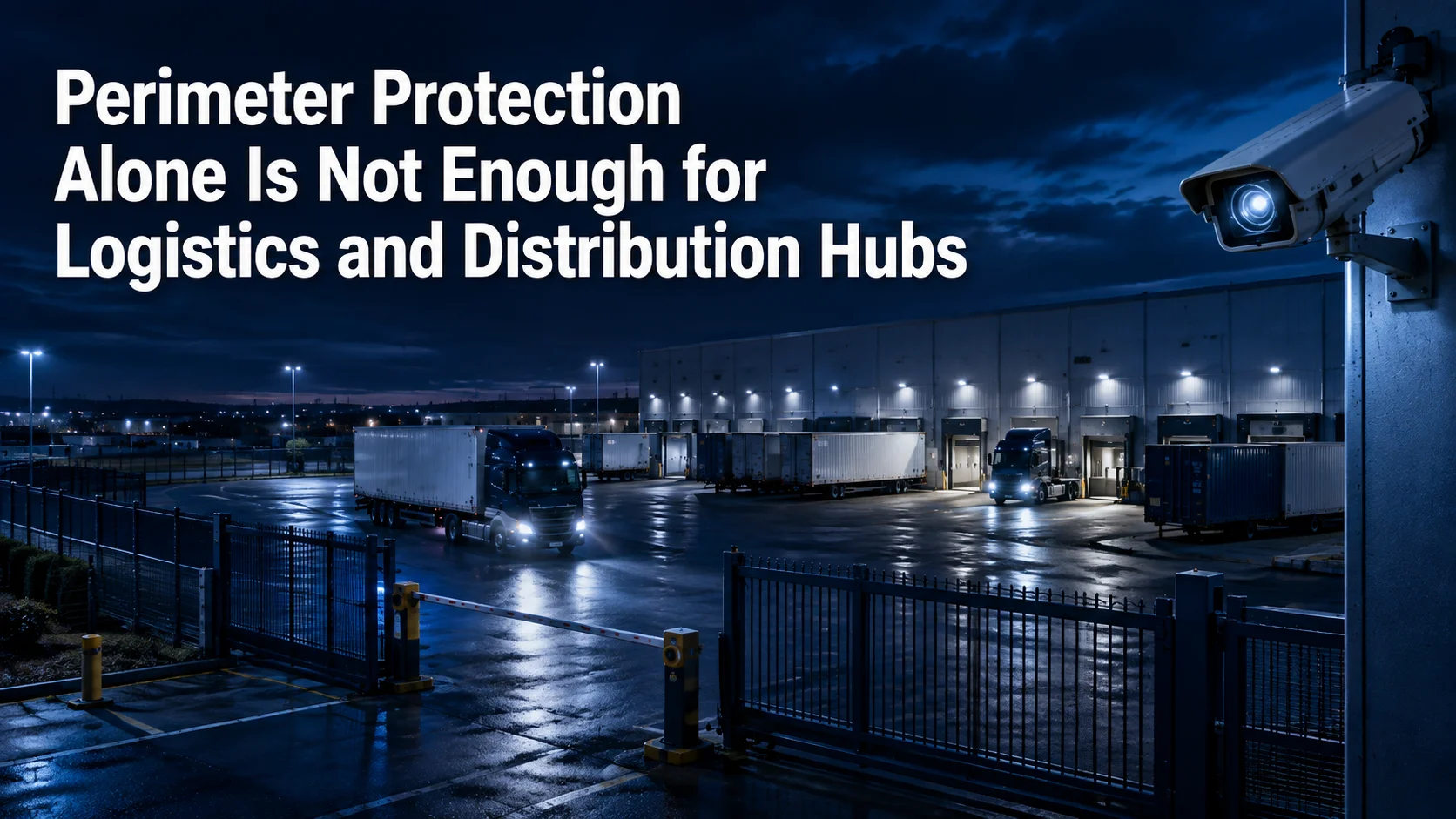
Perimeter protection is important for logistics and distribution hubs, but it is not enough on its own. A fence line, camera tower, gate sensor, or perimeter alarm can help detect activity at the edge of a property, but it does not control everything that happens across the facility.
Modern logistics security needs a connected model that protects the perimeter, verifies access at the gate, monitors what happens inside the yard, documents key events, and centralizes records for review.
For warehouses, distribution centers, transportation yards, manufacturing sites, truck terminals, and logistics hubs, the strongest approach is not perimeter-only security. It is full facility supervision across the gate, yard, perimeter, and reporting layer.
Birdseye helps facilities do this with AI-powered monitoring, human verification, GATECORE, SAFECORE, YARDCORE, and The Portal.
Quick Summary: Perimeter Security vs. Full Facility Supervision
| Security layer | What it protects | Why it matters | What happens if it is missing |
|---|---|---|---|
| Perimeter protection | Fence lines, side gates, restricted zones, outdoor storage areas | Detects suspicious activity near the edge of the property | Intrusions may go unnoticed until after the incident |
| Gate verification | Drivers, vehicles, trailers, BOLs, seals, access events | Confirms who and what enters or exits the facility | Unauthorized or poorly documented movement can occur |
| Yard visibility | Trailer rows, dock areas, vehicle movement, staged freight, equipment | Tracks what happens after access is granted | Freight, trailers, or vehicles may move without clear visibility |
| Human verification | AI alerts, camera events, perimeter activity, gate exceptions | Adds judgment and reduces false alarms | Teams may receive more alerts but less reliable context |
| Centralized reporting | Gate records, yard events, perimeter alerts, incident history | Helps teams investigate, document, and improve procedures | Records remain scattered across cameras, logs, emails, and calls |
What Is Perimeter Protection?
Perimeter protection is the process of securing the outer boundary of a property. For logistics and distribution facilities, this may include fences, gates, lighting, cameras, sensors, mobile surveillance units, AI alerts, speaker systems, and remote monitoring.
Perimeter protection is valuable because it helps identify activity around vulnerable areas such as fence lines, outdoor storage zones, trailer rows, side entrances, employee lots, and after-hours access points.
A strong perimeter strategy can help detect trespassing, loitering, vandalism, unauthorized access, and suspicious movement before those events reach the core of the facility.
CISA’s physical security and resilience resources support the broader idea that facility protection should be planned, layered, and resilient rather than dependent on a single tool or location.
Why Perimeter Protection Matters
Perimeter protection matters because logistics facilities are exposed by design.
Trucks enter and exit throughout the day. Trailers may sit outside. Drivers, vendors, contractors, and employees move through the property. Freight may be staged in yards or near docks. Gates may stay active across multiple shifts. Outdoor storage and equipment can create additional exposure.
For many sites, the perimeter is the first place where risk becomes visible.
A person approaching a fence line after hours, a vehicle stopping near a side gate, or movement near a trailer row may be an early warning sign. If that activity is detected and verified quickly, the facility may be able to respond before the situation becomes a theft, damage event, safety issue, or operational disruption.
That is why perimeter protection is necessary.
But it is still only one layer.
Where Perimeter-Only Security Falls Short
Perimeter-only security creates a dangerous blind spot: it focuses on the edge of the property but not the full movement of people, vehicles, trailers, and freight.
A perimeter camera may detect someone near a fence. It may show a vehicle outside the property. It may capture activity near an outdoor storage area.
But perimeter protection alone does not answer the full set of operational questions that logistics leaders need answered.
- It does not confirm whether a driver at the gate is authorized.
- It does not verify the carrier, truck, trailer, BOL, or seal.
- It does not track what happens after a truck enters the yard.
- It does not document gate transactions in a structured way.
- It does not connect perimeter events with yard movement or access records.
- It does not automatically create a centralized operational record for later review.
That is the core problem. A logistics facility is not only a perimeter. It is a moving operation. Security has to follow that movement.
Why Logistics Facilities Need More Than Fence Line Detection
The FBI’s cargo theft overview explains that cargo theft can occur across many freight environments, including warehouses, freight distribution facilities, truck stops, drop lots, rail yards, and other locations where cargo is stored, moved, or left unattended.
That matters because modern supply chain risk does not exist only at the fence.
A theft or security failure can start with a fraudulent pickup. It can happen through weak driver verification. It can involve a trailer being moved inside the yard. It can come from poor documentation, a missed seal check, or a shipment being released without enough confirmation.
Perimeter protection may help detect one type of threat, but logistics facilities also need control over access, movement, documentation, and response.
That is why the question should not be, “Do we have perimeter protection?”
The better question is: Can we see, verify, respond, and document what happens across the whole facility?
Gate Verification: The Control Point Perimeter Security Cannot Replace
The gate is one of the most important points in a logistics or distribution facility because it is where people, vehicles, freight, and documentation come together.
Every gate event creates a decision.
- Should this driver enter?
- Is this carrier expected?
- Does this truck match the record?
- Is the trailer correct?
- Was the Bill of Lading captured?
- Was the seal checked?
- Was the access event documented?
- Can the team review the transaction later?
A perimeter system cannot answer those questions by itself.
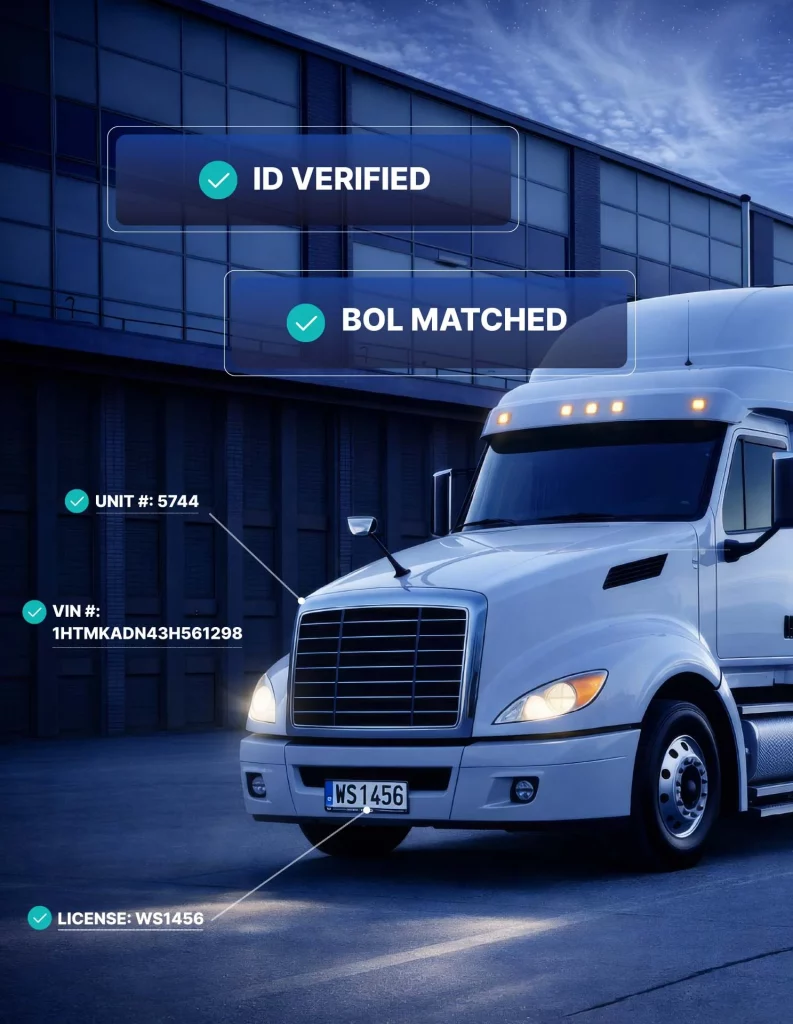
GATECORE helps facilities strengthen gate operations by supporting driver verification, vehicle and trailer logging, license plate capture, Bill of Lading documentation, seal checks, access workflows, and gate transaction records.
This turns the gate from a manual checkpoint into a verified access workflow.
That matters because many logistics incidents are not caused by someone climbing a fence. They happen when something is released, moved, or accepted without enough verification.
Yard Visibility: Risk Continues After Access Is Granted
Even a verified gate event does not eliminate risk.
Once a truck enters the property, the yard becomes the next major visibility challenge.
Trailers may be dropped. Vehicles may move between docks. Drivers may wait in the wrong areas. Freight may sit outside. Vendors may enter operational zones. Equipment may be staged in exposed locations. Employees may cross active vehicle paths.
If the yard is not visible in real time, the facility may only discover a problem after the event has already happened.
YARDCORE helps facilities improve visibility across yard activity. It supports monitoring of movement, exceptions, restricted areas, safety events, and procedure enforcement across large industrial properties.
This is where perimeter-only security falls short again.
A perimeter system may help identify activity near the edge of the property, but it does not automatically show whether a trailer was moved to the wrong area, whether a driver ignored yard procedures, or whether an incident happened after the gate was cleared.
For logistics facilities, yard visibility is the difference between knowing someone entered and knowing what happened next.
Perimeter Protection Still Matters — But It Needs to Be Connected
Perimeter protection should not be dismissed. It is still essential.
Fence lines, side gates, employee parking areas, restricted zones, outdoor storage areas, trailer rows, and after-hours access points all need monitoring.
The issue is not that perimeter security is wrong.
The issue is that perimeter security becomes weaker when it is disconnected from the gate, the yard, and the reporting process.
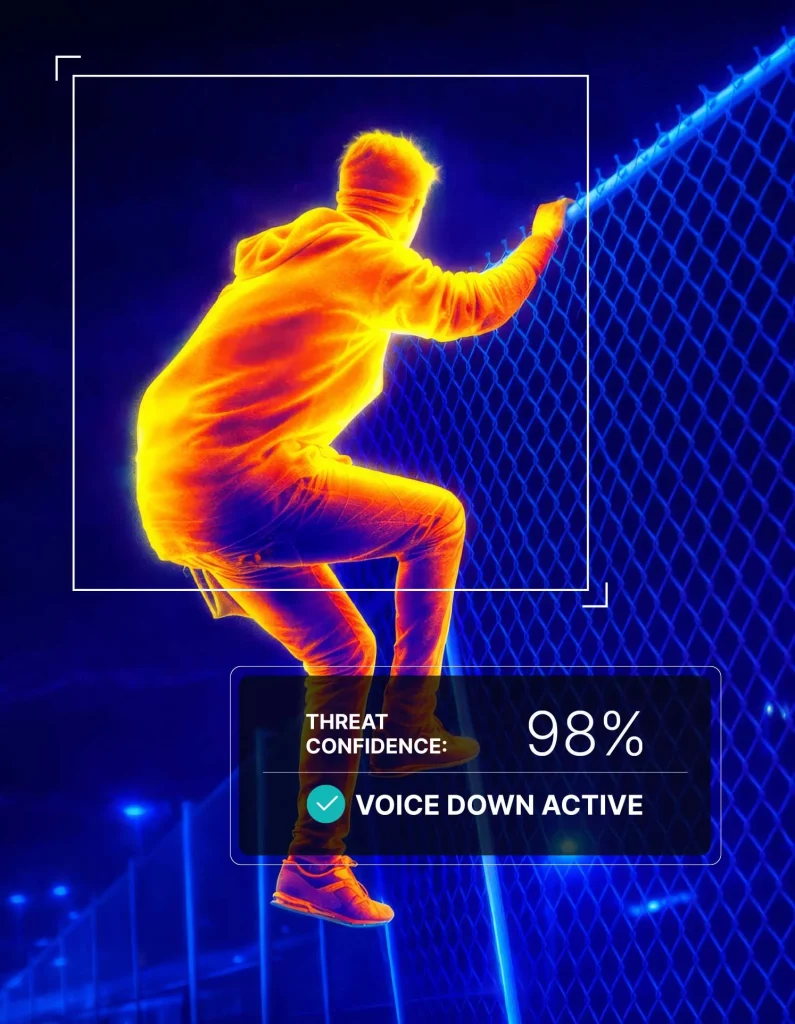
SAFECORE helps facilities protect perimeter areas with AI-powered detection, human verification, live intervention, escalation procedures, and incident documentation.
When suspicious activity is verified, a facility can respond sooner. That may include Voice-Down™ intervention, site contact notification, escalation, and event documentation.
The strongest perimeter strategy is not just recording activity at the fence line. It is connecting that activity to the facility’s broader security and operations workflow.
AI Alerts Are Useful, But Human Verification Makes Them Actionable
AI can help logistics facilities detect people, vehicles, motion, unusual behavior, restricted-area activity, and perimeter events faster than manual review alone.
But more AI alerts do not automatically create better security.
Industrial sites are complex. A person near a gate may be a driver, vendor, contractor, employee, or trespasser. A vehicle near a fence may be suspicious or routine. A trailer movement may be expected or unauthorized. A person in a restricted zone may be creating a safety issue or performing approved work.
That is why human verification matters.
Birdseye combines AI-powered detection with trained remote agents who review activity in context and follow site-specific procedures. AI helps identify the signal. Human verification helps determine what the signal means.
This helps reduce false alarms, improve response quality, and make monitoring more useful for real operations.
Centralized Reporting: The Missing Layer in Many Security Programs
A facility can have cameras, guards, alarms, gate logs, and perimeter alerts and still struggle to understand what happened.
Why? Because the records are often scattered. Camera footage may live in one system. Gate logs may be on paper. Yard notes may be in emails or phone calls. Incident reports may be stored separately. Perimeter alerts may be handled in another platform.
When an incident happens, managers have to reconstruct the timeline from disconnected sources. That slows investigations and weakens accountability. The Portal helps centralize gate transactions, yard events, perimeter alerts, incident records, and operational activity in one place.
This helps teams answer the questions that matter:
- Who entered?
- What vehicle was involved?
- What trailer moved?
- Was the event verified?
- What happened in the yard?
- Was there perimeter activity?
- What response occurred?
- Can we review the event later?
For AI-powered facility supervision, the record is just as important as the alert.
Supply Chain Security Requires Process, Not Just Cameras
Physical security technology matters, but technology alone does not create a strong supply chain security program.
Facilities also need procedures, documentation, access controls, training, review processes, and accountability.
CBP’s CTPAT supply chain security program is built around protecting the supply chain, identifying security gaps, and implementing security measures and best practices.
That is an important principle for logistics facilities.
Security should not be treated as a collection of disconnected tools. It should be treated as a system.
- A camera should connect to a verification process.
- A gate event should connect to documentation.
- A yard event should connect to operational visibility.
- A perimeter alert should connect to response.
- An incident should connect to reporting.
This is where full facility supervision becomes stronger than perimeter-only protection.
Responsible Video Monitoring Also Matters
As more facilities use AI, cameras, remote monitoring, and centralized reporting, responsible video practices become more important.
Security systems may capture employees, drivers, visitors, license plates, vehicles, documents, and facility operations.
The Security Industry Association’s Data Privacy Code of Practice for Video Surveillance provides guidance for using video technology in ways that support sound policies, best practices, and privacy risk mitigation.
The FTC’s Protecting Personal Information guide also recommends that businesses understand what information they collect, keep only what they need, protect what they keep, properly dispose of what they no longer need, and plan for security incidents.
For logistics facilities, the goal should be practical visibility with responsible controls. A strong security partner should help improve monitoring without creating unnecessary data risk.
Birdseye and the Supply Chain Protection Community
Birdseye is aligned with the supply chain protection community, not just the general camera market.
The International Supply Chain Protection Organization announced Birdseye as a Preferred Partner, highlighting Birdseye’s work with AI cameras, live agents, and software for real-time facility visibility and validated workflows.
That matters because logistics and distribution environments need more than generic video coverage.
They need solutions built around how freight, drivers, trailers, yards, gates, and facility operations actually work.
Birdseye’s strength is the connected model:
- GATECORE for gate verification.
- SAFECORE for perimeter protection.
- YARDCORE for yard visibility.
- The Portal for centralized reporting and event review.
- Human verification for context and response.
- AI-powered monitoring for faster detection and better visibility.
How Birdseye Connects Gate, Yard, and Perimeter Security
Birdseye helps facilities move from isolated security tools to connected facility supervision. At the gate, GATECORE helps verify drivers, vehicles, trailers, documents, and access events.
Around the perimeter, SAFECORE helps detect and respond to suspicious activity near fence lines, restricted zones, outdoor storage areas, and vulnerable access points.
Inside the yard, YARDCORE helps monitor movement, exceptions, safety events, and procedure issues after access has been granted. Through The Portal, teams can review important facility activity in one place.
That connection is the difference. A perimeter-only system may tell you that something happened at the edge of the property. Birdseye helps connect that event to the larger operational picture.
What Logistics Leaders Should Ask About Their Current Security
Facilities should review their current setup with practical questions:
- Can we verify every driver before access is granted?
- Can we document trucks, trailers, BOLs, and seals consistently?
- Can we detect suspicious activity at the perimeter in real time?
- Can we see what happens after a vehicle enters the yard?
- Can we identify restricted-zone activity or procedure violations?
- Can we reduce false alarms with human verification?
- Can we review gate, yard, and perimeter events from one place?
- Can we prove what happened without searching through disconnected systems?
If the answer is no, the facility may not have a perimeter problem only. It may have a visibility problem.
Final Takeaway: Protect the Edge, But Control the Whole Facility
Perimeter protection is necessary, but it is not enough for modern logistics and distribution hubs.
A facility can have cameras along the fence and still lack control at the gate. It can monitor the perimeter and still miss what happens in the yard. It can receive alerts and still lack the human verification needed to understand what those alerts mean. It can record footage and still struggle to document the event later.
The strongest security model connects every major layer:
- Protect the perimeter.
- Verify the gate.
- Watch the yard.
- Use AI to detect.
- Use humans to verify.
- Centralize the record.
- Respond while the event is still active.
That is the difference between perimeter-only security and full facility supervision. Birdseye helps logistics facilities make that shift.
FAQs About Perimeter Protection for Logistics Facilities
Is perimeter protection enough for a logistics facility?
No. Perimeter protection is important, but it should be part of a larger facility supervision model. Logistics facilities also need gate verification, yard visibility, human-verified monitoring, response procedures, and centralized reporting.
What does perimeter protection include?
Perimeter protection can include cameras, fences, lighting, sensors, remote monitoring, AI detection, speaker systems, and response procedures around the edge of a property.
Why do logistics hubs need gate verification?
Logistics hubs need gate verification because every driver, vehicle, trailer, and shipment interaction creates a security decision. Weak gate verification can lead to unauthorized access, poor documentation, shipment disputes, or cargo theft exposure.
Why is yard visibility important?
Yard visibility is important because many risks happen after a vehicle enters the property. Trucks, trailers, drivers, employees, vendors, and equipment all move through the yard, creating security, safety, and operational visibility challenges.
Are AI cameras enough for perimeter security?
AI cameras are useful, but they work best when paired with human verification and response procedures. AI can detect activity, but trained human agents provide context and determine the correct action.
How does Birdseye support perimeter protection?
Birdseye supports perimeter protection through SAFECORE, which combines AI-powered detection, human verification, live intervention, escalation, and incident documentation for vulnerable areas around the facility.
How does Birdseye go beyond perimeter protection?
Birdseye goes beyond perimeter protection by connecting SAFECORE with GATECORE for gate verification, YARDCORE for yard visibility, and The Portal for centralized event review and reporting.