Direct Answer: How Does AI Advance Video Verification?
Artificial intelligence advances video verification by providing security teams with more accurate and fast detection, reduced number of false alarms, ability to identify patterns, and bring relevant events to the human operators’ attention.
AI can assist in identifying people, vehicles, abnormal movement, perimeter activity, after-hour activity, safety concerns, and operational issues. However, AI alone does not give an added value. The optimal video verification solution is the combination of AI-powered detection and human verification.
It is especially important for industrial facilities, warehouses, logistics sites, manufacturing facilities, transportation operations, and auto lots since every event happens in the specific context. There is a reason why a truck appeared at the gate: it can be authorized or unauthorized access. A person standing close to the fence can be a driver, contractor, employee, or an intruder. Vehicle movement within the premises can be regular or suspicious.
Birdseye applies AI-powered monitoring with human verification to help industrial facilities detect, verify, react, and document their activity.
Summary: Advantages of AI Video Verification Over Traditional Alarm Monitoring
| Category | Traditional alarm monitoring | AI-powered video verification with human review |
|---|---|---|
| Source of the alert | Motion sensors, alarms, simple triggers | Cameras, analytics, AI detection and site activity |
| Context | Limited information | Visual context and information about the event |
| False alarms | High number without verification | Low number of false alarms through AI filtering and review |
| Response | Reactive | Verification and real-time response |
| Optimal use scenario | Simple alarms | Gates, yards, perimeters, access events, and safety concerns |
| Documenting | Basic information about the alarm | Video evidence and event-based record |
What is Video Verification?
Video verification is a process of reviewing live or recorded video footage to determine whether the event is a true alarm or not.
Without video verification, the security operators will not have any information about the alarm except for its triggering. An alarm can mean the actual intrusion, theft attempt, unauthorized access or movement, vehicle movement, or something else: weather, an animal, a delivery, or a false motion event.
With video verification, security professionals can see what exactly is going on at the facility and take the proper actions based on the real situation.
That is why verification is critical since not all of the events require the same reaction. Verified intrusion, theft attempt, unauthorized vehicle or perimeter movement, etc. need a different reaction compared to motion alarm.
Alarm Verification Scoring Standard by The Monitoring Association states the importance of video verification as the main component of the industry’s shift towards classification of alarm events: AVS-01 Alarm Validation Scoring Standard
What Are the Disadvantages of Traditional Alarms?
Traditional alarm systems usually lack the necessary information.
Triggering of the alarm may mean an open door, disturbance at the gate, or detection of movement. But the system itself does not know the reason why the alarm has been triggered.
Is it an intrusion? Is it an employee? Is it a driver? Is it weather, animal or some other factor?
Without video verification, the security teams will have to react to every alarm with the lack of information. This will waste the time of professionals, increase the number of false alarms, and delay the reaction to real intrusions or other threats.
For industrial facilities, the situation is even worse since the complexity of events is higher than the complexity of regular building entrances.
How Can AI Help with Video Verification?
AI assists security teams in identifying more important activity faster.
Instead of considering every motion alarm equally important, AI can help to separate different events based on the nature of activity. Thus, AI can assist in identifying people, vehicles, movement patterns, activity in the restricted areas, loitering, perimeter activity, and after-hour events.
According to ASIS, AI-powered video analytics can help in monitoring warehouse areas and decreasing the number of false alarms by determining the difference between intrusion, vehicle movement, wildlife, weather, and other environmental factors: ASIS: How to Secure the Modern Warehouse
That is why industrial security teams need not more noise but rather better signals.
AI can assist in bringing the right events to human operators who will then verify them and take the right measures according to the current situation.
AI Detection is Fast, But Verification Is Important
While AI can detect activity fast, human verification is needed for industrial facilities.
The person at the gate may be a driver awaiting instructions. Truck at the entrance is either scheduled, early, late, or unauthorized. Trailer movement can be regular yard activity or some activity that needs investigation. Person in the restricted area is either an employee or a stranger.
AI will be able to detect the event, while human verification will help in understanding the meaning of this particular event.
That is the model used by Birdseye.
Birdseye offers AI-powered monitoring with human verification performed by remote agents who will analyze events, follow the site procedures, and perform the necessary actions. This will decrease the number of false alarms and improve the quality of reaction.
That is not the full automation of the security processes but rather human verification and facility supervision powered by AI.
AI Video Verification for Gates
The gate is one of the most important places for applying AI video verification.
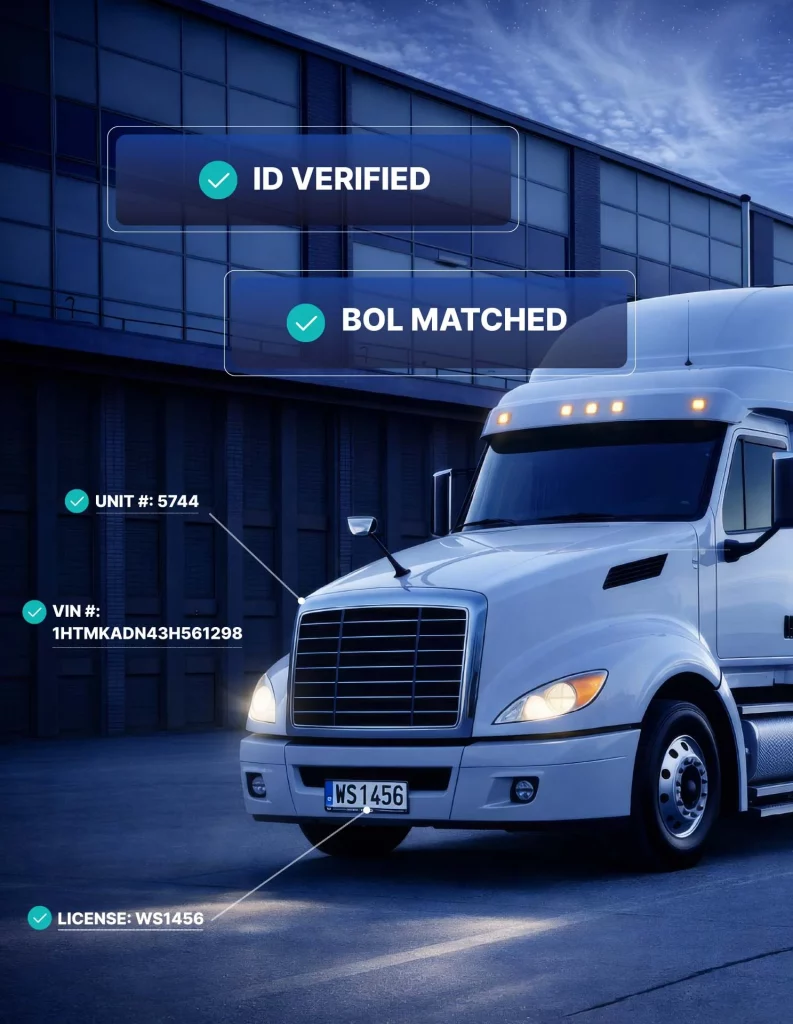
Gates event is more than just the movement of a person or a vehicle to the facility. It includes driver, carrier, truck, trailer, BOL (Bill of Lading), seal, pick-up, delivery, vendor, visitor, or access approval.
Basic camera can record the event, but it does not mean that the event is actually verified.
With GateCORE, Birdseye helps facilities to verify and document their gate activity. Driver verification, vehicle and trailer logging, license plate capture, BOL capture, seal check, access workflow, and gate transactions can be performed thanks to this solution.
AI assists in detecting the gate activity, while human verification helps in verifying the event and creating a more reliable record of it.
That is much more than only guarding log, fob, card reader, or just a passive camera.
AI Video Verification for Perimeters
Perimeter security is another area where AI can assist with video verification.
Fence line, side gate, trailer row, outdoor storage zone, employee lot, and restricted zone can all become a potential threat. The traditional motion alarm can generate many false alarms, especially in the outdoor environment with many elements like weather, shadows, animals, car headlights, or regular movement.
SafeCORE helps facilities to protect these zones with AI-powered perimeter monitoring, human verification, live intervention, and documentation of the incident.
If the suspicious activity is confirmed, Birdseye can deliver Voice-Down™ intervention, notify site contacts, escalate the event, and document what happened.
That way, perimeter monitoring becomes proactive rather than reactive.
AI Video Verification for Yard Activity
Yard is one of the hardest places to monitor due to constant changes.
Trucks come and leave, trailers are moving, drivers are waiting for further instructions, employees pass through the yard, vendors and contractors are walking the facility, equipment and inventory is stored outdoors.
Passive camera can record all of these events, but it does not analyze the events in a proper way.
YardCORE helps facilities to increase the visibility across yard activity. AI can help in identifying movement and exceptions, human verification adds context to the events. All of the events are then reviewed and documented so that facility managers would not need to spend hours analyzing the footage after an incident occurred.
This is where the use of AI video verification goes beyond the scope of security and turns into the operational visibility.
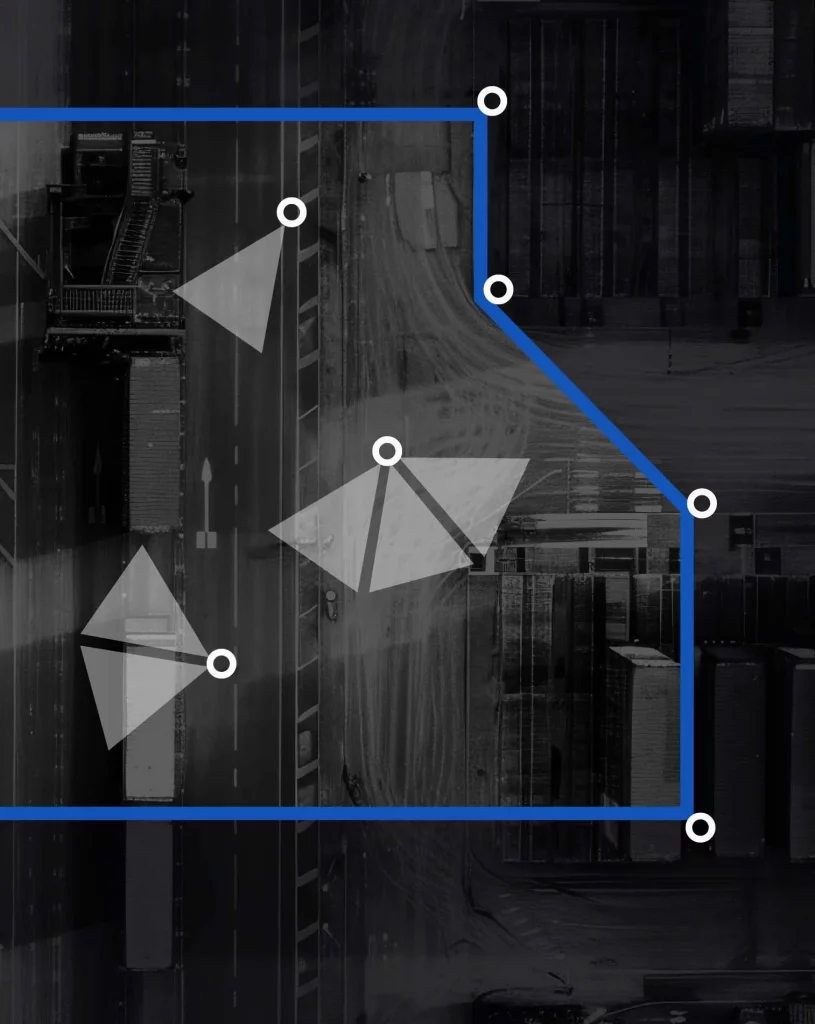
AI Can Help with Safety and Procedure Enforcement
AI video verification can also assist in supporting the safety and protocol enforcement.
On industrial premises, the safety problems can arise suddenly. A person can get to the restricted area, driver can pass through the wrong zone, vehicle can create risks for pedestrians, vendor can violate the site protocols, and some important protocols can be neglected on the busy shift.
AI can assist in drawing the attention to such events. Human verification will allow understanding the situation and taking the proper action according to the protocols.
That is important since many of the incidents start from the small protocol violations. If those are visible in real time, they can be prevented.
Video Verification Allows for Better Responses
One of the main advantages of video verification is the better response to the event.
If an event is verified, it can be explained in detail. Security teams will be able to describe what exactly happened, where it happened, who or what took part in the event, and what steps were already taken.
That is much more effective than just saying that ‘alarm was triggered’.
Instead of this general message, teams can say that a person is at the fence line, truck tries to enter the premises without permission, vehicle moves through the restricted zone, or driver needs gate verification.
More information allows taking the proper action.
The Portal Can Create Usable Event Records
Verification is only valuable if the information about events can be used later.
The Portal allows Birdseye customers to store their gate transactions, yard events, perimeter alerts, incidents, and other activity in one convenient place.
This is important since traditional security systems scatter information across the camera system, guard log, email, phone call, and alarm.
Portal allows transforming the verified events into the useful operational intelligence.
Data Security and Video Responsibility Are Important
The video verification should also be handled responsibly.
Companies need to pay attention to such aspects as accessibility of the video footage, retention period of the video, event documentation, and personal information protection.
The Security Industry Association provides Data Privacy Code of Practice for Video Surveillance that points at the need for privacy and security in video technology use. At the same time, the FTC recommends that businesses should know what kind of information they are collecting, retain only what they need, secure the collected data, get rid of unnecessary video files, and prepare for possible security incidents: FTC: Protecting Personal Information.
That is what industrial facilities should focus on: useful visibility, controlled access to the records, and responsible video handling.
Final Takeaway: AI Makes Video Verification Fast, While People Make it Smart
AI helps in making the video verification better since it detects and prioritizes the activity faster and eliminates the noise generated by the traditional alerts.
But AI should not substitute human verification.
The best video verification model is AI-powered detection combined with human verification. AI finds the signal, while people verify the context. That allows for more efficient responses, better documentation, and enhanced operational visibility.
This is especially important for industrial facilities since every security event happens in the context of operational events. The gate, yard, perimeter, and reporting processes all are interconnected.
Birdseye helps facilities to use AI video verification as a part of comprehensive facility supervision solution including GateCORE, SafeCORE, YardCORE, and The Portal.
Frequently Asked Questions about AI Video Verification
What is AI video verification?
AI video verification is the process of analyzing camera footage using artificial intelligence to detect important activity, such as people, vehicles, abnormal movement, perimeter and restricted area activity, etc. Then human operator reviews this event and decides what action to take.
How does AI reduce false alarms?
Using AI in video verification, security teams are able to filter the irrelevant movement and focus only on the meaningful one. For example, AI can distinguish people, vehicles, animals, weather, or environmental movement.
Is AI video verification better than traditional alarm monitoring?
For industrial facilities, AI video verification is more advantageous than traditional alarm monitoring since it provides the visual context of the events. Instead of only knowing that the alarm has been triggered, security operators can see what exactly is going on.
Does AI replace human monitoring agents?
No, AI just detects and prioritizes the events, while human verification is still necessary. Human agents add the context and decisions based on site-specific information that AI cannot provide.
Where is AI video verification the most useful?
AI video verification is most useful on gates, perimeters, yards, docks, restricted areas, outdoor storage zones, and industrial properties with excessive activity for manual monitoring.
How does Birdseye use AI video verification?
AI video verification is used by Birdseye to detect and prioritize important activity on gates, yards, and perimeters. Birdseye provides the human verification of this activity and allows users to respond to and document the events.