CCTV cameras have a recording period ranging from several hours to even longer periods. However, the recording period varies depending on the type of camera, the recording capacity, and the recording setting among other factors.
However, in industries such as logistics yards, warehouses, manufacturing plants, and distribution facilities, the question “how long do CCTV cameras record” is less important than:
Does anyone review the recording, verify it, and respond in the event of any activity of importance?
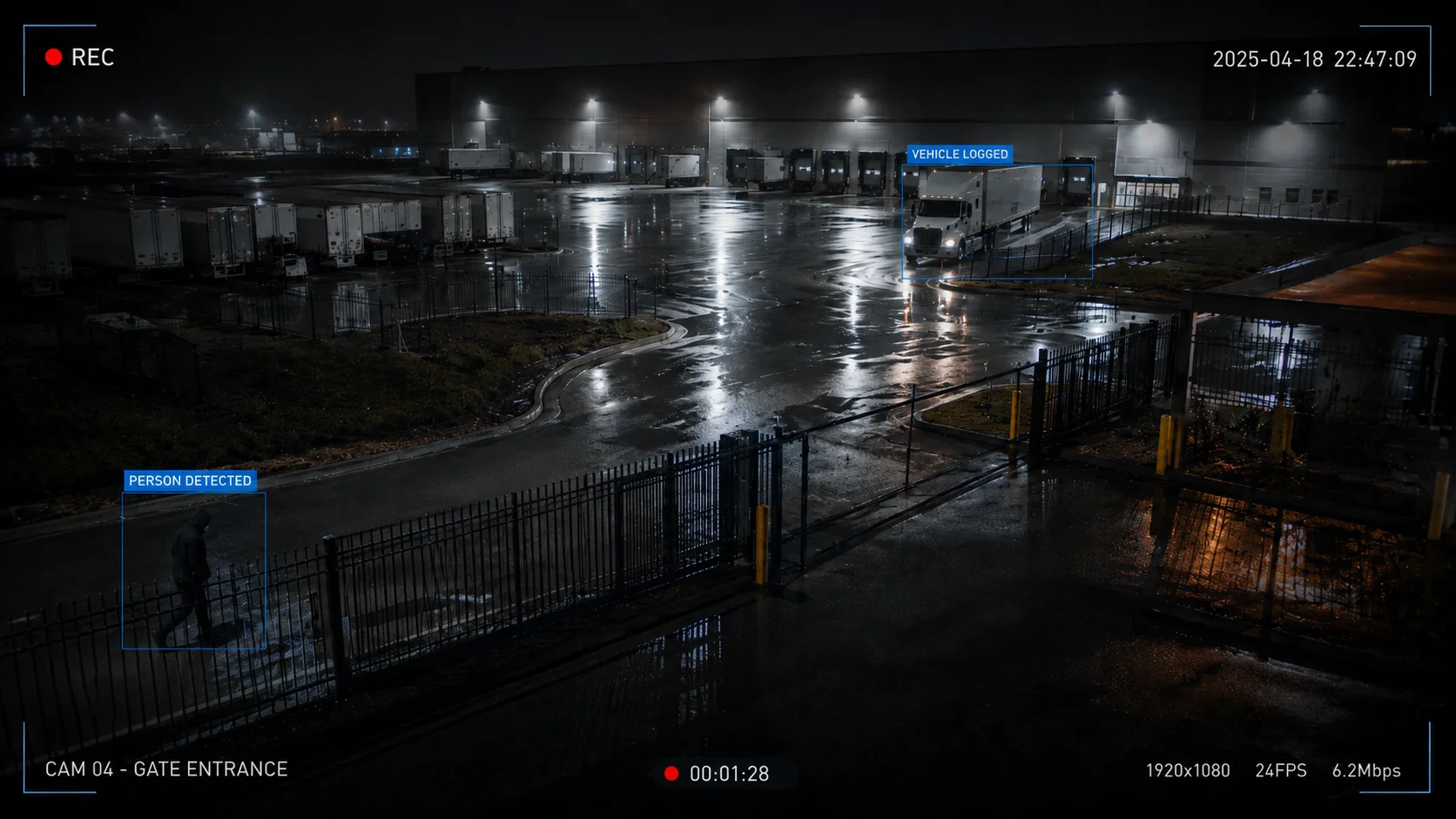
While having a CCTV camera which records the yard may assist in identifying what happened during the incident, the camera will not prevent an intruder from entering the facility. It cannot verify the driver at the gate, it cannot verify trailer seals, it cannot deter unsafe acts within the yard, and it cannot give warning before an incident occurs.
It is for that reason why modern facility security requires not just video archiving. It requires smart detection, manual verification, real-time action, and visibility into operations.
At Birdseye, we provide industrial facilities with better means to upgrade from mere recording through their security cameras. We offer a combination of our state-of-the-art AI technologies along with skilled remote agents who will verify, act according to specific site protocols, and do everything in real time.
How Long Do Security Cameras Usually Record?
However, most security cameras retain their video footage for anything between a few days and up to a few weeks. While some CCTV surveillance systems only retain videos for 24 to 72 hours, others retain them for 30, 60, or even 90 days.
It depends.
For instance, the size of a facility and the number of cameras used determine the time period during which you will want to retain your videos. A smaller facility may not need too long of retention periods, while a large logistical site will definitely require a longer retention period due to increased complexity. For example, a logistics facility that needs to verify a cargo, analyze any incidents involving trailer damages, check the opening and closing times of its gates, and perform any other checks related to the safety and security of the employees may need to go further back in time.
However, video retention is just one aspect of your video security.
Do Security Cameras Record All the Time?
There are various types of security cameras which either record footage continuously, or only when there is movement detected, when an alarm is set off, or based on schedule timings.
Continuous recording entails filming footage at all times of the day and night. While this ensures a complete video history log, it also consumes the maximum storage. On the other hand, movement detection ensures that the camera records only when some movement occurs. Schedule timing ensures the recording based on certain predefined hours.
As far as industrial plants are concerned, there is a suitable solution depending on the location.
A main entrance gate would require continuous recording due to movement taking place during daytime involving trucks, drivers, suppliers and plant personnel. Similarly, a fence area could be recorded using artificial intelligence after office hours to detect any sort of movement. Trailer yards may require monitoring for vehicle movements and inappropriate activities.
The objective here is not to record unnecessary movements but rather to ensure proper action according to required footage.
Why Recording the Yard Is Not the Same as Securing the Yard
Most companies think that because they have cameras, they must have security. In truth, cameras alone provide visual proof of something taking place. Cameras alone don’t give you control.
A passive surveillance system will tell you that a person accessed your property. It might inform you that a trailer was towed. It might tell you that a driver entered an unauthorized zone. It could let you know that access to a gate was gained out-of-hours.
However, by the time somebody checks the recorded footage, the incident may have long since passed.
This is the downside of merely recording what happened – it is reactive in nature. This is useful for investigating incidents; however, it does nothing to prevent them.
Yards are dynamic spaces. Vehicles enter and exit. Trailers are delivered and towed. Drivers access gates and loading bays. Personnel and contractors navigate work areas. Things happen fast in industrial yards.
While it’s valuable to record that activity, doing so in real-time and being able to respond to events as they occur would make all the difference.
Why AI Plus Human Verification Creates Better Security
AI can detect movement, unusual activities, recognize individuals or vehicles entering forbidden zones, and draw attention to specific events more effectively than a human operator monitoring numerous cameras.
However, that is not sufficient.
Industries involve complicated situations. A person walking along the fence line can be an employee, contractor, delivery truck driver, or a trespasser. The truck parked at the gate may belong to a contractor or can be an intruder. Movement in the yard may be ordinary work or something else, such as an emergency. A truck pulling out with a trailer can be completely ordinary or a violation of rules.
This is when a human verifier becomes necessary.
Birdseye offers a unique solution where AI detects the event, and the human verifier determines what really happened based on their knowledge of the facility.
This allows for more accuracy and better handling of incidents. Every time an incident is raised, rather than just raising an alarm, incidents will now be investigated based on their context.
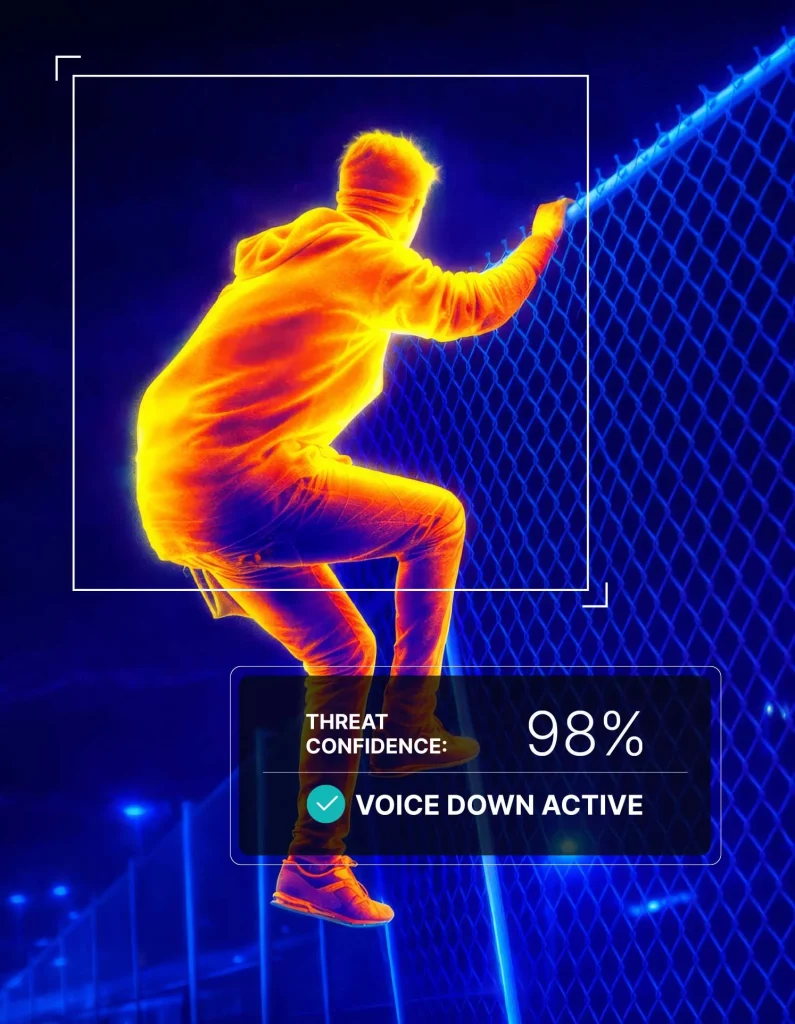
In cases where an individual approaches a restricted zone during off-hours, Birdseye allows a Birdseye agent to warn that individual via voice-down and follow up appropriately. In cases where a truck driver approaches the facility gate, it can assist in verifying their identity. In cases where improper activities take place within the yard, these actions can be recorded as well.
This provides enhanced protection since the facility will not wait until after the fact to determine what transpired.
The facility can act based on the incident itself.
What Affects How Long Security Camera Footage Is Stored?
Many variables dictate how long security camera footage can last before being deleted, archived, or overwritten.
Storage Capacity
Storage capability is one of the largest considerations. Footage can be recorded by a DVR, NVR, hard drive, local server, cloud system, or some combination. If the storage capability has reached its limit, many security systems will automatically overwrite the oldest videos that have not been saved.
A larger storage capacity means increased ability to retain footage, but greater storage capacity does not necessarily equal better security. An organization could record weeks of footage but never actually prevent the occurrence of the event.
Number of Cameras
Having more cameras installed at a location means having more video footage. While a small office might have only two or three cameras, a distribution center, manufacturing plant, or logistics facility would likely employ a large number of cameras that cover gate entry, loading docks, rows of trailers, staff access points, fences, parking lots, and restricted access zones.
More cameras allow for better monitoring, but they complicate the work of human personnel who must examine footage.
Video Quality
With better resolution, there will be more detail in the image captured, which could assist in identifying vehicles, license plates, trailers, individuals, or activities around the gate. However, better quality images will require more storage space.
A facility needs to balance between quality of video and amount of storage that will be used. The correct solution will make it easier for you to capture information about what you need for security and operational purposes.
Continuous vs. Motion-Based Recording
Continuous video capture will take up more space as the video recorder is always capturing footage. Motion-based video recording will use less space as the recorder captures footage only when activity is detected.
Nonetheless, there are certain challenges to overcome. For instance, motion capture must be configured correctly. Otherwise, there may be false positives or negatives due to weather, light, shadows, headlights, animals, yard activities, etc.
These challenges can be solved by using artificial intelligence algorithms to direct your attention where it matters most.
Retention Policy
Each organization must have a well-defined policy on the time that video storage lasts and the situations when the video should be recorded. In most systems, videos are automatically deleted or overwritten after some specified time frame.
For industrial purposes, video retention should depend on the situation. For example, if most cases regarding disputes about shipments or carrier problems happen days later, the organization should allow enough time to record those incidents.
Birdseye GateCORE: Better Control at the Gate
The gate is perhaps the most critical location within any industrial setting. Access, security, compliance, and operations all intersect there.
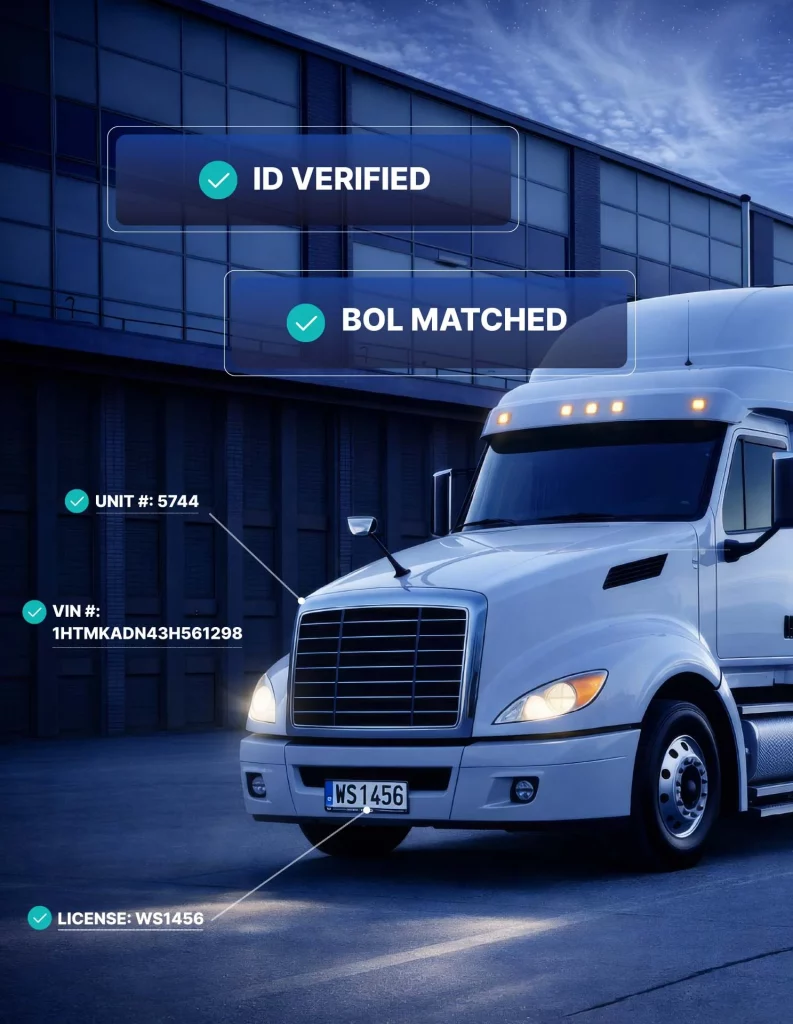
It’s true that a traditional camera system might log a truck at the entrance to your facility. That doesn’t mean that the driver was verified, that the trailer was logged, that the seal was inspected, or even that the transaction was properly documented.
GateCORE from Birdseye gives facilities the ability to add more control over their gates. The software allows for driver verification, vehicle/trailer logging, access process, Bills of Lading, seals inspection, and gate transaction logging.
That represents a huge distinction from having simply a camera to log the event, to supervising it.
Facilities can optimize their trucks flow, eliminate manual guard logs, increase compliance, and ensure proper tracking for every gate transaction.
It’s much easier to manage truck traffic, keep track of who entered and exited, and know how and if everything got verified.
Birdseye SafeCORE: Real-Time Perimeter Protection
Recording also does not cover the other use cases in perimeter security.
While a camera can see someone approach a fence line, enter an access-restricted zone, and move around the premises outside of working hours, if no one is monitoring the camera feed, the recorded footage will be nothing more than an after-the-fact source of information.
But with Birdseye SafeCORE, it is possible to achieve proactive perimeter protection. By leveraging AI-based detection and human monitoring, you can get immediate verification and notification about any suspicious activities taking place.
It is essential because intrusions, attempted theft, or any other kind of trespassing often requires prompt reaction on your side.
In this way, Birdseye SafeCORE makes sure that perimeter cameras do more than record footage but actively participate in prevention and deterrence.
Birdseye YardCORE: Supervision Across the Yard
Yard management is complex since yards are dynamic environments. Trailers shift. Employees wait in lines. Equipment is parked. Personnel cross traffic zones. Vendor and carrier availability may vary. Compliance with safety protocols must be enforced throughout the premises.
Recording yard activity can be helpful. However, that is not enough.
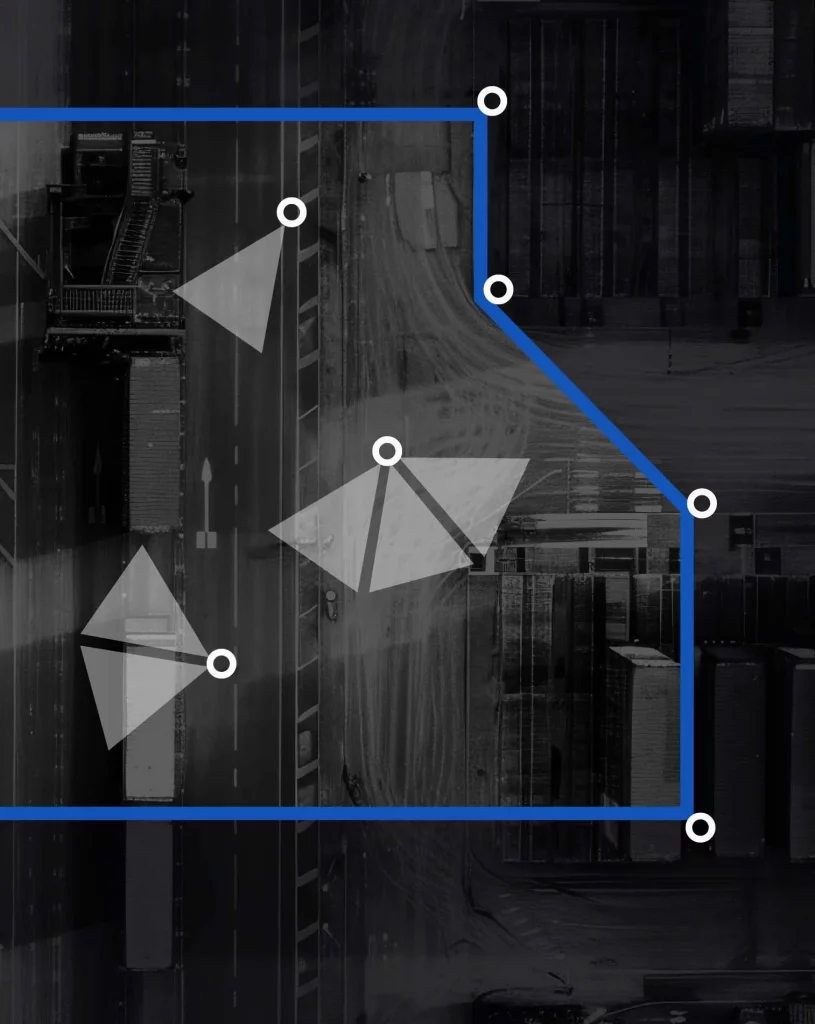
Birdseye YardCORE provides facilities with constant supervision of yard activity. This tool is useful for tracking movements, detecting unsafe activities, enforcing processes, capturing incidents, and providing greater visibility over large outdoor facilities.
The benefit provided by YardCORE to operations management cannot be overlooked. YardCORE is not merely a security solution but also assists in improving safety and efficiency of yard management.
In case of a safety violation, a team will be able to look at video documentation of the incident. In case of a protocol violation, the issue will be corrected. And in case of a confusion regarding an activity in the yard, better visibility will help.
YardCORE helps facilities evolve from “we have cameras in place” to “we know what is going on.”
The Facility Supervisor Portal: Turning Video Into Operational Intelligence
The most significant drawback associated with conventional camera systems is the separation of the captured footage from other elements of the business process.
Business managers often find it difficult to combine video in one system with gate logs in another system, incident notes in yet another system, and manual reports maintained in spreadsheets or emails. Whenever some incident occurs, there is always a risk of wasting much time trying to reconstruct what happened.
Birdseye Portal provides a solution to that problem.
This powerful tool allows teams to gain an insight into facility activity at gates, in yards, and in perimeters. It helps convert events into documented records that facilitate operation, security, compliance, and reporting functions.
With the Portal, it becomes possible to access information related to concrete events without watching long pieces of footage. One can monitor gate transactions, yard events, perimeter activities, incidents, and operations from one place.
This is when Birdseye distinguishes itself from conventional camera monitoring systems.
How Long Should Industrial Facilities Keep Security Footage?
For many commercial facilities, a 30-day video retention period makes an ideal baseline to start from. Depending on their needs, some facilities may require less; others will likely need to retain video footage for 60, 90, or more days.
Retention period isn’t everything, however.
A facility should consider whether critical events are being monitored as soon as they occur. Are the gate activities logged? Do perimeter risks get verified in real-time? Can yard events be tied back to reliable footage? Are all safety issues documented and escalated? Do the teams have an easy way to access footage?
A longer recording period makes it easier to investigate events. The real-time monitoring of events with machine learning and human review makes it easier to prevent and respond to them.
Both are vital in top-notch security systems.